





Barley Twist Library Table
A barley twist library table brings vigorous turned legs and a substantial writing surface to a study or centre space.
Barley Twist Library Table
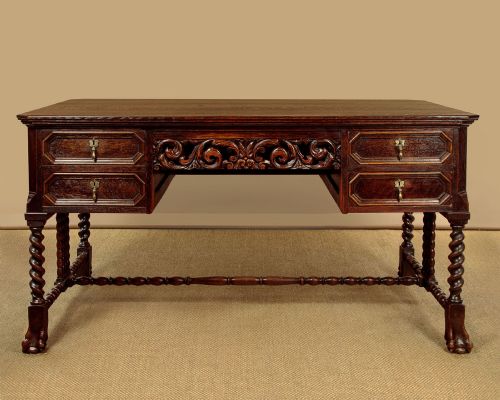
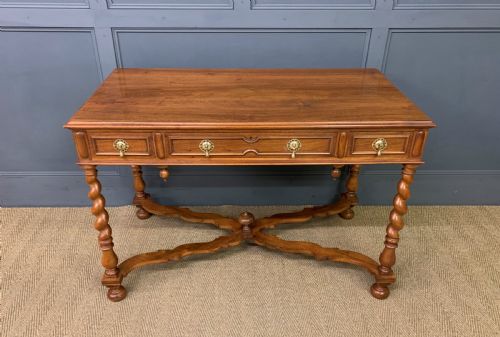
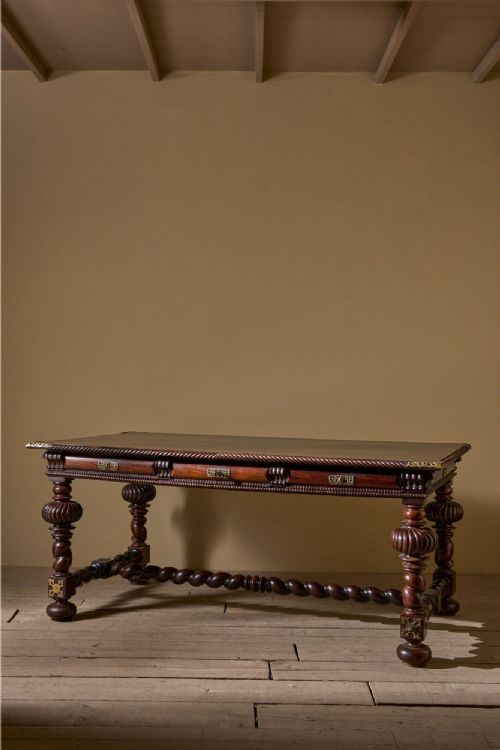
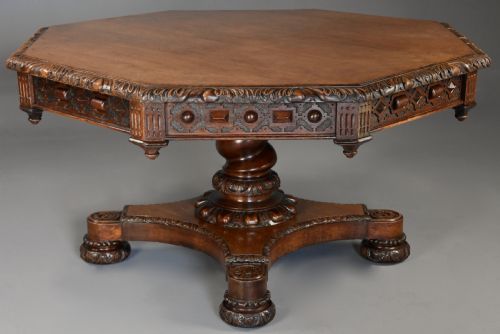
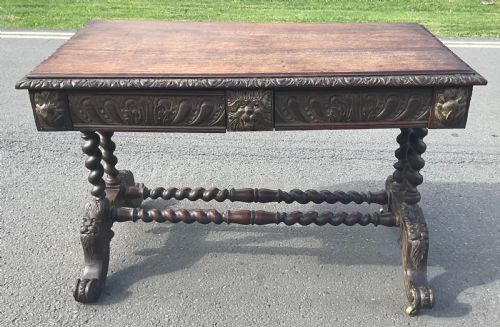
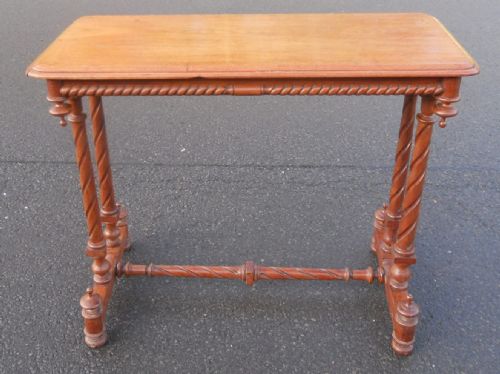
A barley twist library table is a substantial piece designed for study, writing, and the display of volumes in a traditional interior. The form combines a generous rectangular or sometimes octagonal top with distinctive spiral-turned legs that lend vertical movement to the heavy timber framework.
Most examples encountered on this page date from the nineteenth century, drawing heavily on earlier Jacobean, Carolean, and Elizabethan revivals. Oak predominates as the primary timber, though walnut, rosewood, and mahogany also appear in various regional interpretations.
Makers often integrated practical writing surfaces, sometimes lined in leather, alongside frieze drawers for stationery and papers. These tables function equally well positioned in the centre of a room or anchored against a library wall.
Materials and construction
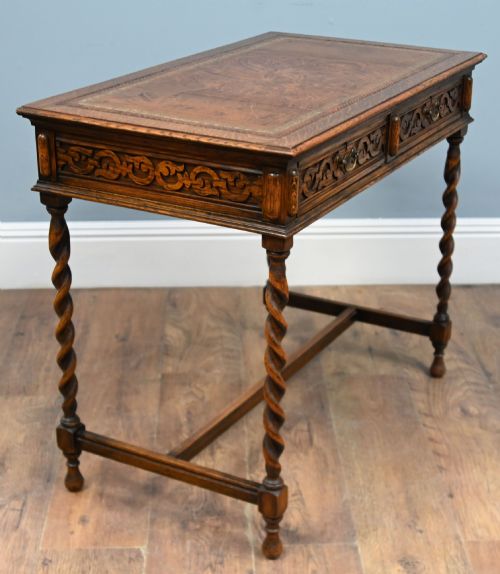
Makers relied on solid hardwoods like oak, walnut, and mahogany, shaped by hand to create the characteristic spiral turnings of the legs and stretcher bases. Joinery followed traditional cabinetmaking methods, utilising mortise and tenon frames to support heavy timber tops.
Surface treatments frequently involved inset leather writing panels, brass hardware such as drawer pulls or cast sabots, and decorative veneers including laburnum oyster pieces or parquetry. Carved details, from Green Man motifs to foliate scrolls, were executed directly into the solid wood framing.
Barley Twist Library Table Retail Price Guide 2026
Typical asking prices for barley twist library table among the pieces listed under this phrase on Sellingantiques today, from the lower quarter to the upper quarter. They describe what is for sale here now, not the wider market.
Listings feature oak, walnut, rosewood, and mahogany, spanning the seventeenth to the twentieth centuries with a strong emphasis on Victorian revival periods.
Assessing quality and proportion
Quality rests in the crispness of the spiral turnings and the selection of timber, where dense, well-figured oak or rich rosewood elevates the piece far beyond utilitarian workshops. Exhibition pieces show finer details like intricate marquetry, satinwood highlights, or robust brass mounts.
Proportion and structural integrity dictate the long-term success of the table, as heavy timber tops require sound internal framing to prevent warping or sag. The depth of the carving and the integration of drawers with tidy secondary woods further distinguish finer examples.
Edwards & Roberts·James Winter·Cottier & Co
The Barley Twist Library Table Glossary
- Barley twist
- A spiral turning resembling a twisted rope, carved into furniture legs and supports during revival periods. This decorative form creates strong diagonal lines and catches the light effectively.
- Library table
- A large freestanding table designed for reading and writing, often fitted with drawers beneath the top. These pieces were historically placed in the centre of a room rather than pushed against a wall.
- Frieze drawer
- A drawer integrated into the horizontal band directly beneath the tabletop. They often feature hand-cut dovetails and period-appropriate brass pulls.
- Sabot
- A metal sleeve or shoe fitted to the foot of a table leg for protection and decoration. Brass sabots frequently appear on mid-nineteenth-century centre tables.
- Oyster veneer
- Circular slices cut transversely from small branches or roots to create a distinctive concentric pattern. This technique appeared on seventeenth-century and revival furniture surfaces.
Barley Twist Library Table: Frequently Asked Questions
Where should I place a library table?
These tables work best positioned in the centre of a study or living room where the turned legs and finished back can be fully appreciated. Their substantial proportions also suit placement behind a sofa or against a primary wall.
Ensure there is adequate clearance around the piece for chairs and movement, as library tables were originally built to command floor space.
How do I care for a leather writing surface?
Keep the leather inset free from dust using a soft, dry cloth and avoid placing damp items directly onto the hide. Occasional treatment with specialist leather balsam helps prevent cracking.
Protect the surface from direct sunlight to preserve the original colour and prevent the leather from drying out over time.
Are these tables suitable for daily writing use?
Most examples were constructed as functional writing desks and library tables, featuring sturdy timber frames built to endure heavy use. The inclusion of drawers provides practical storage for modern stationery.
Consider adding a desk blotter if you plan to use fountain pens or heavy writing implements on antique leather or polished wood surfaces.
How do I distinguish nineteenth-century revival styles?
Nineteenth-century makers drew heavily on seventeenth-century Jacobean and Carolean aesthetics, incorporating deep hand-carving and twisted supports into Victorian frameworks. Look at the secondary woods inside the drawers and the ageing of the timber to confirm the period of manufacture.
Revival pieces often combine earlier decorative motifs with the heavier proportions favoured by Victorian cabinetmakers.