






Barbizon School Landscape Painting
A barbizon school landscape painting captures the quiet rural life of nineteenth-century France through naturalistic observation and tonal harmony.
Barbizon School Landscape Painting
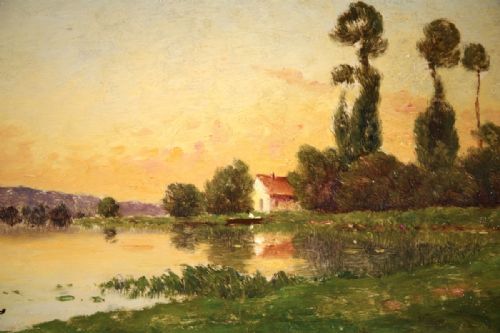
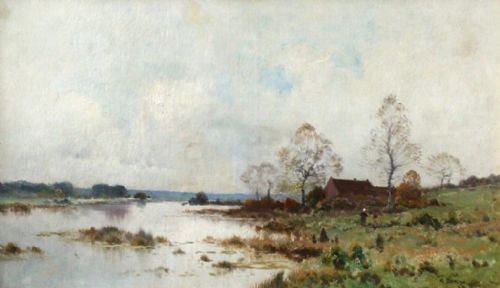
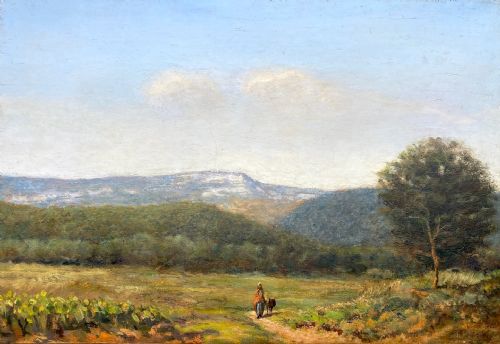
A barbizon school landscape painting brings nineteenth-century French pastoral scenery directly into domestic interiors through oil on canvas and watercolour. These works depict rural subjects such as farmyards, riverbanks, and woodland paths with an emphasis on atmosphere over grand narrative.
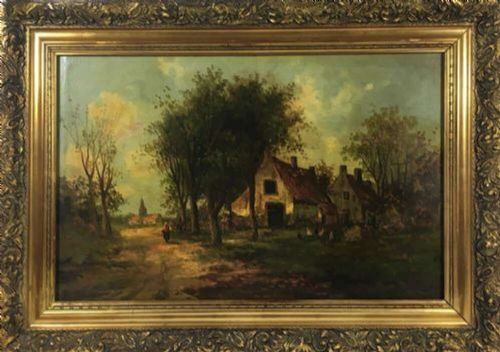
The version most commonly met on this page is the nineteenth-century French oil painting, often framed in giltwood or gilt wood. Buyers encounter both signed works by known continental artists and evocative pieces showing clear Barbizon influence from British or wider European hands.
Materials and technique
Artists painted primarily in oil on canvas, applying oil paint to build rich textures that record the changing light of rural France. Watercolour on paper also appears in the handling of woodland paths and open country scenes.
Many surviving examples retain their period frames constructed from gilded wood or plaster over wood. These frames utilise moulded decoration and gilt finishes that complement the tonal restraint of the canvas within.
Cattle and chickens frequently wander into the background of these rural scenes, reminding viewers of nineteenth-century agrarian life.
Distinguishing quality
Quality rests in the handling of light and the sureness of brushwork across the canvas. Stronger works demonstrate a deep command of atmosphere and tone, capturing the specific humidity and shadow of a French riverbank or pasture rather than relying on formulaic composition.
The integrity of the original oil paint surface and the harmony of the surrounding giltwood frame significantly influence the standing of a piece. Finer examples retain their original substrate and surface tension without heavy restoration, whereas lesser works may show clumsy overpainting or diminished tonal depth.
Paul Désiré Trouillebert·Henri Jaques Delpy·Henri Joseph Harpinies·Alphonse Robert·Pierre Emmanuel Eugene Damoye·Jules-Louis Dusaussay
The Barbizon School Landscape Painting Glossary
- Barbizon School
- A nineteenth-century French art movement dedicated to naturalistic landscape painting outside the formal studio. Painters gathered in the village of Barbizon near the Fontainebleau Forest to observe nature directly.
- Oil on Canvas
- A traditional painting medium where pigment suspended in drying oil is applied to stretched woven fabric. This combination allows for rich blending and varied surface textures.
- Giltwood
- Timber that has been coated with a thin layer of gold leaf or gold powder. It frequently frames nineteenth-century paintings with reflective warmth.
- Watercolour
- A paint consisting of colorants suspended in a water-soluble vehicle, typically applied to paper. It offers transparent washes suited to delicate landscape studies.
Barbizon School Landscape Painting: Frequently Asked Questions
What is a barbizon school landscape painting?
These works are nineteenth-century paintings that focus on unidealised rural scenes, forests, and river views. They mark a shift toward painting outdoors and observing nature directly.
Created primarily by French artists working near the Fontainebleau forest, the style influenced subsequent landscape movements across Europe.
How do I date these paintings?
Dating relies on stylistic evidence, signatures, costume details in figures, and framing materials. Most pieces on this page date from the nineteenth century.
Examine the stretcher bars, canvas weave, and any inscriptions on the reverse for clues to the exact decade of creation.
How should I hang and light these oils?
Hang oil paintings away from direct sunlight and steady sources of intense heat to protect the canvas and the oil paint. Stable indoor humidity prevents cracking in both the painting and its frame.
Use dedicated picture lights with low heat emission to illuminate the muted tones and atmospheric depth characteristic of these works.
Are these paintings signed?
Some pieces bear clear signatures or dates by recorded artists, while others remain unsigned or display indistinct signatures. Works produced within the wider influence of the movement often lack direct attribution.
Both signed canvases and unsigned studio pieces capture the characteristic palette and mood associated with nineteenth-century French pastoral art.