



Banjo Wall Clock
A banjo wall clock combines timekeeping and atmospheric measurement in a distinctive vertical case, offering traditional horology for the home.
Banjo Wall Clock
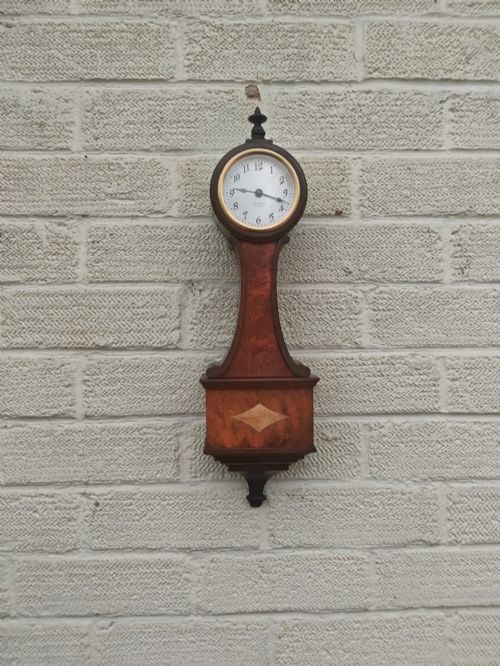
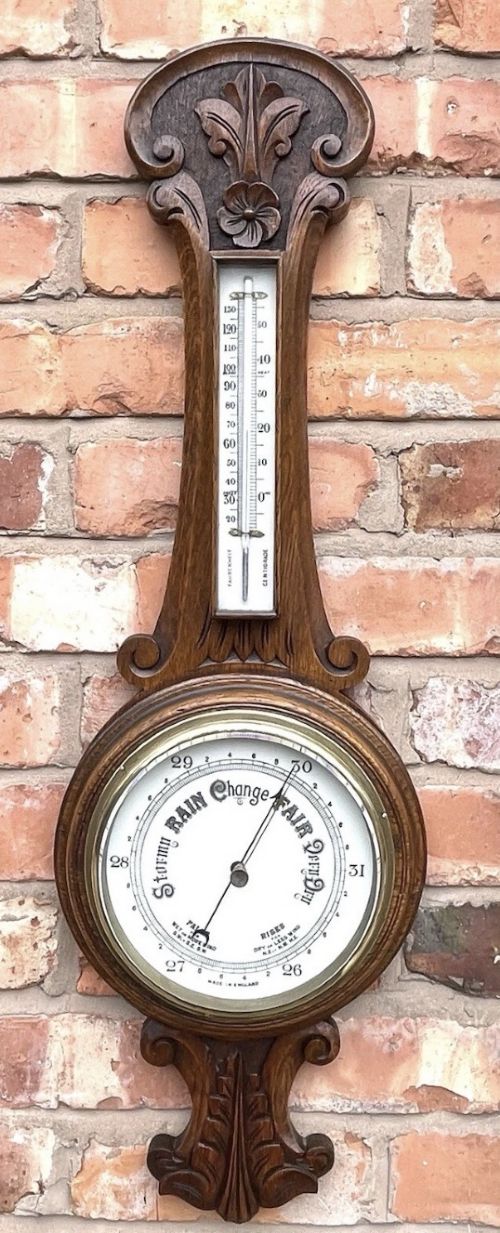
A banjo wall clock takes its name from its unmistakable long-necked silhouette, often combining a dial at the top with a trunk that houses a thermometer or barometer. These instruments appear across the nineteenth century, spanning the Regency, Victorian, and Edwardian periods in various regional interpretations.
The pieces listed on this page encompass traditional timepieces alongside multi-functional weather instruments housed in the same characteristic vertical format. Surviving examples demonstrate origins ranging from English workshops to American makers working in walnut, oak, and mahogany.
Makers and retailers adapted the basic wall-hanging shape to suit changing interior tastes, resulting in plain mahogany cases from the early nineteenth century and heavily carved oak examples from the later Victorian decades. Buyers frequently encounter variants that integrate barometers and thermometers alongside the core clock mechanism.
Materials and construction
Cabinetmakers constructed the distinctive cases using dense hardwoods such as mahogany, walnut, oak, and rosewood, often shaping the timber to create the round throat and expanded base characteristic of the form. These enclosures protect internal mechanisms while providing a substantial wooden surface for decorative carving.
Dials and bezels incorporate brass and silvered metal, protected behind glass faces that allow clear reading of the time, barometric pressure, or temperature. Movement components rely on metal engineering, while barometer tubes utilise mercury or aneroid systems to register atmospheric shifts.
Banjo Wall Clock Retail Price Guide 2026
Typical asking prices for banjo wall clock among the pieces listed under this phrase on Sellingantiques today, from the lower quarter to the upper quarter. They describe what is for sale here now, not the wider market.
Listings feature mahogany, oak, walnut, and rosewood timbers across Victorian, Edwardian, Regency, and Georgian stylistic influences.
Assessing craftsmanship and execution
The depth and crispness of the timber carving separate standard production pieces from finer workshop outputs, particularly on Victorian and Edwardian carved oak and walnut examples. Well-executed cases display sharp relief work along the trunk and bezel without softening of the decorative motifs.
The quality of the movement and the signature of the maker significantly influence the standing of an individual piece, as seen in signed examples from London and provincial centres. The integration of secondary functions such as thermometers and barometers requires precise calibration alongside reliable clockwork.
Seth Thomas·Ganthony of London·H Marks·Russell of Liverpool
The Banjo Wall Clock Glossary
- Aneroid barometer
- A barometer that measures atmospheric pressure through the expansion and contraction of a flexible metal box, avoiding the use of liquid mercury. This mechanism became common in nineteenth-century domestic instruments.
- Silvered metal
- A metal dial surface treated with a silver compound to create a matte, reflective finish that enhances the legibility of engraved numerals and inscriptions. It frequently appears on clock faces and barometer scales.
- Regency
- An English design period spanning the early nineteenth century, characterised by classical restraint and refined proportions before the heavier ornamentation of the Victorian era. Pieces from this time often favour smooth mahogany veneers.
- Dial
- The visible face of the instrument displaying numbers, graduations, or maker details behind a protective glass cover. Dials range from simple painted surfaces to finely engraved silvered metal plates.
Banjo Wall Clock: Frequently Asked Questions
What is a banjo wall clock?
A banjo wall clock is a hanging timepiece distinguished by a round dial connected to a wider lower box by a narrow trunk, frequently incorporating weather instruments.
First popularized in the early nineteenth century, the form evolved through various stylistic periods from Regency elegance to Victorian revivalism.
How do you tell the periods apart?
Early nineteenth-century examples often feature smooth mahogany veneers and restrained classical lines, whereas Victorian pieces frequently display deep oak or walnut carving.
Edwardian and later iterations continue these revivalist trends while adapting to smaller domestic scales and different regional manufacturing standards.
Were these clocks also barometers?
Many instruments housed in banjo-shaped cases combine timekeeping with barometric pressure and temperature measurement in a single vertical unit.
This multi-functional approach made them practical fixtures in nineteenth-century hallways and parlours where wall space was limited.
Where were they typically hung?
These instruments were designed for domestic wall placement in principal rooms and hallways where guests could check the time and local weather.
The secure hanging points on the wooden case allowed the pendulum and barometer mechanisms to remain plumb and operational.