


Bamboo Stick Stand Mirror
A bamboo stick stand mirror brings natural texture and practical daily function to a hallway, offering integrated storage alongside a reflective glass panel.
Bamboo Stick Stand Mirror
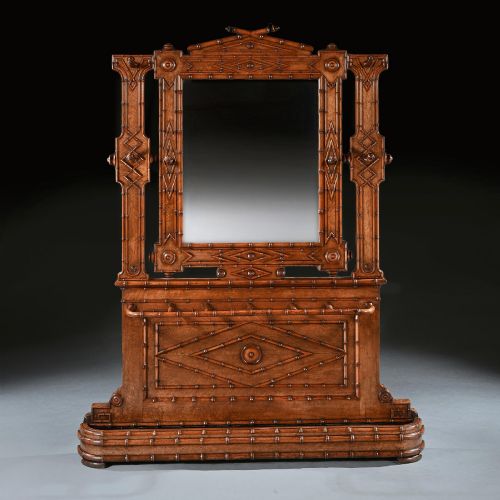
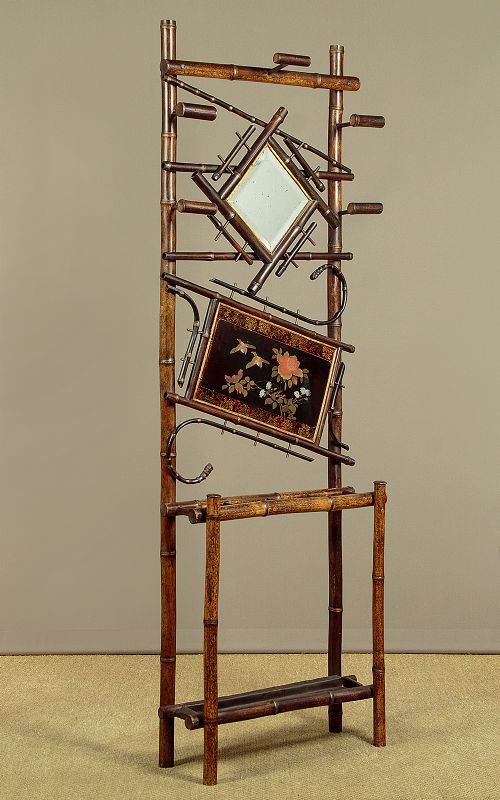
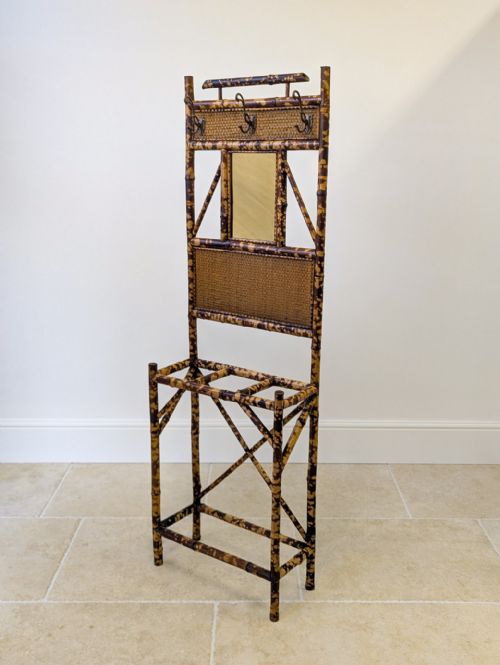
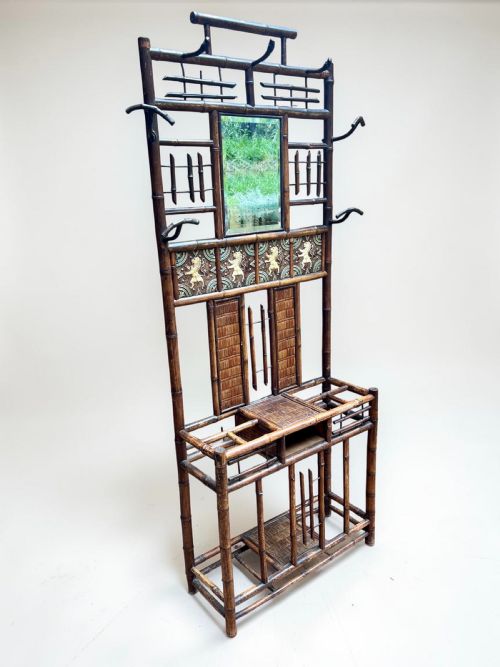
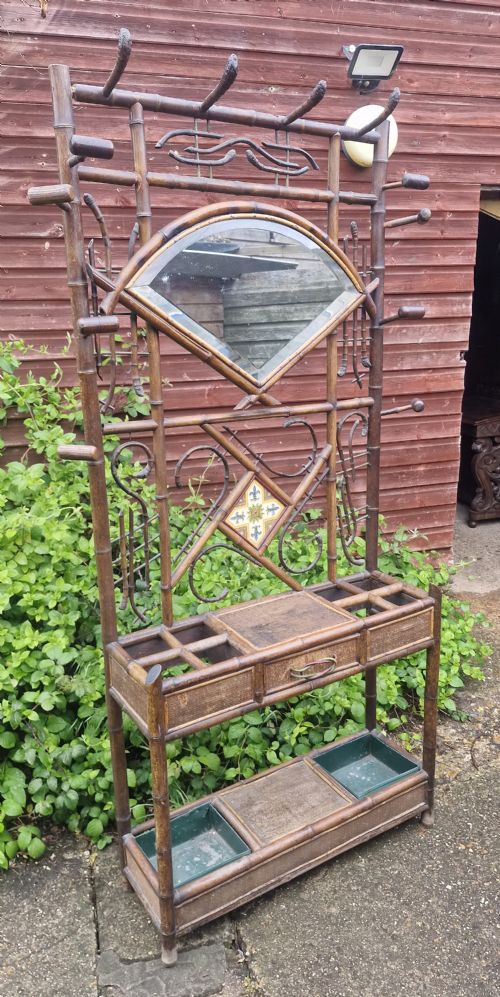
A bamboo stick stand mirror combines a tall upright frame, hanging hooks for coats or hats, a drip tray for umbrellas, and an inset mirror glass panel. These hallway pieces date primarily from the Victorian era around 1890 up to 1910.
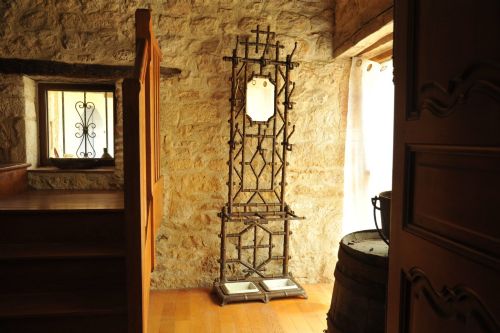
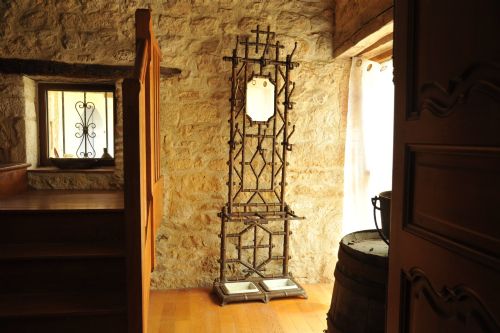
The objects appearing here span traditional natural bamboo construction and French 19th-century cast iron faux bamboo interpretations. Many align with the Aesthetic Movement or French Chateau styles, reflecting a late nineteenth-century fascination with exoticism and Japonisme.
Buyers meet both compact variants and larger hallstands designed to anchor an entrance space. Most examples integrate multiple materials to serve several utilitarian purposes within a single footprint.
How they were made
Natural bamboo stems form the structural framework of these pieces, joined securely to create lightweight yet rigid uprights for hanging garments and holding walking sticks. Artisans utilised bendable rattan elements alongside the core bamboo to add decorative bracing and woven panel details.
Makers incorporated mirror glass panels secured directly into the bamboo framework to provide a functional reflective surface at eye level. Certain French versions substituted actual bamboo with cast iron moulded meticulously to mimic jointed bamboo canes, finished to deceive the eye.
Ceramic tile inserts occasionally appear within the framework to provide a durable, moisture-resistant surface near the umbrella trays. Birdseye maple is also employed on specific panels to contrast warmly against the golden tones of the surrounding bamboo.
Some Victorian makers ingeniously used cast iron to pretend to be bamboo, proving that even heavy metals wanted to join the holiday resort aesthetic.
What varies in quality
Construction rigidity dictates the baseline quality of these stands, as natural bamboo tends to loosen or dry out over decades of use. Superior examples maintain tight joints and stable uprights that support the weight of heavy coats without listing to one side.
The intricacy of the secondary materials elevates certain pieces above standard utility items. The presence of hand-painted ceramic tiles, finely figured birdseye maple panels, or heavy original cast iron bases denotes a higher tier of manufacture.
The clarity and originality of the mirror glass contribute significantly to an individual piece's integrity. Stands retaining their original bevelled or clear mirror plates alongside matching drip trays demonstrate greater overall completeness.
The Bamboo Stick Stand Mirror Glossary
- Aesthetic Movement
- A late nineteenth-century design style that emphasised visual beauty and artistic expression over utilitarian morality. This movement embraced Japanese artistic influences.
- Japonisme
- The influence of Japanese art and design on Western decorative arts during the mid-to-late nineteenth century. It is frequently identified in furniture through asymmetric arrangements and natural motifs.
- Birdseye maple
- A decorative timber figuring resembling small, swirling eyes caused by local disruptions in the wood grain. It provides a striking contrast when set against bamboo frames.
- Hall stand
- A tall piece of entrance furniture combining clothes hooks, a mirror, and umbrella storage. These items served a practical function in nineteenth-century hallways.
Bamboo Stick Stand Mirror: Frequently Asked Questions
What is a bamboo stick stand mirror?
A bamboo stick stand mirror is a multi-purpose hallway furnishing designed to hold hats, coats, and umbrellas while incorporating a vertical mirror. These items combine structural framework with integrated storage compartments.
Most examples originate from the Victorian period and the early twentieth century. They serve as both practical entrance furniture and decorative statements.
How do I care for bamboo furniture?
Bamboo requires gentle cleaning with a dry or barely damp cloth to prevent the natural fibres from drying out or splitting. Keeping these pieces away from direct heat sources helps preserve the material.
Applying occasional light furniture wax maintains the sheen of the cane. Checking the structural joints periodically ensures the frame remains stable.
Are these stands heavy?
Natural bamboo stands are remarkably lightweight and easy to reposition within a hallway space. This lightness comes from the hollow structure of the cane itself.
Conversely, variants made from cast iron faux bamboo possess considerable weight and sturdiness. Buyers should check the primary material to understand the physical heft of the piece.
How do I date a bamboo hall stand?
Dating relies on stylistic clues such as Aesthetic Movement motifs and the presence of period mirror glass or hardware. Most catalogued examples date from around 1890 through the Edwardian period.
Construction methods, including the type of fixings and timber panels used, offer further chronological markers. French interpretations often display distinct casting techniques for their iron frames.