


Bamboo Hall Tree
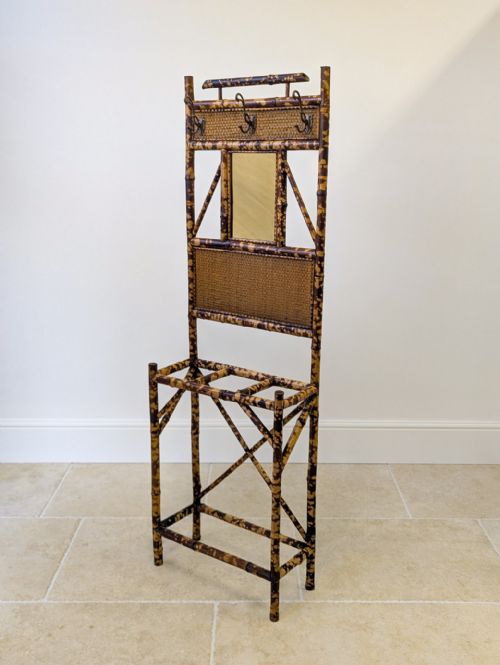
A bamboo hall tree is a practical piece of entrance furniture offering a place for hats, coats, and umbrellas.
Bamboo Hall Tree
A bamboo hall tree serves as a functional entranceway furnishing designed to hold hats, coats, and umbrellas. Pieces matching this search phrase appear mainly in Victorian and Aesthetic Movement styles, alongside French nineteenth-century interpretations.
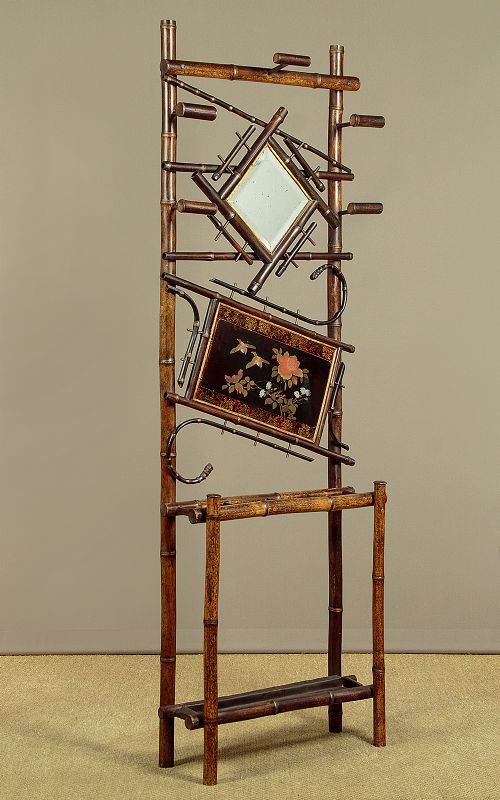
Most examples you encounter on this page date from the late nineteenth century, around 1890 to 1900, though dates stretch from 1860 to 1910. Forms include hall stands and hallstands, frequently incorporating mirrors and lacquered panels.
The aesthetic bridges British Victorian sensibilities with French design influences such as Japonisme and chinoiserie. These items deliver a striking botanical silhouette to hallway spaces.
How they were made
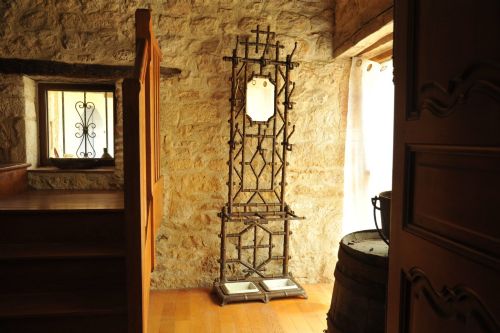
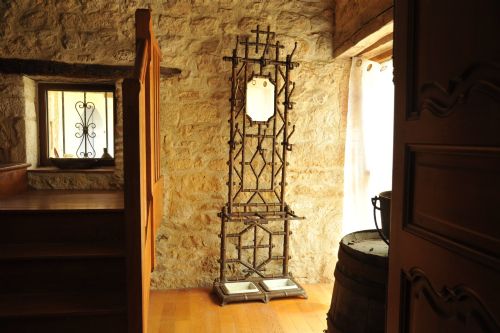
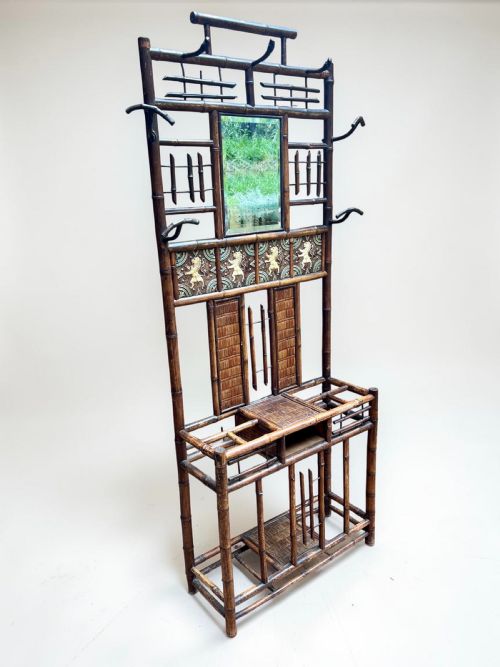
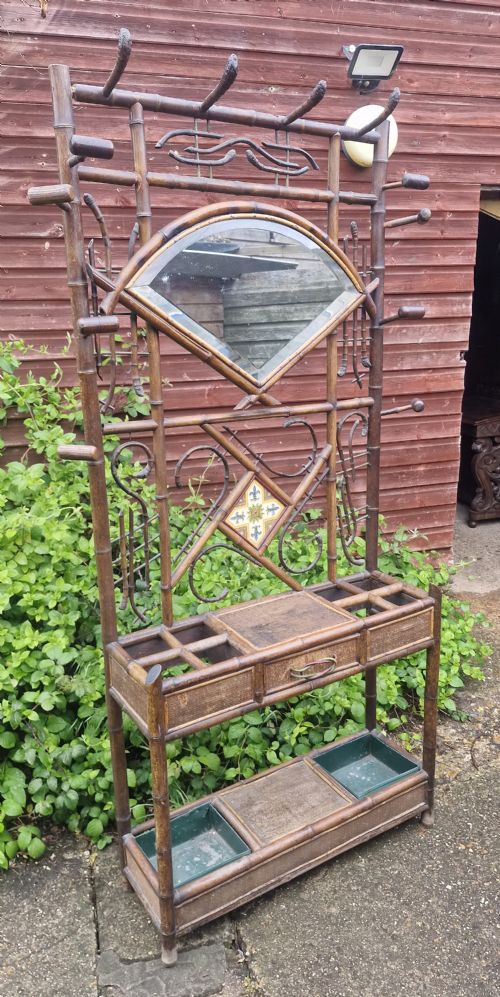
Construction relies primarily on natural bamboo, rattan, and timber, combined with structural elements of cast iron and metal. Makers utilised mirror glass for central panels and incorporated ceramic tile details into the framework.
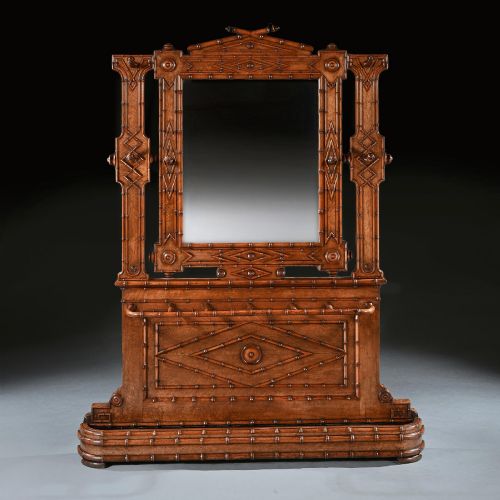
Surface decoration involves lacquer panels and faux bamboo finishes rendered on alternative timbers like birdseye maple. This marriage of organic plant stems with durable metal backings provided both lightness and strength.
Listings feature periods from the Victorian era alongside eighteen sixty, eighteen ninety, nineteen hundred, and nineteen ten.
What varies in quality
Quality depends upon the complexity of the integrated components, such as the inclusion of hand-painted lacquered panels, ceramic tiles, or bevelled mirror glass. Simpler versions rely entirely on plain bamboo and basic metal hooks.
The integrity of the structural joinery and the condition of the delicate cane work dictate the overall standard. Faux bamboo versions cast in iron demonstrate a different manufacturing ambition compared to organic plant stems.
The Bamboo Hall Tree Glossary
- Hall stand
- A piece of furniture placed in an entrance hallway designed for hanging garments and storing umbrellas. These often incorporate a mirror and drip trays at the base.
- Faux bamboo
- Furniture made from hardwoods such as maple carved or painted to resemble natural bamboo stems. This technique was popular in nineteenth-century French and English workshops.
- Japonisme
- The influence of Japanese art and design on Western decorative arts during the late nineteenth century. It appears in furniture through asymmetrical layouts and oriental motifs.
- Aesthetic Movement
- A late nineteenth-century design movement that emphasised visual beauty over narrative or moral function. It championed unconventional materials like bamboo and lacquer.
Bamboo Hall Tree: Frequently Asked Questions
What is a bamboo hall tree used for?
A bamboo hall tree serves as an entranceway organizer for hanging outdoor garments and storing wet umbrellas. The built-in hooks and compartments keep daily accessories tidy.
Many examples also feature a central mirror to check your appearance before leaving the house. They combine utility with decorative presence in narrow hallways.
How old are these hall stands?
Most pieces date from the late Victorian era and the Aesthetic Movement around eighteen ninety. Dates span from the mid-nineteenth century up to nineteen ten.
French nineteenth-century and chinoiserie examples share this same general period. Stylistic clues help distinguish between earlier and later variations.
Are they made of real bamboo?
Many examples utilise natural bamboo and rattan combined with metal framing for structural support. Other versions employ cast iron shaped to mimic plant stems.
Faux bamboo pieces use hardwoods like birdseye maple carved to resemble natural cane. Each material offers a distinct weight and texture.
What styles do they come in?
Styles range from Victorian Aesthetic Movement designs to French chateau interpretations. Japonisme and chinoiserie influences appear frequently across the selection.
Some incorporate lacquered panels and ceramic tiles alongside the primary bamboo framework. These decorative elements reflect late nineteenth-century tastes.