


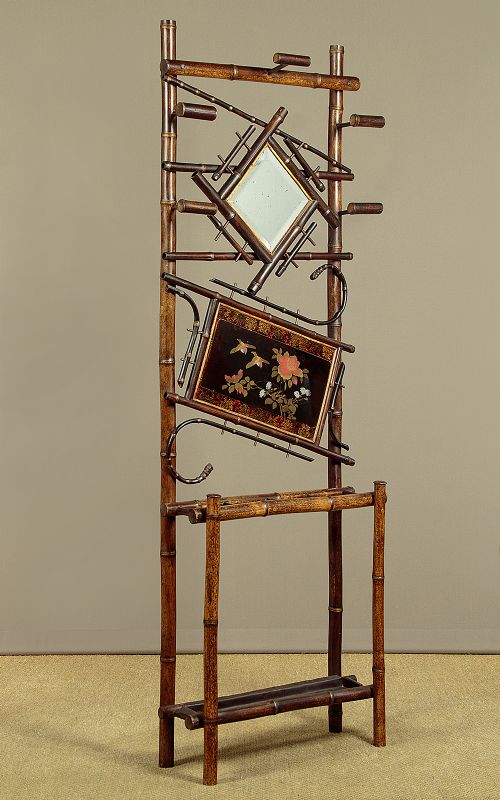


Bamboo Coat Rack Mirror
A bamboo coat rack mirror brings practical utility and natural texture to an entryway, offering a striking focal point for any hallway.
Bamboo Coat Rack Mirror
When you search for a bamboo coat rack mirror, you encounter pieces designed to organise hallways and entryways efficiently. These items combine hooks for garments, a central looking glass, and compartments for walking sticks or umbrellas.
You are most likely to meet Victorian and 1890s examples on this page. These pieces often incorporate Aesthetic Movement sensibilities or French aesthetic influences into their construction.
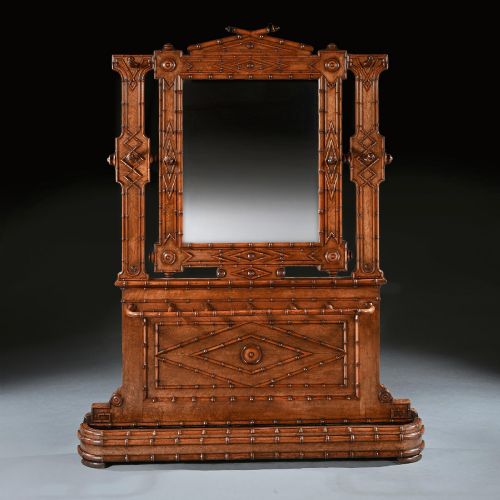
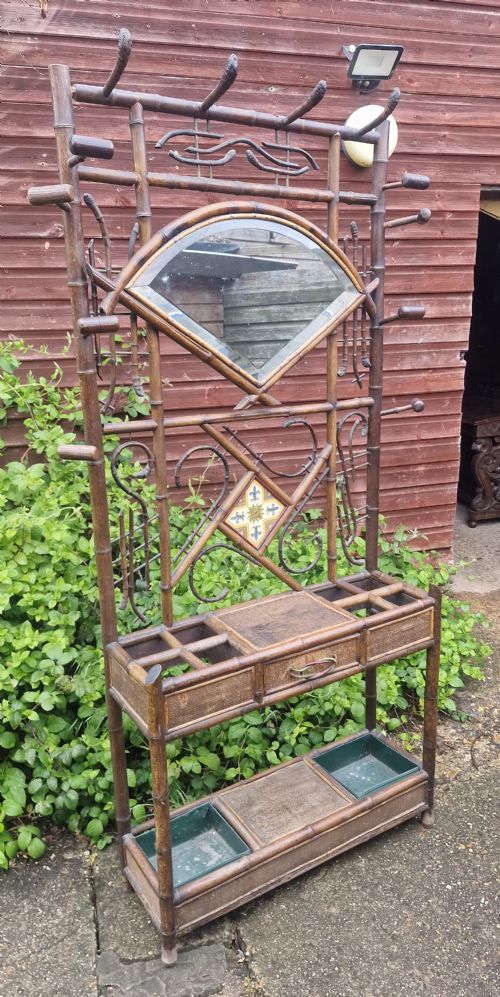
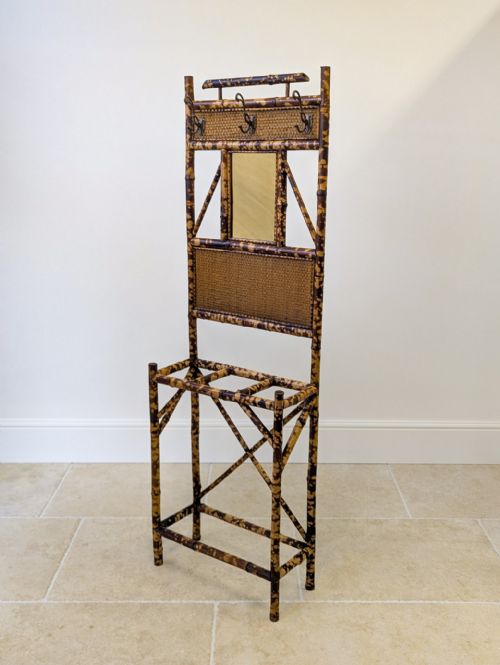
Forms range from compact small stands to larger hallstands featuring ceramic tile details or birdseye maple panels. Each variant serves the traditional purpose of receiving hats, coats, and umbrellas upon entering the home.
Materials and construction
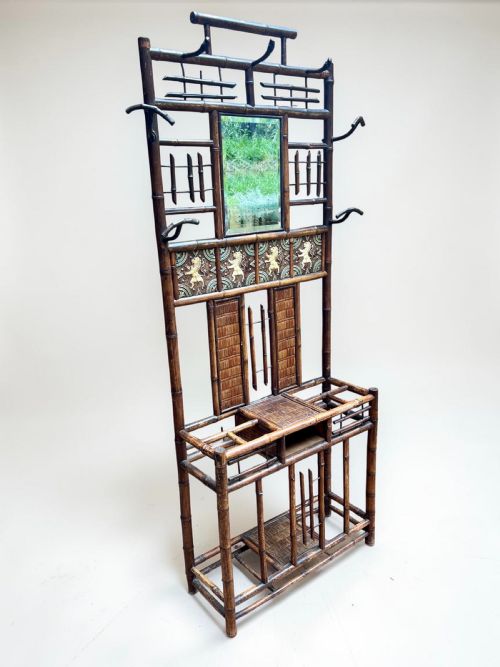
Makers utilised natural bamboo alongside rattan to build the primary structural framework of these stands. Metal and cast iron components frequently provide the necessary weight and durability for umbrella wells and heavy coat hooks.
Many items employ faux bamboo techniques, transforming woods like birdseye maple to mimic the distinctive jointed stalks. Mirror glass forms the central viewing plate, occasionally complemented by decorative ceramic tiles.
Bamboo Coat Rack Mirror Retail Price Guide 2026
Typical asking prices for bamboo coat rack mirror among the pieces listed under this phrase on Sellingantiques today, from the lower quarter to the upper quarter. They describe what is for sale here now, not the wider market.
The selection includes both natural bamboo frames and French faux bamboo examples incorporating mirror glass.
Judging the work
Quality rests upon the structural integrity of the natural or faux bamboo joints and the stability of the overall frame. Superior examples maintain a rigid stance despite holding heavy winter garments and wet umbrellas.
The refinement of auxiliary materials such as ceramic tiles, mirrored glass quality, and cast iron drip pans elevates certain pieces above standard utilitarian furniture. Aesthetic details like chinoiserie decoration also separate simpler hallstands from more ambitious works.
The Bamboo Coat Rack Mirror Glossary
- Aesthetic Movement
- A late nineteenth-century design style that prioritised visual beauty over narrative or moral purpose. It heavily influenced the dark finishes and decorative lines seen on bamboo hallstands.
- Faux bamboo
- Wood that has been carved, turned, or painted to imitate the segmented stems of natural bamboo. This technique was popular in nineteenth-century French cabinet making.
- Hallstand
- A piece of hallway furniture combining a coat rack, mirror, and umbrella stand. They were essential pieces in Victorian and Edwardian domestic interiors.
- Chinoiserie
- European artistic interpretation of Chinese and East Asian motifs. This style appears on decorative panels and lacquer work of the period.
Bamboo Coat Rack Mirror: Frequently Asked Questions
Where should I place a bamboo hall stand?
These pieces belong in an entrance hall or porch where guests arrive. They function best against a sturdy wall near the main entrance.
Positioning the stand near the door allows visitors to deposit coats and hats immediately upon entry. The integrated mirror also provides a final check before leaving the house.
How do I care for bamboo furniture?
Keep natural bamboo and rattan away from direct heat sources and excessive moisture to prevent splitting. Dust the framework regularly with a dry cloth.
Condition the wooden and bamboo surfaces occasionally with appropriate furniture wax. Avoid soaking cast iron bases or metal hooks during cleaning.
Did Victorians use faux bamboo?
Cabinet makers frequently used faux bamboo throughout the nineteenth century. This technique involved turning solid hardwoods to replicate segmented plant stems.
French workshops excelled at this method, often painting maple to resemble natural cane. These simulated pieces offered greater weight and durability than actual plant stems.
What is an Aesthetic Movement hall stand?
Aesthetic Movement pieces reflect the late nineteenth-century push for artistic design in everyday household objects. They often feature darker finishes and stylised natural motifs.
These stands prioritised elegant silhouettes and harmonious decorative details. They stand apart from heavier, highly carved Victorian furniture through their lighter, more linear construction.