








Balustroid Stem
These balustroid stem drinking vessels represent the quintessential English glass manufacturing of the eighteenth century, sought after by collectors for their substantial weight and architectural profiles.
Balustroid Stem
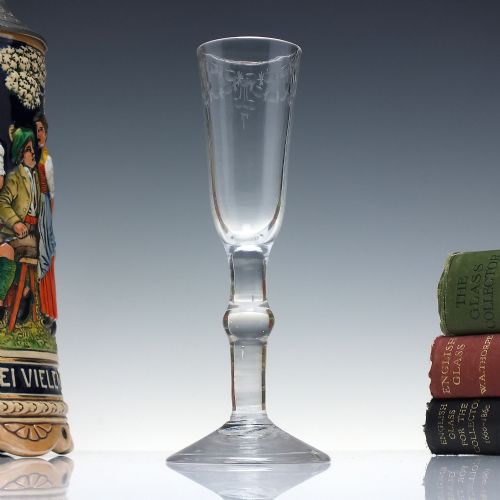
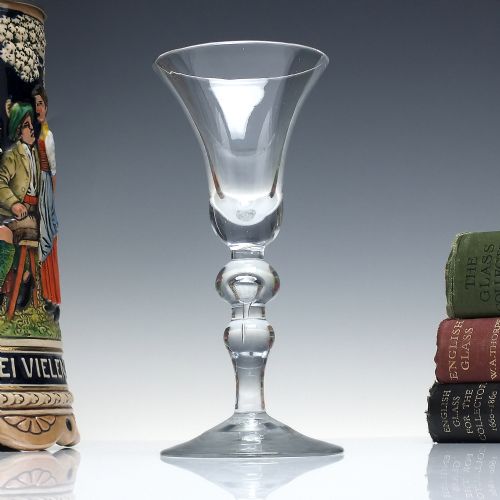
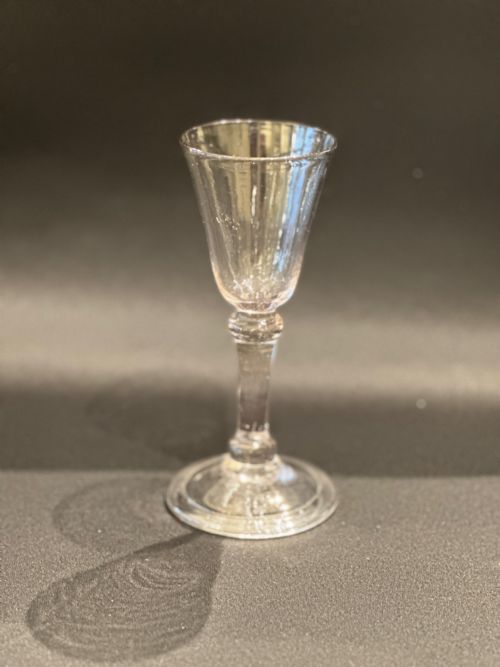
When you search for balustroid stem, you encounter Georgian glassware originating from the eighteenth century, specifically stemware produced during the reigns of George II and the broader Georgian period. The form bridges the heavier seventeenth-century baluster glasses and the lighter drawn trumpet stems that followed later.
You will mostly meet wine glasses, gin glasses, ale glasses, and ratafia glasses on this page. These pieces often feature specific bowl shapes such as bell or ogee forms, supported by characteristic baluster-derived stems that carry distinct nodes or knops above folded or domed feet.
The English examples recorded here span from approximately 1730 to 1750. They display both plain stem variations and those decorated with intricate engravings like hop and barley motifs or swag and tail patterns.
How they were made
The makers utilised lead glass, flint glass, and hand-blown lead crystal to achieve the dense, refractive quality characteristic of the period. Working with molten metal required skilled manipulation to form the thick balustroid stems and heavy feet necessary for stability.
Foot construction often involved folding the rim under to create a thickened edge, or blowing the metal into a domed profile for added elevation. Surface decoration was applied by hand, utilising wheel engraving techniques to etch detailed botanical patterns such as hops and barley directly onto the glass bowls.
Balustroid Stem Retail Price Guide 2026
Typical asking prices for balustroid stem among the pieces listed under this phrase on Sellingantiques today, from the lower quarter to the upper quarter. They describe what is for sale here now, not the wider market.
All listed pieces are attributed to the eighteenth century and the Georgian period, executed in lead glass, flint glass, and hand-blown lead crystal.
What varies in quality
The distinction between ordinary and superior examples lies in the proportion and crispness of the stem formation. A well-balanced knop and a correctly weighted foot demonstrate the glassmaker's command over the molten material.
Engraving quality also sets pieces apart, with finer depth and precision in the wheel-cut details elevating the status of items like the Kit Kat or engraved wine glasses. The clarity of the lead crystal and the absence of heavy clouding further determine the desirability of individual drinking vessels.
The Balustroid Stem Glossary
- Balustroid
- A stem form resembling an architectural baluster, narrower and lighter than earlier seventeenth-century baluster stems. It typically incorporates a knop or series of swelling nodes beneath the bowl.
- Folded foot
- A base edge turned underneath while hot to create a smooth, double-layered rim. This technique added strength and weight to the base of eighteenth-century drinking glasses.
- Domed foot
- A raised, convex base rising towards the centre where it meets the stem. This profile provides architectural height and improved stability for heavier glasses.
- Ratafia glass
- A narrow, fluted or straight-sided drinking vessel designed for sweet cordial or fruit-infused liqueurs. They date predominantly from the Georgian period.
- Kit Kat
- A specific proportion of wine glass featuring a tall, slender bowl and a balanced balustroid stem. The term relates to the glassware associated with the Kit Kat club of the eighteenth century.
Balustroid Stem: Frequently Asked Questions
How do I date a Georgian glass?
Dating involves examining the metal composition, the manufacturing technique of the foot, and the profile of the stem. Earlier pieces from the seventeen-thirties often display heavier proportions and folded feet.
Later eighteenth-century examples tend towards lighter forms and different bowl configurations. Engraving styles and tool marks also offer reliable clues to the decade of manufacture.
Were these glasses used daily?
These vessels served as dining table glassware for wine, ale, gin, and cordials among the Georgian gentry. Their robust lead glass construction made them suitable for regular use at social gatherings.
Over time, many surviving pieces transitioned from functional tableware into cabinet collections. Their sturdy lead crystal fabric has allowed them to endure for centuries.
Why does the foot have a fold?
Glassmakers folded the rim of the foot underneath while the metal was still hot to add weight and structural reinforcement. This technique prevented chipping along the vulnerable edge during regular tavern or dining use.
A folded foot is a common characteristic of eighteenth-century English stemware and helps confirm the period of manufacture.