



Baluster Turned Legs Table
These baluster turned legs table pieces combine heavy timber frames with robust, shaped supports built for enduring domestic service.
Baluster Turned Legs Table
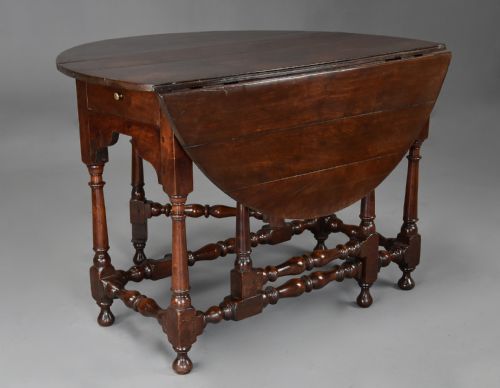
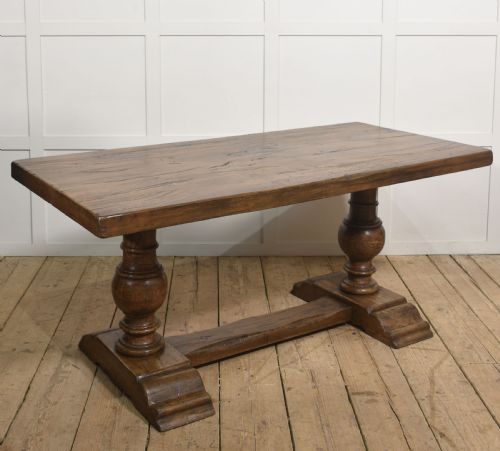
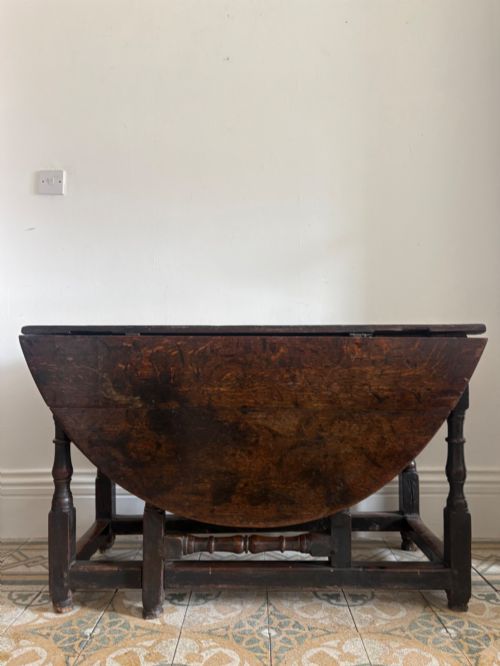
A baluster turned legs table relies on distinctive lathe-shaped pillar supports that taper and swell along their length. The selection on this page ranges from early gateleg forms to refectory and dining formats spanning several centuries.
Makers in various periods adopted this leg form for large dining tables, centre tables, and kitchen boards. Oak and walnut dominate the construction, providing the structural mass needed to anchor the turned uprights.
Early examples display seventeenth-century and eighteenth-century origins with plank tops, while later revival pieces from the Victorian and Edwardian eras adapt the traditional turning to newer domestic functions.
Construction and materials
Joiners fashioned these tables primarily from solid oak and walnut, utilising heavy timber planks for tops and sturdy stretchers for base stability. Turning the baluster legs required a lathe and precise hand chisel work to achieve the characteristic swelling profile.
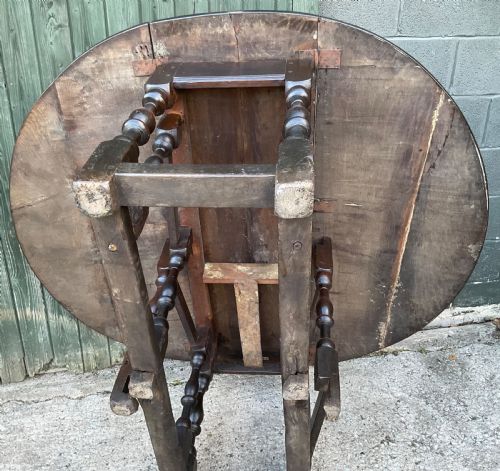
Early pieces incorporate pegged joints and gateleg folding mechanisms to support drop leaves, while later nineteenth-century and twentieth-century workshop methods introduced alternative framing while retaining the classic turned leg silhouette.
Baluster Turned Legs Table Retail Price Guide 2026
Typical asking prices for baluster turned legs table among the pieces listed under this phrase on Sellingantiques today, from the lower quarter to the upper quarter. They describe what is for sale here now, not the wider market.
Listings feature oak and walnut predominantly, alongside alternative timbers such as rosewood and iron across dining, coffee, and centre table forms.
Judging quality and character
Quality rests in the crispness of the lathe turning and the harmonious proportion between the heavy top and the supporting pillars. Superior examples display mature timber patination earned through centuries of use rather than applied finishes.
The integrity of the structural joints and the retention of original timber components distinguish better pieces from later restorations or marriages of disparate parts.
The Baluster Turned Legs Table Glossary
- Baluster
- A vertical pillar or column that swells in thickness along its shaft, commonly turned on a lathe. This form provides the defining structural support for the legs in this category.
- Gateleg
- A table with hinged drop leaves supported by movable legs that swing out like a gate. This mechanism allows a compact frame to expand significantly for dining.
- Refectory
- A long, narrow dining table traditionally used in communal monastic halls. These heavy boards utilise substantial stretcher bases to maintain rigidity.
- Patina
- The surface sheen and colour developed by wood over long periods through oxidation, handling, and wax polishing. A deep patina indicates considerable age and honest use.
Baluster Turned Legs Table: Frequently Asked Questions
How do I date an oak table?
Dating relies on examining the joinery methods, tool marks left by makers, and the natural ageing of the timber. Early pieces often feature pegged mortise and tenon joints alongside hand-planed plank surfaces.
Later revival interpretations from the Victorian and Edwardian eras typically incorporate standardised fixings and machine-assisted turning while emulating earlier styles.
How were gateleg tables used?
Gateleg tables served as versatile furniture items in historical homes where floor space was valuable during non-meal times. The drop leaves remained folded down against a wall until dining or gathering required an expanded surface.
Swinging the hinged leg frames outward locked the leaves into a stable horizontal position for daily activities.
How do I care for antique wood?
Antique wood requires stable indoor humidity levels and protection from direct heat sources to prevent timber splitting. Regular application of traditional beeswax helps nourish the grain and preserve the surface sheen without building up synthetic residues.
Avoiding moisture exposure ensures the historical finish and structural joints remain intact for future years.