






Baluch Rug Bag
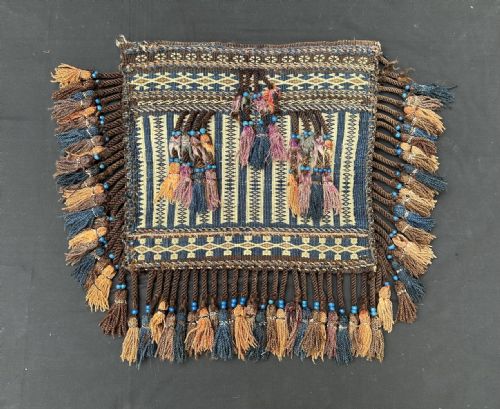
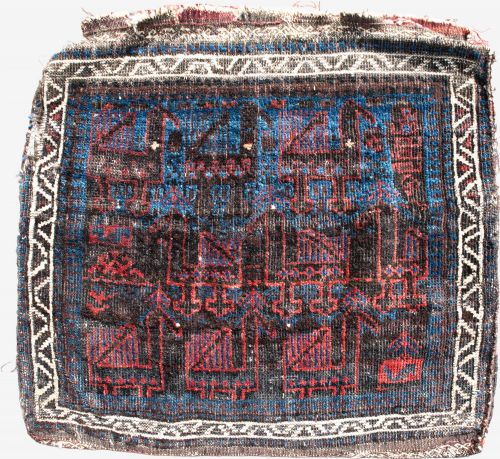
These baluch rug bag pieces are nomadic woven storage containers and faces crafted with wool and natural dyes by tribal makers.
Baluch Rug Bag
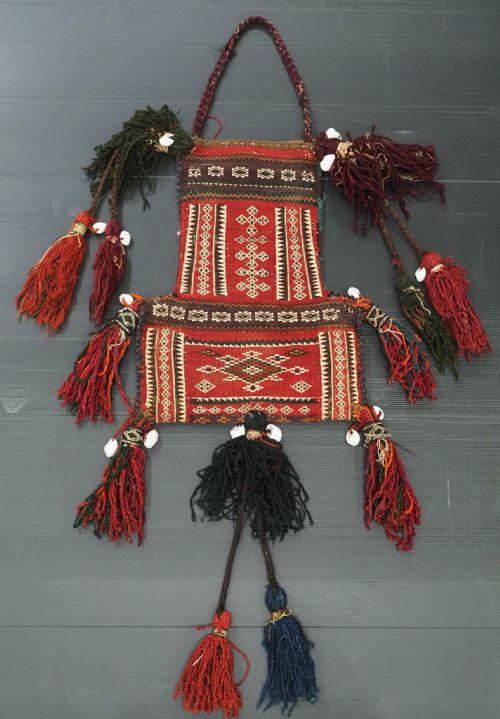
A baluch rug bag represents a functional nomadic textile created by tribal makers across regions spanning Afghanistan, Persia, and Khorassan. When searching for a baluch rug bag, buyers encounter varied forms including storage pieces, vanity bags, salt bags, saddle bag faces, and cushions.
The pieces listed now originate primarily around nineteen hundred, alongside examples from eighteen ninety, nineteen ten, and nineteen twenty. They serve distinct domestic functions within nomadic life, from grain storage to personal vanity items and salt containers.
Tribal classifications within the evidence attribute these items to specific groups such as the Salar Khani, Timuri, and Zaggar Mengal. Each piece displays traditional nomadic styles described as tribal, Baluch tribal, Persian tribal, or nomadic tribal.
Materials and construction
Makers constructed each baluch rug bag predominantly using wool, supplemented by cotton and goat hair for structural integrity. Natural dyes provide the colour palette across the woven surfaces.
Certain examples incorporate decorative elements such as glass beads and cowrie shells alongside woven structures like plain weave backs and banded weft work designs.
Baluch Rug Bag Retail Price Guide 2026
Typical asking prices for baluch rug bag among the pieces listed under this phrase on Sellingantiques today, from the lower quarter to the upper quarter. They describe what is for sale here now, not the wider market.
Current listings feature materials including wool, cotton, goat hair, glass beads, natural dyes, and cowrie shells across pieces dated between eighteen ninety and nineteen twenty.
Assessing quality in nomadic textiles
Quality in a baluch rug bag rests upon the fineness of the weave, the clarity of natural dyes, and the preservation of original backs. Pieces retaining complete structural elements display superior craftsmanship.
The complexity of traditional motifs, such as the Herati pattern, tile designs, and bird representations, distinguishes finer tribal weaving. Condition of secondary materials like goat hair and applied shell or beadwork further separates examples.
The Baluch Rug Bag Glossary
- Baluch tribal
- A descriptive style associated with nomadic weavers originating from border regions of Persia and Afghanistan.
- Plain weave
- A fundamental textile construction technique where warp and weft threads cross alternately to create a flat surface.
- Namakdan
- A traditional Persian term specifically denoting a salt bag utilised by nomadic groups.
- Herati design
- A classic repeating geometric floral pattern featuring a central rosette flanked by curved leaves.
- Pushti face
- The decorative front panel of a small rug or cushion harvested from a larger woven container.
Baluch Rug Bag: Frequently Asked Questions
What is a baluch rug bag used for?
Nomadic groups utilised these woven containers for practical storage needs including grain, salt, and personal vanity items. They functioned as portable storage within tents and temporary settlements.
Saddle bag faces and smaller storage pieces also served decorative or utility roles in daily nomadic transport and domestic life.
How do I date a baluch rug bag?
Dating relies on examining the materials, natural dye usage, and structural wear consistent with turn of the twentieth century production. Most pieces date from eighteen ninety to nineteen twenty.
Tribal attributions and specific weaving structures help place examples within this historical manufacturing window.
How should I display a baluch rug bag?
These textiles can be mounted flat on walls as textile art or utilised as small cushions depending on their construction. Preserving original backs and fragile elements requires careful handling.
Keeping them away from direct sunlight protects the natural dyes used in their creation.