






Balkan Oriental Rug
These balkan oriental rug pieces deliver rich folk geometry and regional warmth into a room.
Balkan Oriental Rug
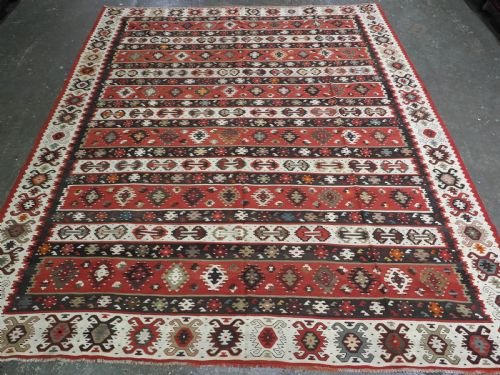
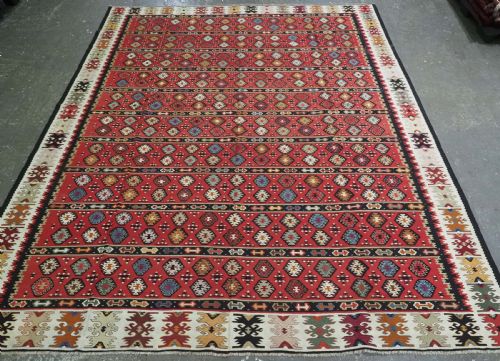
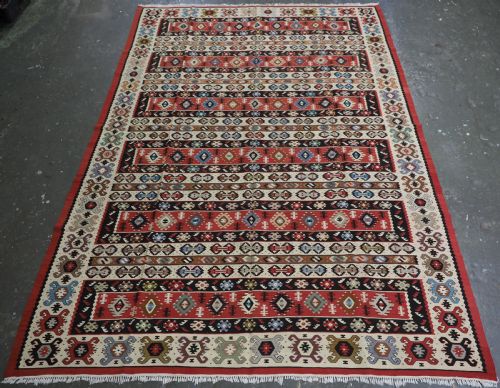
When a buyer searches for a balkan oriental rug, they encounter flatwoven and pile textiles originating from the late nineteenth and early twentieth centuries. The selection centres on specific regional forms such as Sarkoy kilims, Pirot kilims, and Monastir prayer rugs.
The most common version met on this page is the early twentieth-century Sarkoy or Pirot kilim, often displaying banded, repeat medallion, or flowering tree designs. These rugs reflect traditional Balkan and Ottoman visual vocabularies passed down through generations of weavers.
Origins span across Balkan Folk Art, Ottoman Balkan, and traditional Anatolian styles, capturing a distinct intersection of European and Middle Eastern textile traditions. Pieces range from intimate prayer formats to large room sizes suited for expansive floor spaces.
How they were made
Weavers constructed these textiles predominantly using wool and cotton, combining durable wool pile or flatweave structures with sturdy cotton foundations where required. Natural dyeing traditions yielded the soft reds, warm tones, and pastel colours seen across the pieces.
The construction relies on traditional slit-weave and banded techniques that allow sharp geometric transitions and intricate botanical motifs. Skilled hands executed these flatweaves and pile rugs to withstand daily domestic utility while maintaining decorative refinement.
Listings span production dates from eighteen-sixty through nineteen-thirty, focusing on wool and cotton textiles.
What varies in quality
The hierarchy of quality rests on the crispness of the design, the complexity of motifs such as lattice or flowering trees, and the subtlety of the colour palette. Pieces with scarce layouts and harmonious soft colours occupy the upper tier of the range.
Scale and structural preservation further distinguish the examples, particularly in large room sizes where maintaining geometric symmetry across a broad surface demands exceptional weaver discipline. The retention of original dimensions and vibrant yet soft hues marks superior execution.
The Balkan Oriental Rug Glossary
- Kilim
- A flatwoven textile produced without a pile, traditionally used as a floor covering or wall hanging. These rugs achieve their patterns through interlocking weft threads.
- Pirot
- A town renowned for producing distinctive kilims characterised by dense geometric motifs and crisp regional designs. Pirot pieces often share stylistic traits with Sarkoy weaving.
- Sarkoy
- A regional designation for flatweaves originating from the Balkan region, noted for traditional all-over patterns and banded compositions. These textiles display a distinct blend of Ottoman and local folk aesthetics.
- Prayer rug
- A small format rug featuring a mihrab or niche design used historically for ritual prayer. Monastir examples represent this specific devotional form within the Balkan tradition.
- Banded design
- A decorative arrangement featuring horizontal stripes or bands filled with geometric or floral motifs. This layout structures the field of many traditional kilims.
Balkan Oriental Rug: Frequently Asked Questions
What is a balkan oriental rug?
A balkan oriental rug is a woven textile, typically a kilim or prayer rug, originating from southeastern Europe and influenced by Ottoman traditions.
These pieces feature distinctive folk art motifs, geometric layouts, and regional colour palettes created by traditional makers.
How were these rugs used originally?
Historically, these textiles served practical functions as floor coverings, wall hangings, and dedicated prayer mats within domestic spaces.
Their durable wool construction allowed them to endure daily household wear while adding warmth and colour to interiors.
How do I live with a kilim?
Placing a suitable underlay beneath the flatweave helps secure it on smooth floors and prevents unnecessary friction against the fibres.
Keeping the textile out of direct, harsh sunlight preserves the soft reds, pastels, and natural dyed tones over time.
How do I tell different regional types apart?
Regional attribution relies on observing specific structural traits, such as the prayer niche in a Monastir or the distinct banded layouts in Sarkoy and Pirot kilims.
Motif vocabulary, such as repeat medallions versus flowering trees, also points toward the specific background of the weaving.