
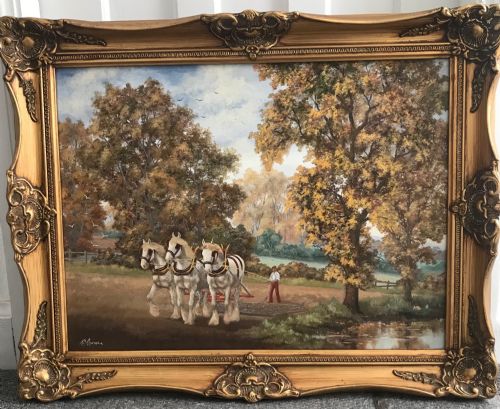
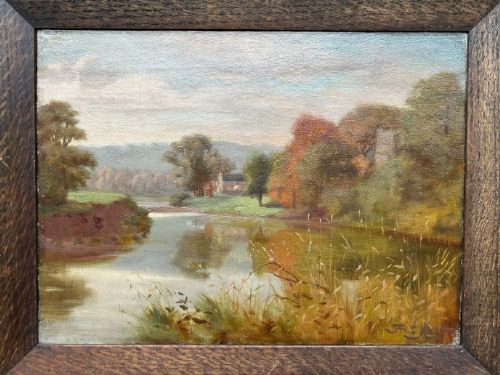
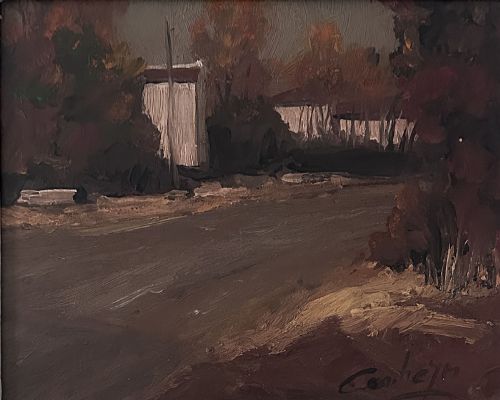
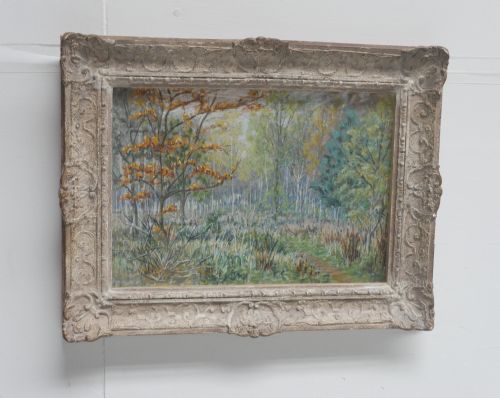
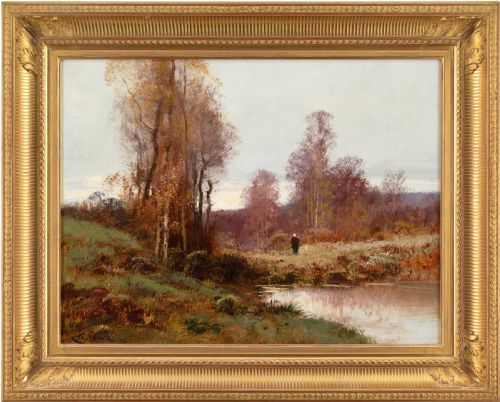


Autumn Landscape Artwork
When you search autumn landscape artwork, you encounter painted scenes of seasonal countryside, rivers, and woodlands from the Victorian era through the mid-twentieth century.
Autumn Landscape Artwork
When you search autumn landscape artwork, you meet framed wall art capturing rural seasonal changes, farming fields, and river valleys. These works record seasonal transformations across British and French countryside settings.
The pieces on this page span the late nineteenth century, the Edwardian period, and mid-century modern decades up to the 1960s. You find works grouped under Victorian Realism, British Impressionism, and traditional country styles.
Object forms vary between large oil paintings on canvas or wood panel and delicate watercolours or pastels on paper under glass. Many bear signatures from period artists working within regional schools.
How they were made
Makers utilised oil paint applied thickly or thinly to stretched canvas, wood panels, and paper supports. Canvas pieces often show heavy texture from brushwork and palette knives.
Watercolour and pastel works on paper employ fluid washes and dry pigments to render soft atmospheric effects in woodland and river scenes. These paper works are preserved behind protective glass.
Substantial works rely on sturdy wooden stretchers and original frames that contain the weight of oil on canvas compositions.
Listings include Victorian Realism, British Impressionism, and Expressionist styles applied to rural subjects.
What varies in quality
Execution separates standard decorative pieces from accomplished works by named artists. The handling of natural light, shadow, and seasonal foliage determines the depth of the composition.
Condition of the painted surface and original backing materials influences the integrity of the piece. Intact brushwork without heavy craquelure or pigment loss preserves the visual impact of the landscape.
Provenance and legible signatures connect specific works to recognised regional painters and established schools of art.
Frederick Marriott·Charles Clair·Samuel Timmins·Arthur Herbert Rigg·Owen Bowen·William Mellor·Walter Follen Bishop·Edmund George Warren·Berthe des Clayes·John Falconar Slater·Robert Lesley Howey·Charles James Adams·Frederick W Jackson·Ernest Higgins Rigg·J McIntyre·George Sykes·Ernest Moore·Augustus William Ennes·Everett W Mellor·Fred Merriman·Frederick J Haycock·Percy Lancaster·Charles Ashmore
The Autumn Landscape Artwork Glossary
- Oil on Canvas
- A painting medium where pigments suspended in drying oil are applied to woven fabric stretched across a wooden frame. This combination allows for rich colour blending and textured brushwork.
- Watercolour Painting
- Artworks created using water-soluble pigments on paper supports. They produce translucent washes that capture delicate light effects.
- Wood Panel
- A rigid wooden board utilised as a sturdy support for oil paintings before canvas became dominant. These panels offer a smooth, stable surface for fine detail.
- British Impressionism
- An artistic movement focusing on everyday scenes, natural light, and loose brushwork adapted from French practices. Artists working in this style prioritize outdoor observation.
- Victorian Naturalism
- A nineteenth-century approach emphasising detailed observation of the natural world and rural life. These works depict specific countryside locations with high fidelity.
Autumn Landscape Artwork: Frequently Asked Questions
What periods do these artworks cover?
The listings span from the nineteenth century and the Victorian era through Edwardian times and mid-century twentieth-century decades.
You encounter works created across various decades up to the 1960s, reflecting changing artistic movements over time.
How are watercolours framed?
Watercolour paintings and pastels on paper are protected behind glass to prevent atmospheric damage to the delicate pigments.
Paper works require this barrier because moisture and dust degrade unsealed water-soluble paints.
What subjects appear in these scenes?
Common subjects include rural farming fields, river valleys, woodland clearings, and country homes during the autumn season.
Artists frequently painted specific locations across British and French landscapes, capturing changing seasonal foliage and rural activities.
How do oil paintings differ from watercolours?
Oil paintings utilise heavy pigments on canvas or wood panels, creating textured surfaces that do not require glass protection.
Watercolours rely on transparent washes on paper and need glass glazing to safeguard the delicate medium.