



Austrian Ceramic Figurine
An austrian ceramic figurine brings expressive figural modelling and rich period character to a room, ranging from grand portrait busts to charming domestic animals.
Austrian Ceramic Figurine
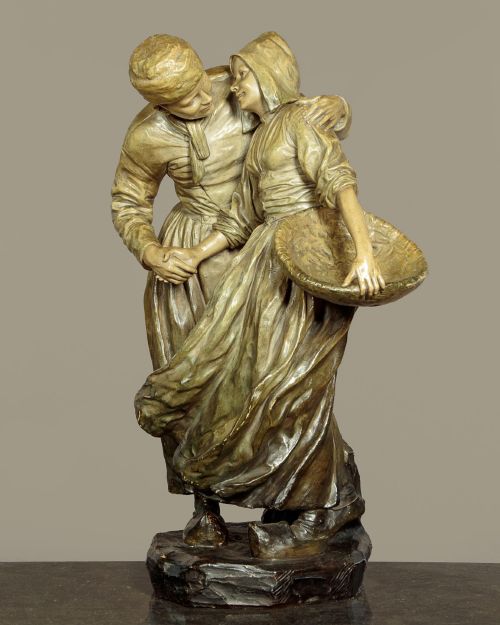
When you search for an austrian ceramic figurine, you are looking at expressive figural sculpture produced primarily during the late nineteenth and early twentieth centuries. These works span decorative spill vases, powder jars, and substantial portrait busts created by notable Viennese makers.
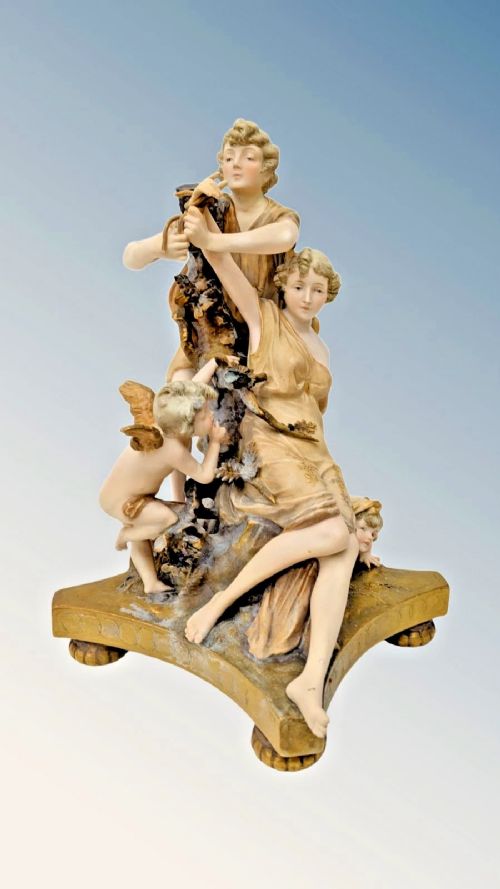
The pieces appearing on this page showcase distinct stylistic movements, moving from ornate Victorian and Neoclassical themes through flowing Art Nouveau curves to geometric Art Deco designs. You will encounter female maidens, mythological groups, and life-size animal studies.
Terracotta and earthenware dominate the selection, often finished with polychrome pigment, bronze slip cast treatments, or gilt accents. Porcelain also appears in delicate decorative figures and figural jars.
How they were made
Makers utilised slip casting and terracotta moulding techniques to shape detailed forms in earthenware and clay. Artisans then refined the surface texture by hand before applying pigments, metallic bronze slip, and gilt highlights.
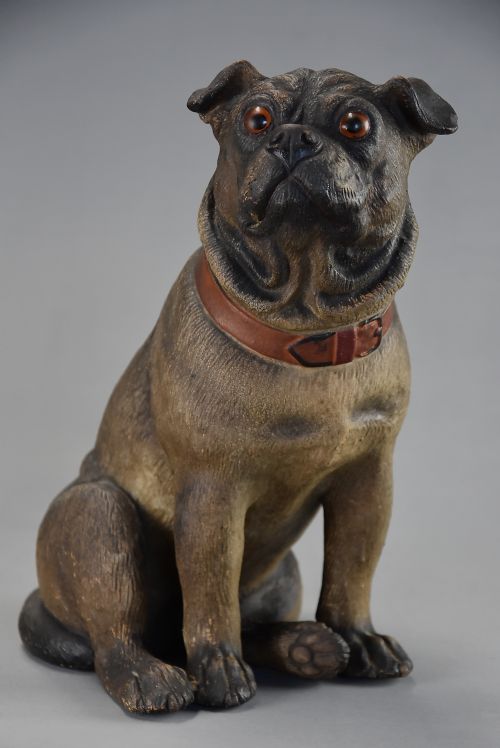
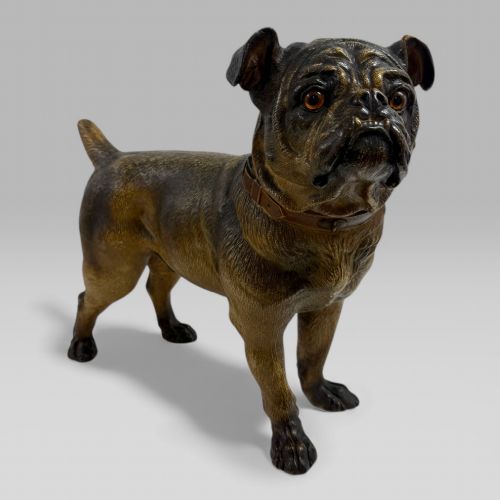
Life-size terracotta pug dogs sit heavily on ceramic floors, guarding Victorian parlours with solemn ceramic dignity.
What varies in quality
Surface finish and original polychrome or bronzed slip preservation dictate the visual impact of a piece. Applied pigments and gilt details executed with high fidelity elevate the decorative presence of the ceramic body.
Goldscheider·Friedrich Goldscheider·Ernst Wallace·Ernst Wahliss·Bernard Bloch·Ernst Whaliss
The Austrian Ceramic Figurine Glossary
- Terracotta
- A porous fired clay body that provides a robust medium for detailed figurative sculpture. It serves as the primary base for many nineteenth-century Austrian animal and human figures.
- Slip cast
- A manufacturing method where liquid clay slip is poured into a plaster mould to create hollow ceramic forms. This technique allowed makers to produce intricate undercuts and complex shapes efficiently.
- Spill vase
- A hollow decorative container designed to hold wooden splints used for lighting fires or pipes. These functional items often incorporated figural sculpture into their vertical design.
- Polychrome
- The practice of decorating sculptural surfaces with multiple colours of paint or pigment. It brings lifelike warmth to terracotta skin tones and garments.
- Gilt
- A thin layer of gold applied to ceramic or metallic slip surfaces to highlight decorative details. It adds reflective contrast against matte terracotta bodies.
Austrian Ceramic Figurine: Frequently Asked Questions
What periods do these pieces date from?
The selection spans from the late nineteenth century through to the early twentieth century, encompassing Victorian, Art Nouveau, and Art Deco movements. Most examples date between eighteen-eighty and nineteen-thirty.
Production methods shifted over these decades from naturalistic terracotta animal studies and classical figures towards stylised earthenware and porcelain vanity items.
How do I identify Art Nouveau styling?
Art Nouveau pieces feature organic motifs, flowing long hair, draped scarves, and asymmetrical compositions inspired by natural forms. Female figures often display gentle postures integrated with floral or aquatic elements.
Makers utilised these sinuous lines to transform functional objects like spill vases and powder jars into expressive sculptural works.
Where were these ceramics manufactured?
Production centred primarily in Vienna, Austria, which housed prominent ceramic manufactories and studios during the late nineteenth and early twentieth centuries. These workshops employed skilled modellers and sculptors.
Export markets across Europe and beyond embraced these distinctive terracotta and earthenware sculptures for domestic interior decoration.
How should I clean my figurine?
Dust surfaces gently with a soft, dry brush to prevent particulate buildup within the textured terracotta or painted details. Avoid liquid cleaners that might disturb delicate pigments or bronze slip finishes.
Display the piece away from direct moisture and handling to preserve the original surface patination and polychrome decoration.