

Asian Urn Table
These pieces brought together under the heading of an asian urn table include carved hardwood stands and converted vase lamps spanning the nineteenth and early twentieth centuries.
Asian Urn Table
When searching for an asian urn table, buyers encounter a mix of low hardwood stands, marble top plant supports, and table lamps fashioned from older vases. The selection draws primarily from late nineteenth and early twentieth century production, bridging Qing Dynasty Chinese pieces and Meiji Period Japanese works.
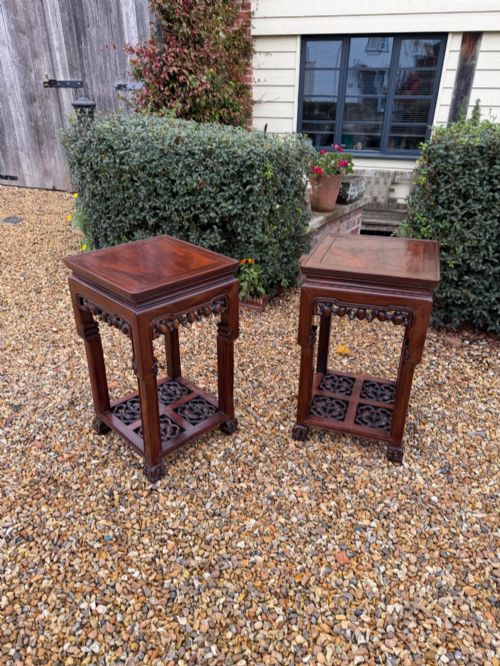
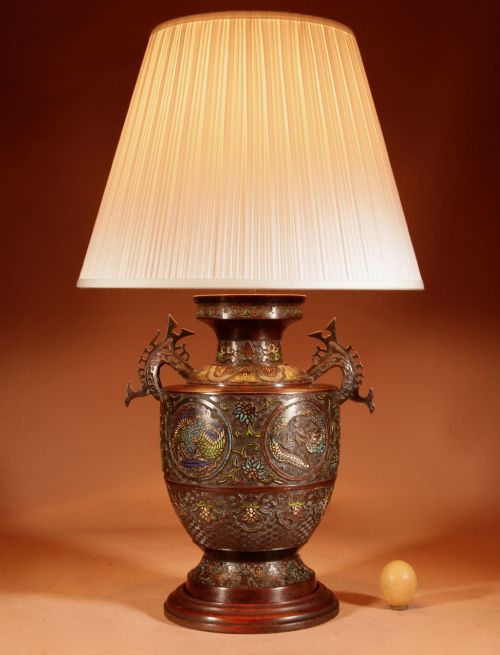
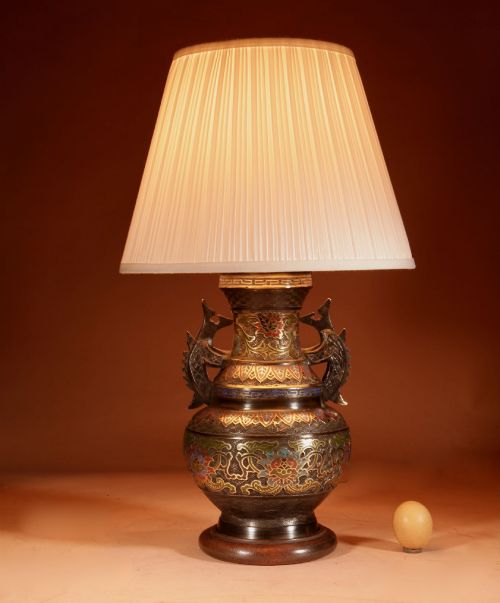
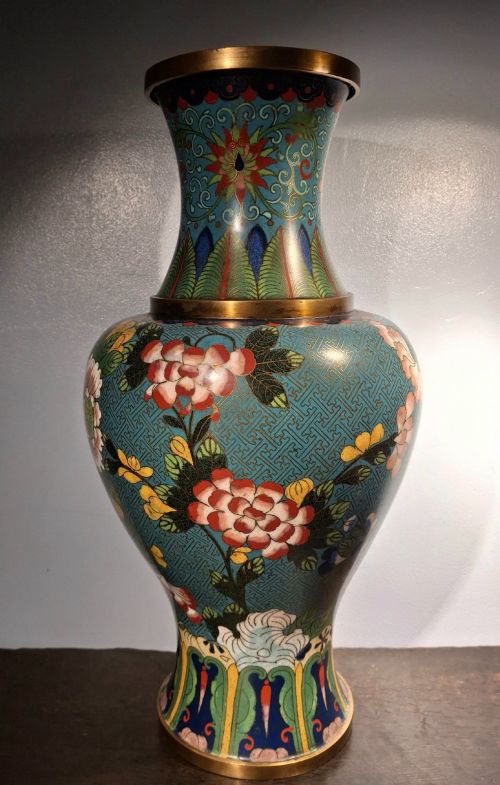
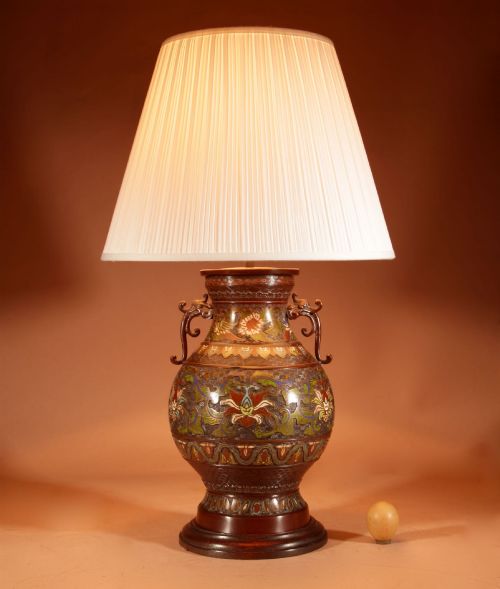
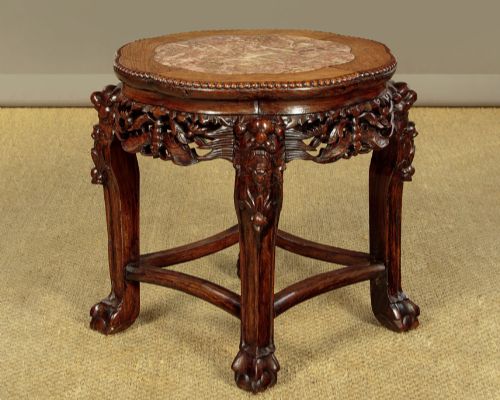
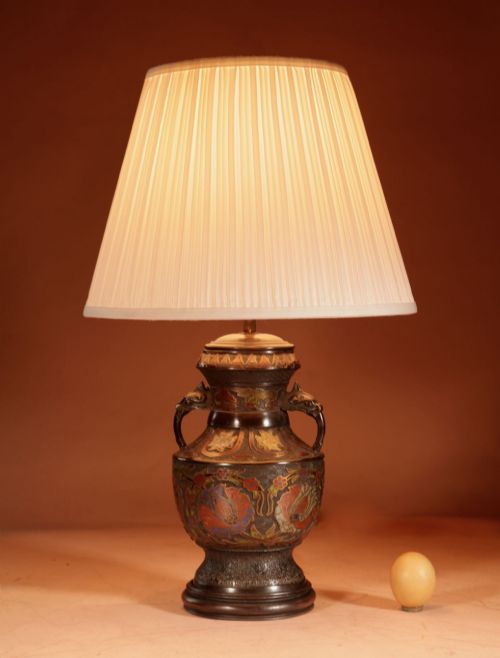
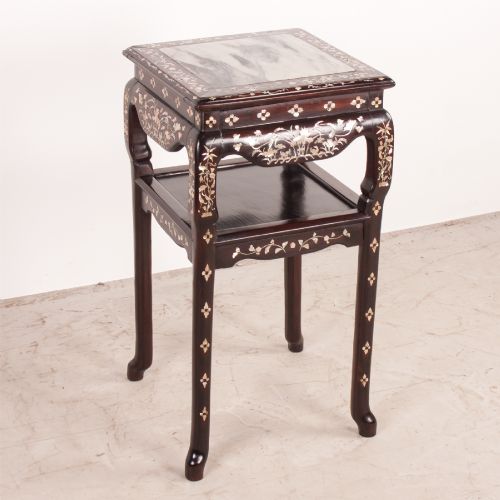
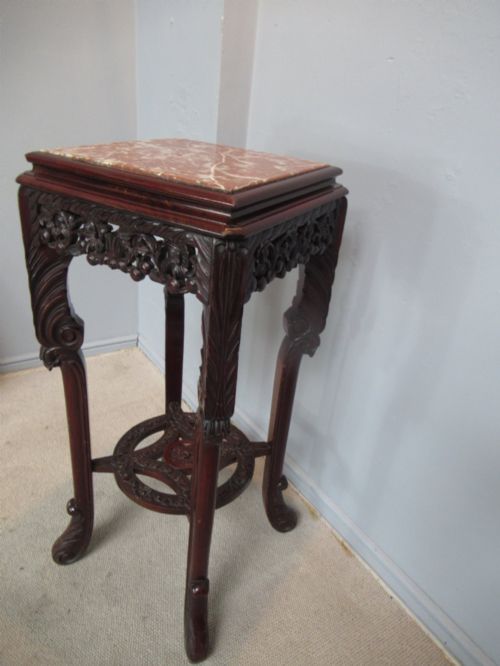
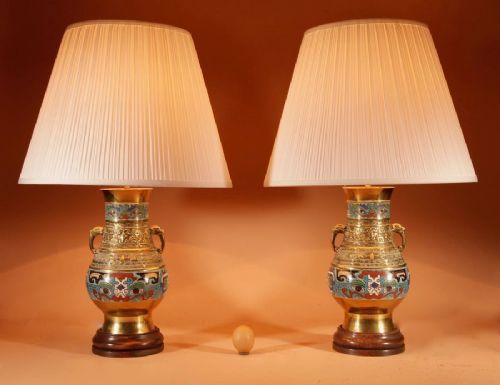
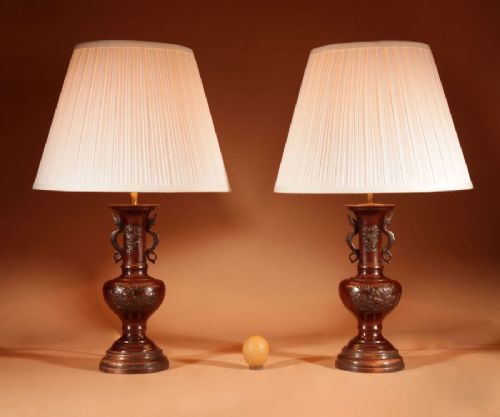
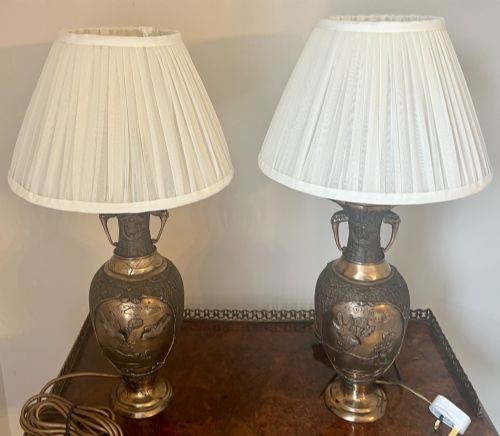
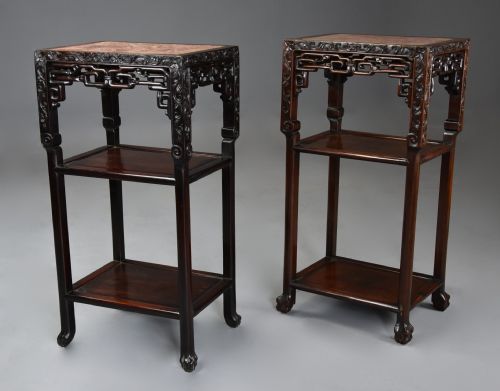
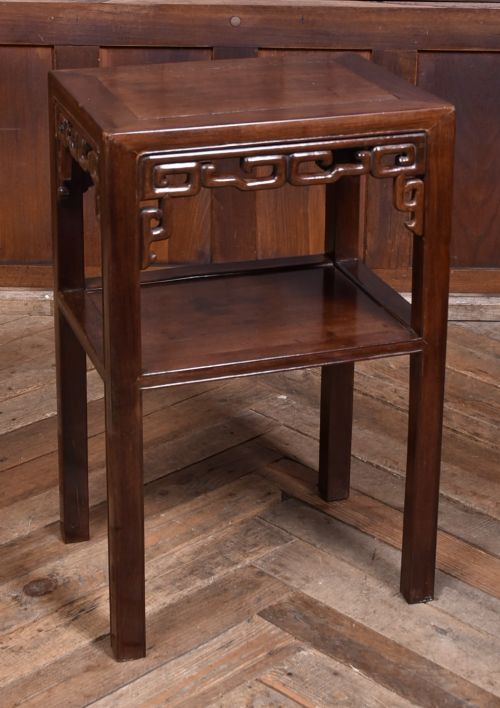
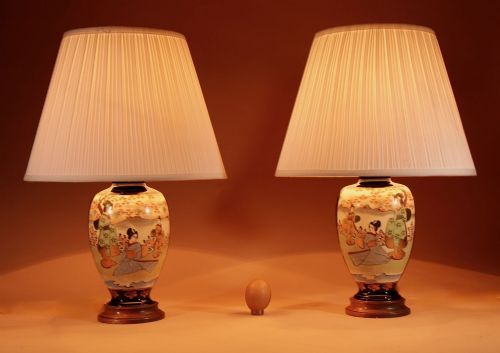
The dominant forms on this page are sturdy pot stands, pedestal tables, and occasional tables designed originally to elevate precious vessels or plants within a room. Many listings also incorporate Japanese bronze and Satsuma vases or Chinese cloisonne enamel vessels that have been adapted to serve as lighting.
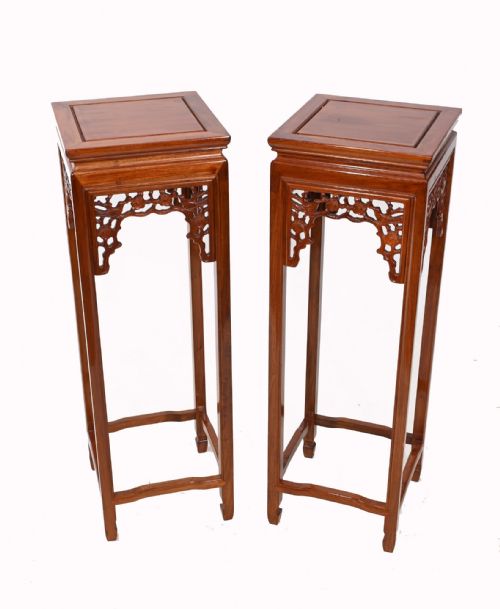
Originating largely from Chinese export workshops and Japanese makers of the Meiji era, these objects reflect traditional craftsmanship applied to domestic interior decoration. The variety ranges from single low side tables to matched pairs of freestanding hardwood pedestals and elaborate bronze lamp assemblies.
How they were made
Makers utilised dense Asian hardwoods such as hongmu and huali for structural furniture, employing precise joinery to create carved stands and tables that support inset marble tops. Metalwork pieces rely on bronze and brass casting, often finished with intricate champleve or cloisonne enamel detailing.
Ceramic components stem from traditional pottery and porcelain traditions, including Satsuma and Kutani wares, decorated with hand-painted glazes. Where vases are converted into lamps, the transformation integrates electrical fittings with historical vessels without obscuring the original manufacture.
Asian Urn Table Retail Price Guide 2026
Typical asking prices for asian urn table among the pieces listed under this phrase on Sellingantiques today, from the lower quarter to the upper quarter. They describe what is for sale here now, not the wider market.
Object forms range from plant stands and side tables to converted vase lamps, garniture sets, and pedestal tables.
What varies in quality
The distinction between standard and superior pieces rests on the depth of carving in the hardwood and the crispness of detail in the bronze or enamel work. Finer examples display meticulous hand-finishing on wood joints and unblemished marble inserts that fit flush within the frame.
Condition and completeness also dictate distinction, particularly in matched pairs of stands or lamps where uniform patina and matching decorative motifs preserve visual balance. Original conversion methods for lamp fittings matter, as thoughtful adaptation respects the integrity of the underlying bronze or ceramic vase.
The Asian Urn Table Glossary
- Cloisonne
- Enamelwork technique where thin metal wires form raised partitions on a base to hold coloured pastes before firing. This method creates intricate patterns frequently seen on nineteenth century vases.
- Champleve
- Enamel technique where troughs or cells are hollowed out of a metal surface directly to receive coloured enamel. It provides robust decoration on bronze lamp bases.
- Hardwood
- Dense timber such as hongmu or huali used for furniture and stands. These heavy woods resist warping and take deep, dark polishes.
- Meiji Period
- Japanese historical era spanning from 1868 to 1912, characterised by opening trade and fine bronze and ceramic production for export. Pieces from this time often bear distinct artistic signatures.
- Satsuma
- Japanese earthenware featuring a crackle-glaze finish and detailed polychrome enamel painting. These ceramics frequently appear converted into table lamps.
Asian Urn Table: Frequently Asked Questions
What is an asian urn table?
An asian urn table or plant stand is a low wooden or marble-topped piece designed to elevate decorative vessels, jardinieres, or table lamps. They originate primarily from the nineteenth and early twentieth centuries.
These items provide a stable surface for display while introducing traditional craftsmanship and rich timber tones into domestic interiors.
How were vase lamps made?
Vase lamps are created by taking historical ceramic or bronze vessels from periods such as the Meiji era and adapting them with electrical wiring and lamp hardware. This practice repurposes decorative objects into functional lighting.
The conversion respects the original body of the vase, allowing the painted or cast details to remain the visual focal point of the lamp.
Where do marble top stands come from?
Marble top stands and tables on this page stem largely from nineteenth and early twentieth century Chinese workshops, often associated with Qing Dynasty export production. The stone provides a cool, durable surface inset into carved wooden frames.
These stands were built to hold heavy porcelain planters, urns, or bronze arrangements safely above floor level.
How do I style these pieces?
These hardwood stands and bronze lamps integrate easily into both traditional and modern rooms by adding textural contrast and historical depth. Low stands function well beside seating or beneath window displays.
Paired items offer symmetry when placed on sideboards, while individual vase lamps provide ambient lighting with distinct cultural provenance.