




Asian Timber Cabinet
An asian timber cabinet brings centuries of Far Eastern craftsmanship directly into the modern interior through rich woods and distinctive joinery.
Asian Timber Cabinet
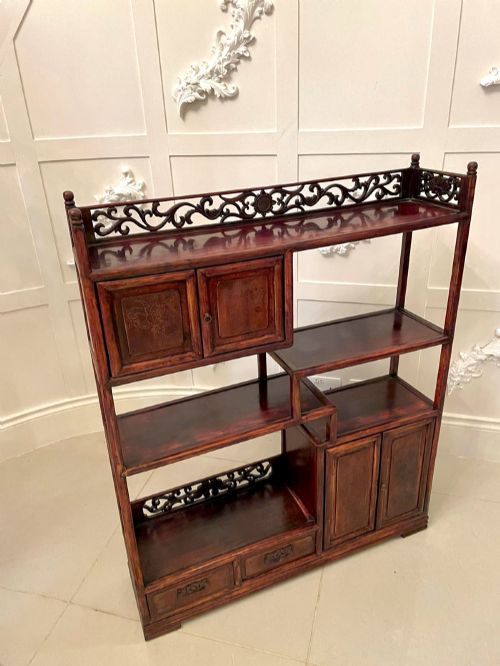
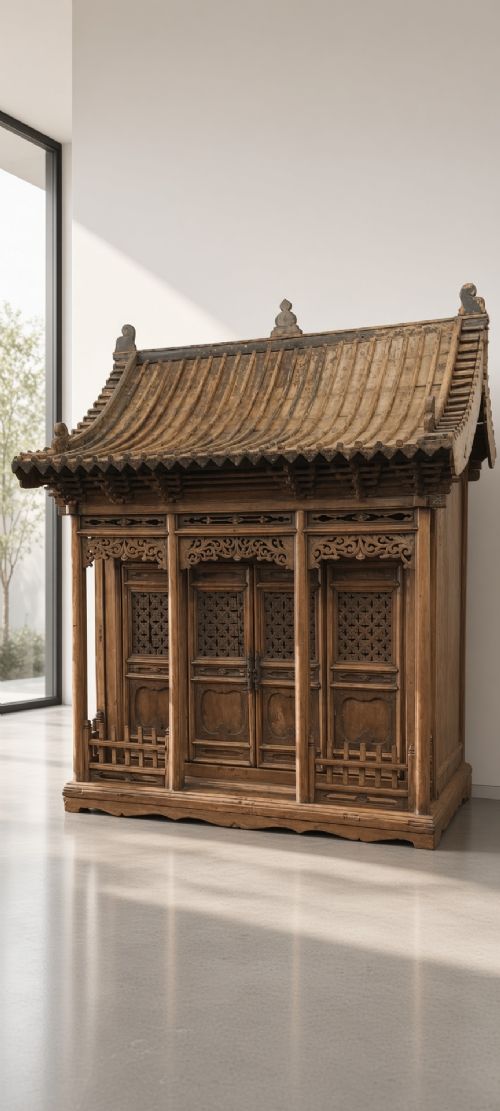
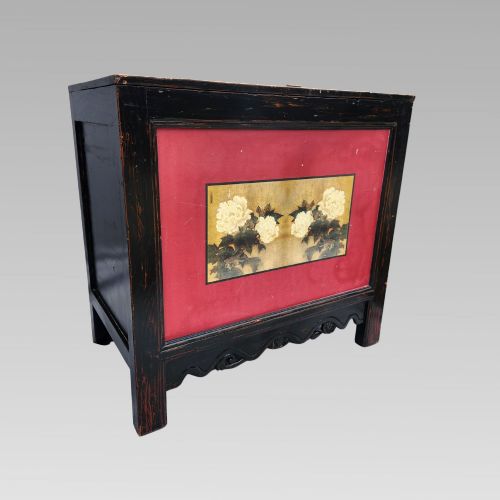
When you search for an asian timber cabinet, you are looking at substantial storage pieces and display furniture originating from China and Japan across the eighteenth, nineteenth, and early twentieth centuries. The selection encompasses forms ranging from towering compound wardrobes and side-cabinets to low storage chests and intricate table-top display units.
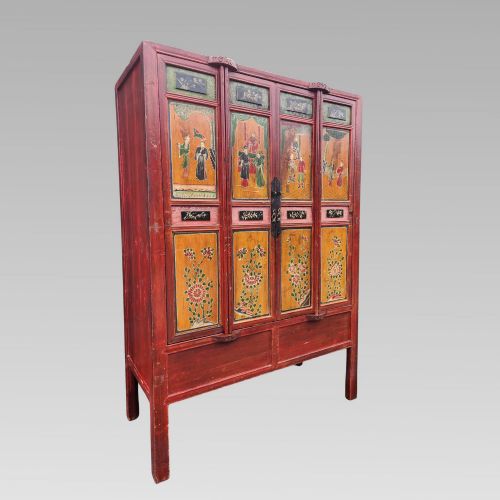
The pieces on this page heavily feature traditional Chinese Qing styles and Japanese Meiji period aesthetics, utilising dense native timbers. You will encounter tall marriage cabinets finished in vivid lacquers alongside rustic elm cupboards and finely carved rosewood or zitan display furniture.
Materials and construction methods
Construction relies upon durable hardwoods such as elm, rosewood, and zitan, frequently paired with contrasting iron or brass hardware for hinges and locking plates. Craftsmen utilised sophisticated joinery techniques that allowed timber to expand and contract naturally without relying on modern metal fasteners.
Surfaces are treated with traditional black or red lacquer finishes, delicate mother-of-pearl inlay, and deep relief carving depicting dragons, florals, and narrative scenes. Certain examples incorporate marble inserts or carved ebonised framework to elevate the visual texture of the piece.
Asian Timber Cabinet Retail Price Guide 2026
Typical asking prices for asian timber cabinet among the pieces listed under this phrase on Sellingantiques today, from the lower quarter to the upper quarter. They describe what is for sale here now, not the wider market.
Some marriage cabinets hide secret compartments behind internal drawers, built for stashing private letters and family heirlooms.
Understanding quality in construction and finish
The distinction between tiers of quality rests upon the density of the primary timber utilised and the depth of the hand-carved ornamentation. Pieces executed in heavy rosewood or zitan with intricate, crisply defined relief carving represent superior craftsmanship compared to simpler utility cupboards.
Integrity of the original lacquer and surface finish dictates desirability, with intact pigment and original brass or iron mounts preserving the historical character. The precision of the traditional joinery and the survival of interior shelving or drawers further separate standard storage items from exhibition-grade furniture.
The Asian Timber Cabinet Glossary
- Zitan
- A dense, heavy Asian hardwood prized for its dark colour and fine grain. It was frequently utilised for imperial Chinese furniture.
- Tansu
- A traditional Japanese mobile storage chest constructed from timber with prominent iron mounts and handles. They were originally utilised for clothing or documents.
- Chinoiserie
- European artistic style reflecting Chinese motifs and decorative techniques. It often appears on storage chests and cabinets adapted for Western markets.
- Sijiangui
- A traditional Chinese compound cabinet design consisting of stacked sections. These large storage pieces often feature carved dragon motifs.
Asian Timber Cabinet: Frequently Asked Questions
What is an asian timber cabinet?
An asian timber cabinet is a traditional storage or display piece constructed from hardwoods like elm, rosewood, or zitan in China or Japan. These items range from large marriage cupboards to multi-tiered display stands.
They reflect historical design periods including the Qing Dynasty and the Meiji era, utilising native woods and regional joinery methods.
How were these cabinets used?
Original uses varied from storing silk robes and household linens in large compound cupboards to displaying scholarly objects on tiered shodana shelves. Chests served secure domestic storage functions.
Today, they function as focal storage points in living areas, hallways, or dining rooms, accommodating modern tableware or collections.
How do I style a cabinet at home?
Position a tall cabinet or cupboard against a neutral wall to let the dense timber grain and carved details stand out as a primary focal point. Low chests work well beneath artwork or mirrors.
Balance the dark wood tones with simple surrounding decor to highlight the historical character of the piece without cluttering the space.
How can I tell the period apart?
Dating relies upon identifying regional construction traits, carved motifs, and the specific timber species associated with dynastic eras or Japanese periods. Qing Dynasty pieces often feature formal symmetry and dragon carvings.
Meiji and Taisho Japanese pieces frequently display asymmetrical shelving layouts and ebonised finishes characteristic of late nineteenth and early twentieth-century export work.