



Asian Style Sideboard
An asian style sideboard brings striking lacquer and rich timber grain into a room, offering practical storage with distinct cultural character.
Asian Style Sideboard
An asian style sideboard encompasses low cabinets, console tables, and cupboards drawing on Chinese provincial, Chinoiserie, and Japanese Meiji traditions. These pieces often serve as focal points in a dining room or hallway, providing enclosed storage alongside decorative surface space.
The selection on this page ranges from nineteenth-century elm console tables and teak cupboards to early twentieth-century black and red lacquer cabinets. Buyers encounter both traditional Chinese forms, such as Shanxi storage cabinets, and export designs featuring carved stands.
How they were made
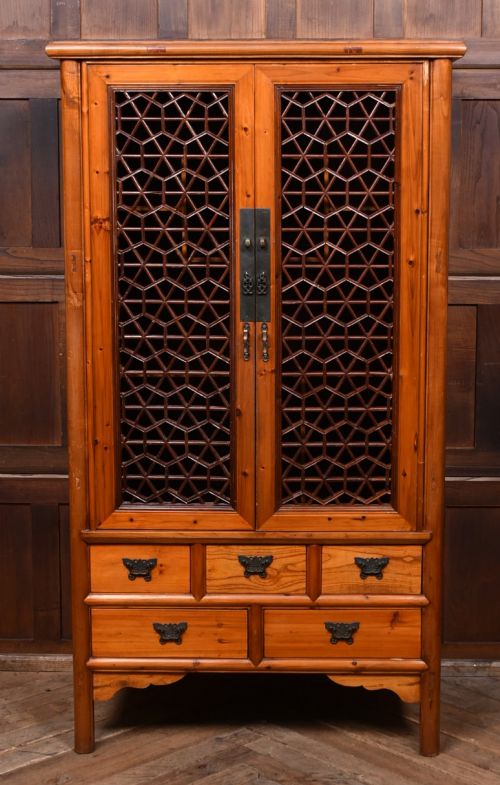
Construction relies heavily on traditional timbers such as elm and teak, shaped into robust storage furniture and console tables. Artisans built these frames to withstand daily use while providing a stable foundation for decorative finishes.
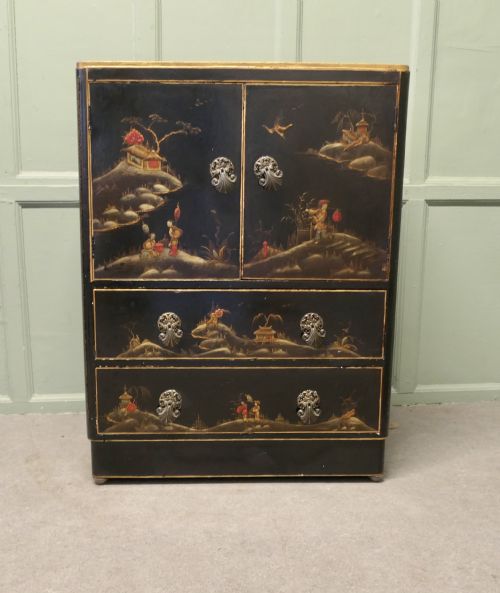
Surfaces frequently display applied lacquer in bold red or black tones, sometimes paired with gilt highlights and brass or iron hardware. Carved stands and drawer fronts further demonstrate the detailed joinery and ornamentation characteristic of these periods.
Asian Style Sideboard Retail Price Guide 2026
Typical asking prices for asian style sideboard among the pieces listed under this phrase on Sellingantiques today, from the lower quarter to the upper quarter. They describe what is for sale here now, not the wider market.
Some cupboards manage to hide up to ten distinct drawers behind their doors, proving that historic organizers loved a hidden compartment just as much as we do.
What varies in quality
Quality reveals itself in the depth and preservation of the lacquer finish, alongside the crispness of any carved detailing on stands or panels. Pieces with intact gilt work and deeply patinated wood naturally command greater visual presence.
The integrity of the underlying timber framework and the original brass or iron metalwork also distinguish finer examples. Structural balance and the smooth operation of drawers and doors indicate superior craftsmanship from the outset.
The Asian Style Sideboard Glossary
- Chinoiserie
- European decorative style reflecting Chinese artistic influences, often featuring lacquered surfaces and painted motifs. This aesthetic became particularly prominent in early twentieth-century British and continental furniture.
- Lacquer
- A durable resin finish applied in multiple layers to wood and polished to a smooth sheen. It provides both protection and a deep, glossy appearance.
- Meiji
- A period in Japanese history lasting from eighteen sixty-eight to nineteen twelve, known for opening trade and distinct craftsmanship. Pieces from this era often display refined joinery and specific regional utility.
- Elm
- A hard, durable wood utilised in traditional Chinese furniture making for its resilient grain and structural strength. It takes carving well and ages with a distinct patina.
- Altar table
- A traditional long table form originating from domestic and ceremonial Chinese contexts, adapted here into surface furniture. These tables typically feature slender proportions and raised ends.
Asian Style Sideboard: Frequently Asked Questions
Where should I place an asian style sideboard?
These cabinets suit dining rooms for tableware storage or hallways where a bold colour makes an immediate impression.
Keep them away from direct heat sources to protect the wood and lacquer finishes over time.
How do I clean lacquered wood furniture?
Dust gently with a soft, dry cloth to prevent scratching the delicate surface.
Avoid chemical polishes or excessive water, which can damage aged lacquer and gilt highlights.
What is the difference between a cabinet and a console table?
Cabinets provide enclosed storage with doors and drawers for concealing household items.
Console tables are open and narrow, designed primarily for display against a wall rather than bulk storage.
How can I tell the age of these pieces?
Examine the timber shrinkage, hand-cut joinery, and the wear patterns on the hardware and feet.
Nineteenth-century examples often display deeper patination and traditional construction methods compared to later interpretations.