

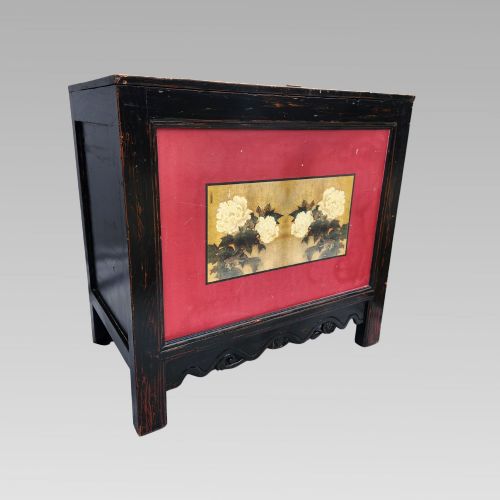


Asian Storage Trunk
An asian storage trunk brings centuries of craftsmanship into a modern room, offering generous utility alongside rich regional character.
Asian Storage Trunk
An asian storage trunk encompasses substantial pieces designed for keeping garments, documents, and domestic goods secure, spanning dowry chests, travelling boxes, and blanket boxes. These items originate from diverse traditions across China, Japan, India, and Korea, reflecting distinct regional joinery and local aesthetic preferences.
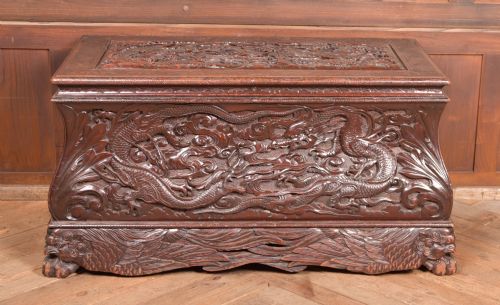
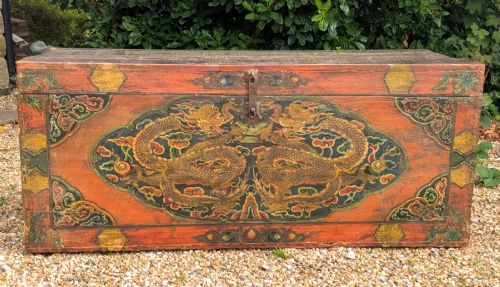
The selections on this page span from the eighteenth century through to the early twentieth century, showing periods such as the Qing Dynasty and the Japanese Meiji Period. Forms range from simple camphor wood blanket boxes to complex tansu chests with multiple drawers and wheeled kuruma-dansu variants.
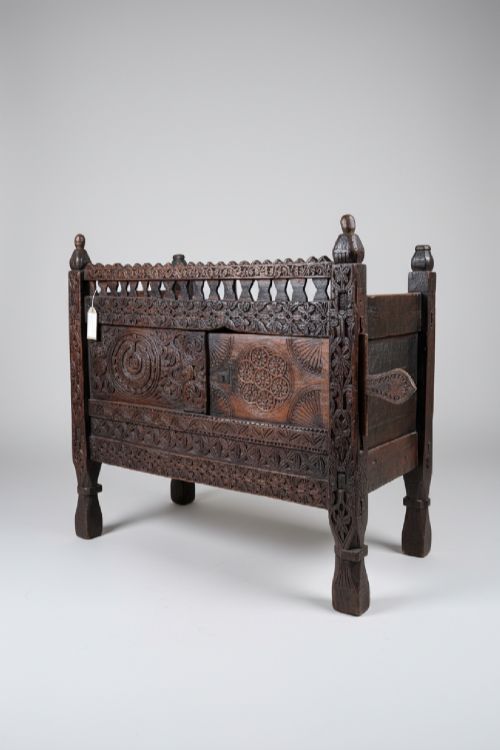
Buyers will encounter traditional Chinese export items alongside provincial Swat Valley folk art pieces and Korean elm bandaji chests. Each object serves as both functional furniture and a historical artefact shaped by its specific geographical origin.
Materials and Construction
Makers utilised fragrant timbers like camphor wood and durable hardwoods such as hongmu and elm, often chosen for their natural resilience against insects and humidity. These woods provide a stable foundation for intricate hand-carved surface details and solid structural joints.
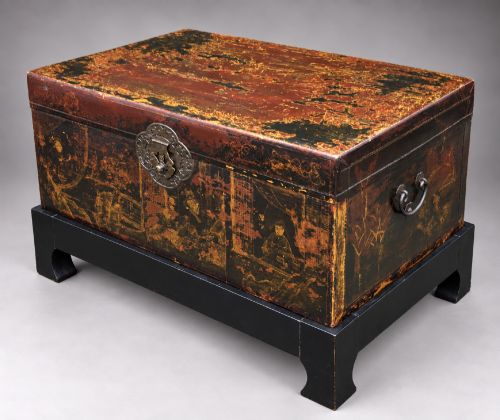
Surface treatments involve layers of black or red lacquer, gilt detailing, and elaborate brass or iron hardware used for hinges, straps, and protective corner mounts. Some items incorporate pig skin over wooden carcasses or feature specialised stands that elevate the main storage body.
The listings on this page include examples from the 18th Century, 19th Century, and 1920s, constructed from camphor wood, lacquer, brass, and iron.
Factors of Quality
The standard of an asian storage trunk depends upon the precision of the joinery and the depth and crispness of the hand-carved ornamentation. Pieces executed with tight dovetail or mortise-and-tenon joints demonstrate superior structural integrity compared to simpler assemblies.
The preservation of original lacquer surfaces, metal fittings, and patinated timber significantly affects the overall standing of an example. Items retaining their original brass or iron hardware and uncompromised surface decoration represent higher craftsmanship within their respective regional traditions.
The Asian Storage Trunk Glossary
- Tansu
- A traditional Japanese mobile chest or cabinetry system used for storing clothing and household goods. These units often feature sliding doors and numerous external iron-strapped drawers.
- Bandaji
- A traditional Korean chest characterised by large, decorative front brass or iron strapwork and hinges. They were typically employed for storing bedding and garments in domestic interiors.
- Camphor wood
- A dense, aromatic timber commonly utilised for chests due to its natural ability to repel moths and dampness. The wood releases a distinctive scent that persists for decades.
- Chinoiserie
- European interpretations and adaptations of Chinese and East Asian artistic motifs, frequently applied to lacquered furniture and decorative objects during earlier centuries.
- Hongmu
- A category of dense, heavy Chinese hardwoods often translated as red wood, prized for its deep colour and ability to take a fine polish without heavy ornamentation.
Asian Storage Trunk: Frequently Asked Questions
What were camphor wood trunks used for?
Camphor wood trunks served primarily for storing garments, woollens, and valuable textiles in humid climates. The natural oils in the timber protected the contents from insects and moisture damage.
They were also utilised by travellers and merchants for transporting personal belongings across regions. Their sturdy construction and secure metal mountings made them reliable for long journeys.
How do I identify a tansu chest?
A tansu chest is recognised by its modular construction, dark iron hardware brackets, and numerous small drawers or sliding doors. These Japanese pieces were designed for specific domestic functions.
Many examples include recessed side handles for lifting and moving between rooms. Some variants incorporate wheels for easier transit across tatami flooring.
How do I care for a lacquered trunk?
Maintain a lacquered trunk by keeping it away from direct sunlight and fluctuating heat sources. Extreme temperature changes cause the wood beneath to expand and the lacquer finish to crack.
Dust the surface gently with a dry, soft cloth and avoid chemical polishes or abrasive cleaners. Stable indoor humidity helps preserve the integrity of both the wood and the decorative coating.
Are these chests suitable for modern living?
These chests function well in contemporary spaces as coffee tables, end-of-bed blanket boxes, or hallway storage units. Their substantial proportions provide concealed storage while adding distinct historical texture to a room.
The durable timbers and robust metal hardware allow them to withstand daily domestic use. They anchor modern interior schemes by introducing natural materials and handmade character.