






Asian Storage Cupboard
An asian storage cupboard brings practical depth and vivid regional character to a room, ranging from robust elm wedding pieces to intricate lacquer cabinets.
Asian Storage Cupboard
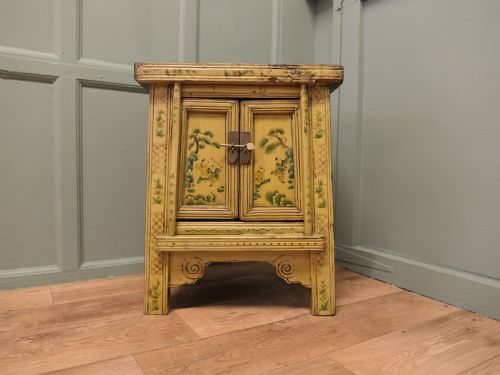
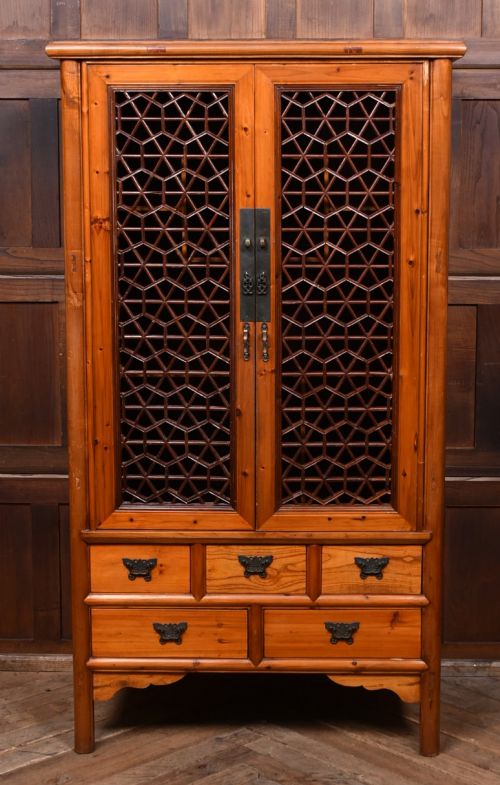
An asian storage cupboard covers a diverse group of functional furniture originating from China, Japan, Korea, Tibet and Burma. These pieces encompass large marriage cabinets, multi-drawer apothecary chests, larder cupboards and compact table-top units.
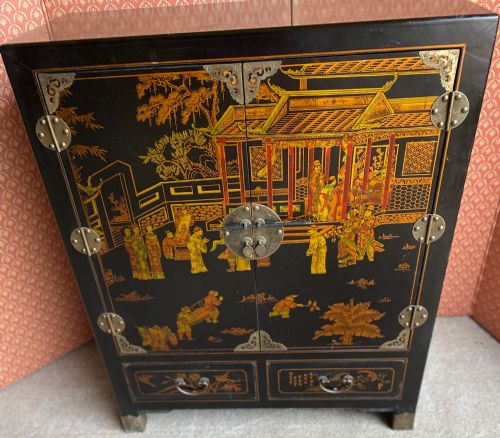
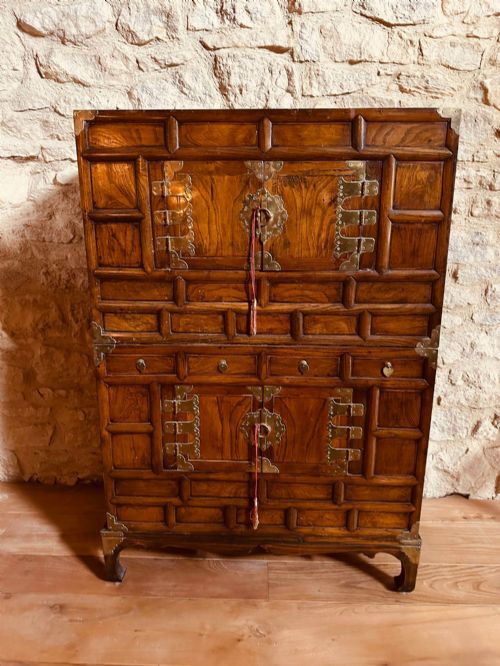
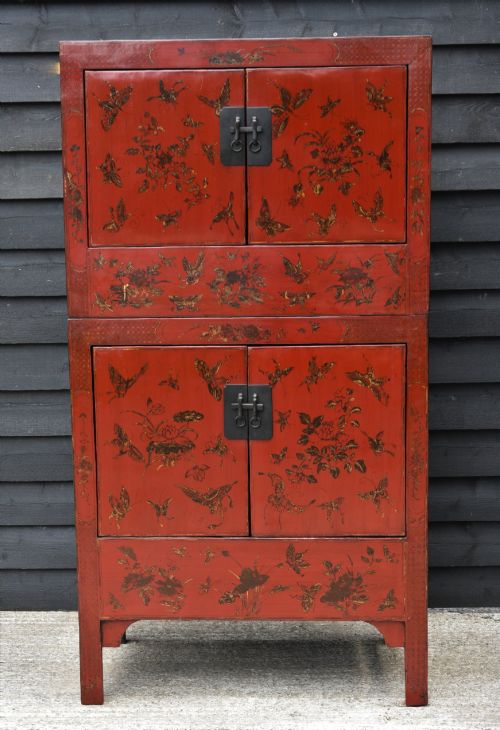
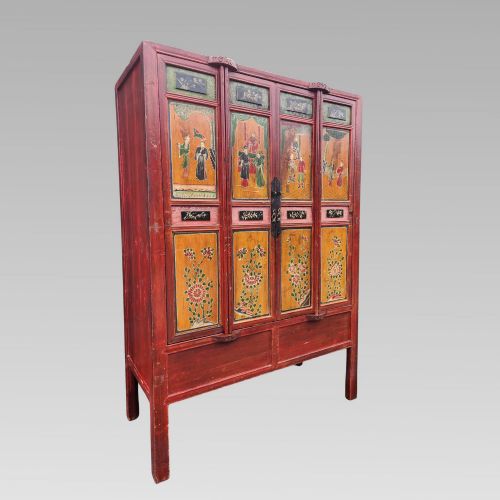
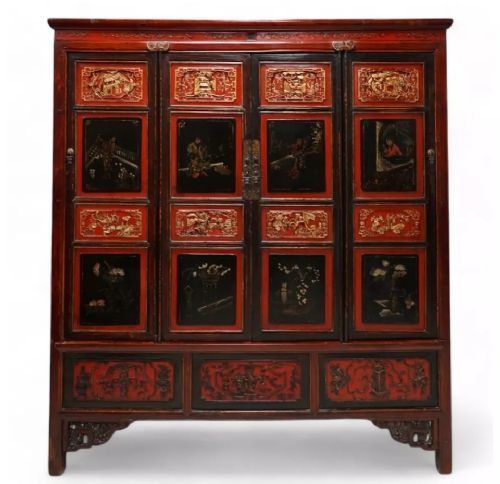
The pieces on this page span the nineteenth century through the early twentieth century, including the Victorian and Edwardian periods as well as the Meiji and Taisho eras. Buyers encounter traditional forms such as Chinese red lacquer marriage cabinets, Japanese tansu step chests, and Korean burr elm storage units.
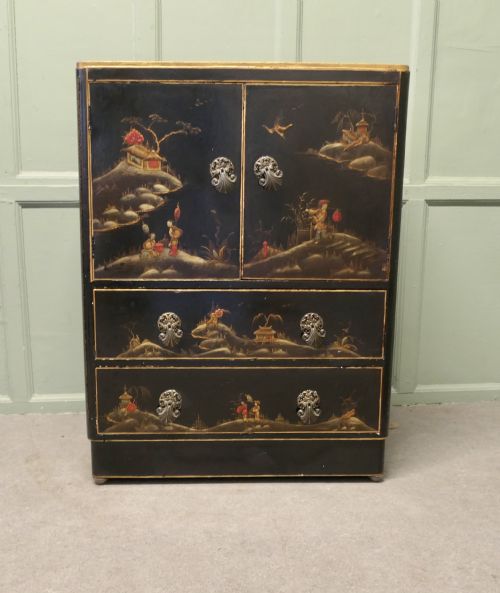
Regional styles dominate the selection, featuring Qing Dynasty designs, Chinese provincial work, Chinoiserie decoration, and Japanese kitchen tansu. Each regional variation serves a distinct domestic purpose, from storing garments and bedding to organising dried herbs and household goods.
Materials and construction
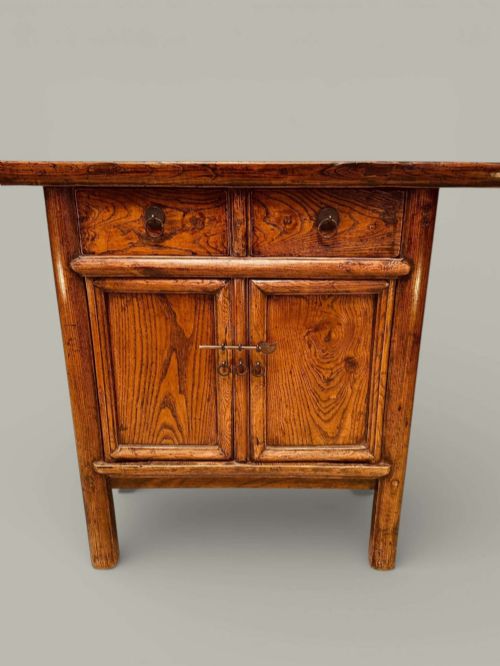
Makers utilised solid regional timbers including elm, hardwood, teak, pine, keyaki and burr elm to build the foundational carcases of these cabinets. Joinery methods prioritized structural stability to accommodate seasonal climate shifts without warping the primary storage compartments.
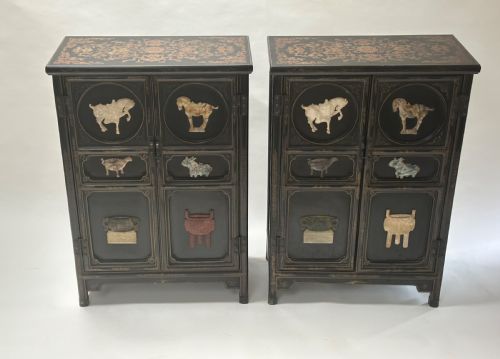
Surfaces frequently display applied layers of red or black lacquer, hand-painted floral motifs, or detailed carvings depicting birds and botanical scenes. Metalwork plays a structural and decorative role, incorporating brass and iron hardware, strap hinges, and bronze animal decoration.
Asian Storage Cupboard Retail Price Guide 2026
Typical asking prices for asian storage cupboard among the pieces listed under this phrase on Sellingantiques today, from the lower quarter to the upper quarter. They describe what is for sale here now, not the wider market.
Several chests on offer served as movable Japanese staircases, allowing household members to climb to upper sleeping lofts while storing kimonos inside the steps.
Judging quality and finish
Quality rests in the integrity of the timber selection and the preservation of the original surface finishes, whether unpainted elm or layered lacquer. Pieces featuring crisp hand-painted details and intact original hardware command greater appreciation among collectors.
Construction standards distinguish utilitarian storage from refined craftsmanship, evident in the precision of drawer fitting and the stability of compound cabinet doors. The survival of an original patination without excessive modern restoration preserves the historic character of the piece.
The Asian Storage Cupboard Glossary
- Tansu
- A traditional Japanese mobile storage chest built primarily for domestic organisation. These modular units often feature numerous small drawers and sliding panels.
- Lacquer
- A durable resin finish applied to wooden surfaces in multiple layers. It provides a smooth, protective coating that accepts pigments and decorative painting.
- Chinoiserie
- European artistic interpretation and imitation of Chinese decorative styles. This style appears frequently on British and continental cabinets finished in the eighteenth and nineteenth centuries.
- Marriage cabinet
- A large Chinese storage cupboard traditionally given to a bride as part of her dowry. These pieces typically feature double doors and substantial interior shelving.
- Apothecary cabinet
- A partitioned storage chest fitted with many small drawers. Originally utilised by herbalists and practitioners of traditional medicine to sort dry ingredients.
Asian Storage Cupboard: Frequently Asked Questions
How do I choose the right size cupboard?
Measure your wall space and ceiling height carefully before selecting a piece, as many Asian storage cabinets possess substantial vertical proportions. Consider the swing clearance needed for wide double doors or the depth required for narrow hallways and alcoves.
Think about the intended storage function within your home, whether you plan to house heavy dinnerware, folded linens, or everyday media equipment. Matching the scale of the cupboard to the room ensures the furniture anchors the space without overwhelming surrounding furnishings.
Where should I place an Asian storage cupboard?
These cabinets work effectively as focal points in living rooms, dining spaces, or spacious hallways where their distinct painted or timber surfaces stand out. Position them away from direct heat sources and strong sunlight to protect historic wood and delicate lacquer finishes from drying out.
Ensure the floor surface is level so that heavy doors and multiple drawers align correctly within their frames. Grounding a large wardrobe or step chest against a solid wall provides both visual stability and physical security.
How do I care for lacquer furniture?
Dust surfaces regularly using a soft, dry microfibre cloth to prevent abrasive particles from accumulating on the finish. Avoid commercial polishes, harsh chemical sprays, and excessive moisture, which can damage aged resin and painted details.
Maintain a stable indoor humidity level to prevent the underlying timber from expanding or contracting beneath the lacquer layer. Gentle handling of brass and iron hardware preserves the patination accumulated over centuries of use.
What is the difference between a Tansu and a Chinese cabinet?
Japanese tansu chests were engineered for modular flexibility and domestic portability, often featuring exposed iron or copper reinforcement brackets and numerous small drawers. They reflect the practical requirements of merchant and farming households.
Chinese storage cabinets generally present a more monumental architectural facade, utilising hidden wooden pivot hinges and framed panel construction. They frequently display rich red or black lacquer surfaces decorated with symbolic motifs or botanical paintings.