








Asian Side Cabinet
An asian side cabinet brings striking red lacquer or carved hardwood into a room, offering compact storage with distinct regional character.
Asian Side Cabinet
When you search for an asian side cabinet, you encounter low cupboards, marriage chests, and occasional stands originating from China, Tibet, and Korea. These pieces span the nineteenth century and early decades of the twentieth century, reflecting traditional forms adapted for domestic storage.
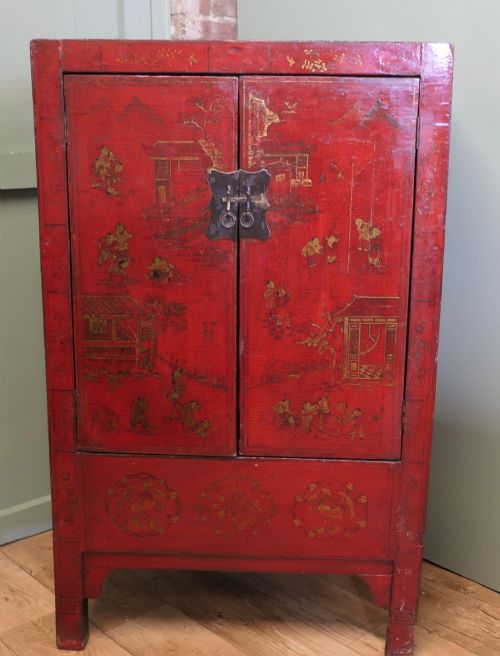
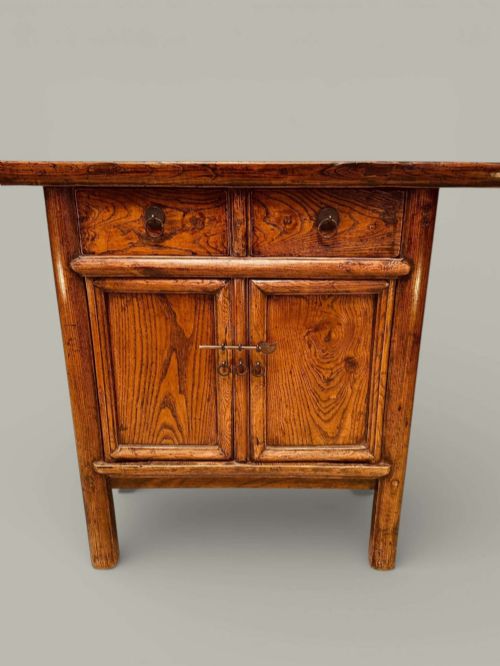
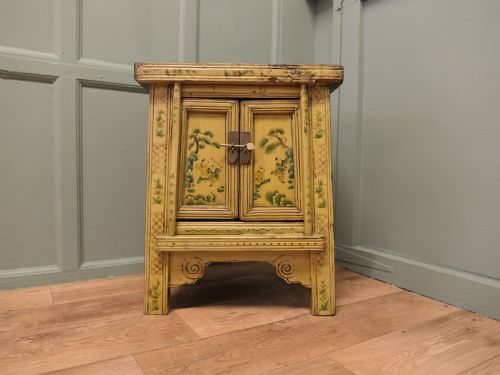
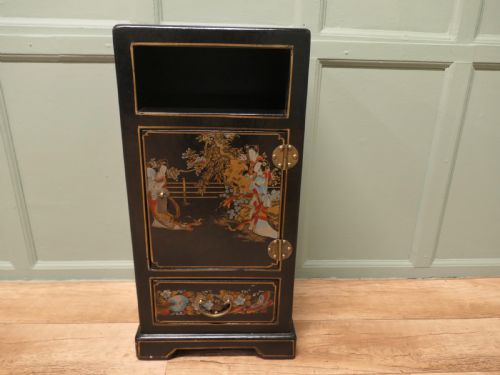
The version you meet most often on this page is a lacquered or elm side cupboard, frequently finished in red or cream tones with painted Chinoiserie decoration. Alongside these, smaller hardwood pedestals and occasional tables appear, providing low surfaces and compact compartments.
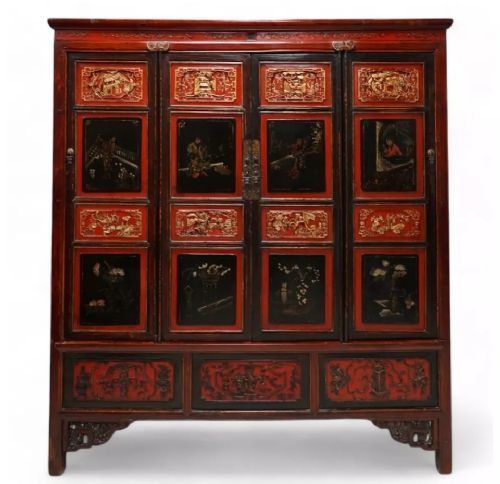
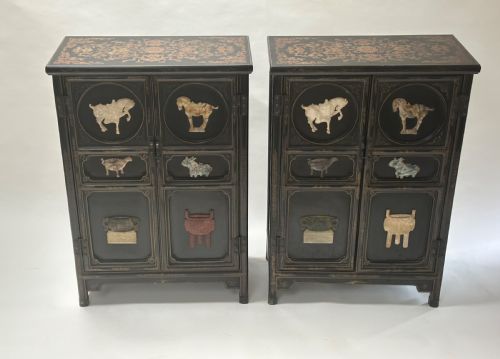
Originating from diverse regional traditions, these items range from heavily carved rosewood dwarf cabinets to hand-painted Tibetan storage pieces. They serve as functional accent furniture in modern interiors, combining surface display space with enclosed storage.
How they were made
Cabinet makers utilised dense timbers such as Chinese elm, rosewood, and hardwods, often constructing frames using traditional joinery methods. Elm and rosewood provide the structural integrity required for heavy marriage chests and carved dwarf cabinets.
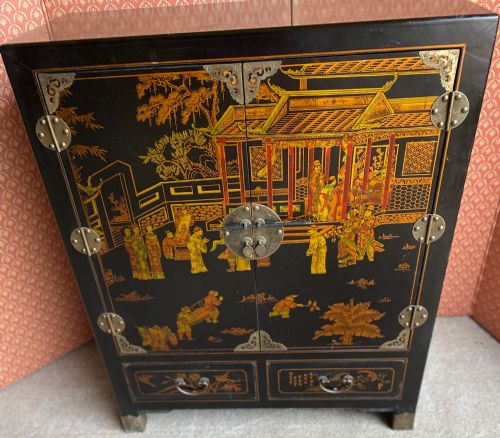
Surfaces receive layers of lacquer, sometimes incorporating mother of pearl inlay, hand-painted floral motifs, or cinnabar work. Brass hardware, including decorative lock plates and hinges, secures doors and drawers while adding metallic contrast to the dark wood or coloured lacquer.
Asian Side Cabinet Retail Price Guide 2026
Typical asking prices for asian side cabinet among the pieces listed under this phrase on Sellingantiques today, from the lower quarter to the upper quarter. They describe what is for sale here now, not the wider market.
Materials recorded across the selection include elm, rosewood, marble, brass, and traditional lacquered wood.
What varies in quality
Quality rests upon the crispness of the wood carving and the preservation of the original lacquer surface. Pieces with deeply carved rosewood or intact hand-painted floral details demonstrate superior craftsmanship compared to simpler, plain-timber variations.
The condition of the brass fittings and the stability of the joinery influence the overall standard of each piece. Original lacquer work that retains its depth and colour without extensive modern repainting commands greater interest.
The Asian Side Cabinet Glossary
- Chinoiserie
- European artistic interpretation of Chinese and East Asian decorative styles, commonly found painted on wooden cabinets. This style often employs motifs of figures, landscapes, and floral patterns against coloured lacquer backgrounds.
- Marriage cabinet
- Large traditional Chinese storage cupboard traditionally given as a wedding gift to hold personal belongings. These pieces frequently feature striking red lacquer finishes and prominent brass hardware.
- Cinnabar lacquer
- Technique involving multiple layers of red carved lacquer applied to a wooden base. The resulting surface displays intricate low-relief carvings of figures or natural scenes.
- Shodana
- Japanese-style display cabinet featuring asymmetrical shelving and small cupboards. Examples in East Asian furniture traditions utilise profusely carved hardwoods.
- Elm
- Common structural timber utilised in Chinese provincial cabinet making. This wood accepts lacquer finishes well and provides a sturdy frame for side tables and cupboards.
Asian Side Cabinet: Frequently Asked Questions
Where should I place an asian side cabinet?
These cabinets suit hallways, living rooms, and bedrooms where compact storage and surface display are required. Their distinct red lacquer or dark hardwood finishes allow them to function as focal points against neutral walls.
Because they vary significantly in height and width, measuring your available floor space ensures the proportions complement surrounding furniture. Low side cabinets also work effectively as bedside tables or lamp stands.
How do I care for lacquered wood furniture?
Maintain lacquered and painted surfaces by dusting gently with a soft, dry cloth. Avoid using harsh chemical cleaners or placing the cabinet in direct sunlight, which can fade pigmented finishes and delicate painted details.
Keeping the room at a stable humidity level prevents the underlying wood from expanding or contracting, which protects both the timber joints and the exterior lacquer layers.
What is the difference between Chinese export and provincial pieces?
Export pieces were made specifically for Western markets, often featuring pronounced Chinoiserie decoration and forms tailored to European tastes. Provincial pieces originated for domestic use within regional communities, focusing on practical utility and local timber traditions like elm.
Examining the decorative motifs and construction details helps reveal whether a cabinet was built for local daily life or international trade.
How can I identify nineteenth-century pieces?
Nineteenth-century items typically exhibit traditional joinery techniques, hand-forged brass hardware, and natural wear patterns on the lacquer or wood. Examining the interior construction and timber shrinkage provides clues regarding the age of the cabinet.
Makers of this period relied on regional woods like elm and rosewood, applying hand-mixed finishes that differ noticeably from twentieth-century factory production.