
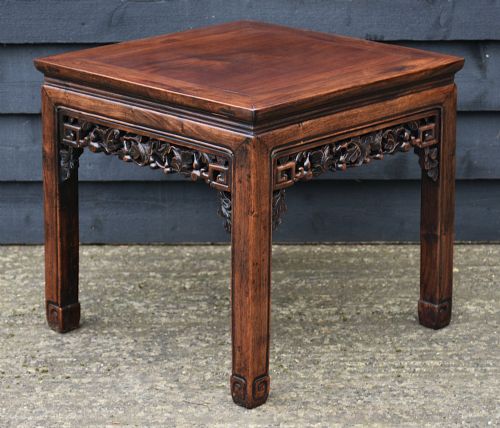
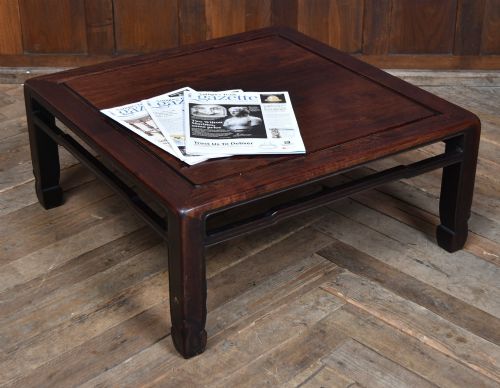
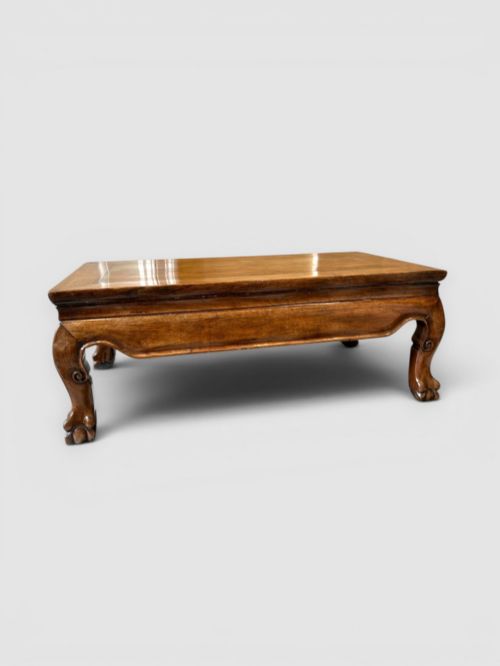
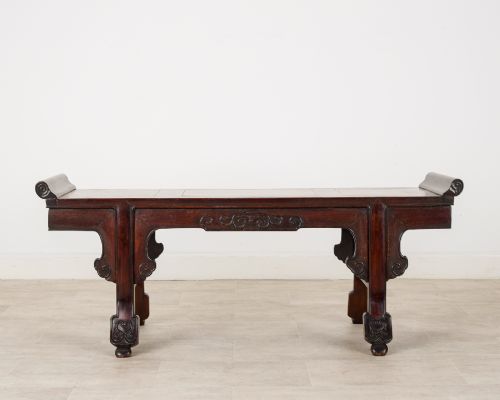
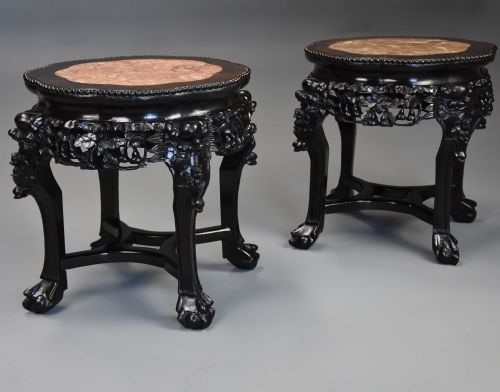


Asian Hardwood Low Table
An asian hardwood low table brings versatile timber and low-profile design into a modern room, anchored in centuries of traditional craftsmanship.
Asian Hardwood Low Table
An asian hardwood low table encompasses functional surfaces designed for sitting low, resting coffee cups, or displaying ornamental objects. When you search for this phrase, you meet forms that range from traditional Chinese kang and opium tables to Japanese side tables and low benches.
The selections span the nineteenth century into the early twentieth century, taking shape as rectangular coffee tables, circular stands, and plank-top trestle tables. Many pieces reflect Qing Dynasty aesthetics, Chinese export traditions, and Taisho period influences.
Most examples originate from China or Japan, utilising dense timbers suited for domestic interiors and scholarly use. Buyers frequently encounter low forms designed originally for kneeling or floor-level seating, now adapted for contemporary living.
How they were made
Maker workshops utilised dense regional timbers including rosewood, padouk, hongmu, elm, and huanghuali. These durable materials provided the structural integrity needed for low tables, benches, and scroll-end kang tables without requiring bulky frames.
Construction techniques relied on traditional joinery that accommodated wood movement while supporting carved aprons, scroll ends, and inset panels of marble, glass, or porcelain. Craftsmen shaped these elements by hand, producing smooth plank tops and articulated supports.
Finishing involved developing a rich surface patina through repeated rubbing and polishing of the natural hardwood. Artisans often incorporated delicate carved details, ranging from simple recessed legs to elaborate scholarly motifs.
What varies in quality
The distinction between ordinary and exceptional pieces lies in the choice of timber and the depth of the carving. Dense rosewood, hongmu, and padouk surfaces show tighter grain and a deeper, more lustrous natural patina than standard timber alternatives.
Structural refinement separates simpler utility items from masterwork scholar's tables and scroll-end kang tables. Clean joinery, balanced proportions, and well-executed relief carving indicate higher standards of workshop production.
The presence of integrated decorative elements, such as inset porcelain panels or marble inserts, elevates certain pieces above plain plank-top variants. Original surfaces that retain their historic depth of colour command greater attention from discerning collectors.
The Asian Hardwood Low Table Glossary
- Kang table
- A low platform table traditionally placed upon a heated brick bed in northern China for dining or writing. These pieces sit close to the floor and often feature scroll ends.
- Opium table
- A common Western term for a small, low Chinese table used for social leisure, resting at a height convenient for floor seating. They share structural similarities with kang tables.
- Padouk
- A heavy, durable exotic hardwood prized for its reddish-brown colour and stability in furniture construction. It takes a fine finish and resists heavy wear.
- Hongmu
- A translation meaning red wood, used in Chinese furniture to describe dense, dark hardwoods of the rosewood family. This material yields a smooth, heavy surface.
- Scroll end
- A table design where the short ends of the top board curl upward into a scroll shape. This stylistic feature appears frequently on traditional kang tables.
Asian Hardwood Low Table: Frequently Asked Questions
How were asian hardwood low tables used originally?
These low surfaces served domestic and scholarly purposes in traditional households, accommodating tea service, writing, and leisure activities while occupants sat on mats or low beds.
In many regions, they functioned as portable writing desks or central gathering points within the home before being adapted as coffee tables in modern interiors.
What is a kang table?
A kang table is a low-profile wooden table designed to sit atop a heated domestic sleeping platform in traditional northern Chinese homes. They provided a stable surface for dining and writing at floor level.
These pieces typically feature recessed legs or scroll ends, making them easy to move around the domestic interior.
How do I date an antique asian low table?
Dating relies on examining the timber species, joinery construction, surface patina, and stylistic markers associated with periods like the nineteenth century or the Qing Dynasty. Characteristics such as hand-carved scroll ends and dense padouk or hongmu indicate older workshop production.
Wear patterns and the depth of the polish also provide clues to a piece's age and historical context.
How do I care for a hardwood low table?
Maintain the timber surface by dusting regularly with a soft, dry cloth and avoiding placement near direct heat sources or strong sunlight. Excessive temperature changes can affect dense woods like rosewood and elm.
Apply natural furniture waxes sparingly only when the timber appears dry, preserving the historic patina built up over generations.
Can I use an antique low table as a coffee table?
These low tables fit naturally into modern living spaces as coffee tables due to their modest height and stable proportions. Their traditional dimensions align well with contemporary seating arrangements.
Protective glass tops can be added if desired to safeguard historic timber surfaces from daily use.