


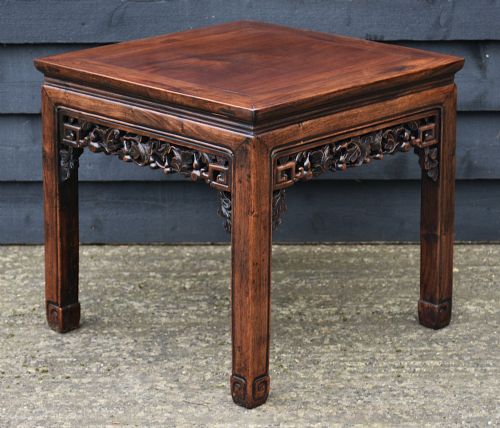


Traditional Chinese Low Furniture
Traditional chinese low furniture brings centuries of craftsmanship into modern spaces through versatile forms designed for floor-level living.
Traditional Chinese Low Furniture
Buyers encountering this category will most frequently find low tables, opium tables, kang tables, and coffee tables constructed from various woods. These forms served practical functions in traditional households, often used for dining, resting, or displaying objects.
The selection includes rectangular low tables, trestle tables, and side cabinets, showcasing styles from nineteenth-century Chinese to traditional Chinese aesthetics. Each piece demonstrates the specific domestic utility and aesthetic values of its period of origin.
Materials and construction
Construction relies heavily on timbers such as hardwood, elm, rosewood, padouk, huanghuali, and huali wood, alongside softer woods. Artisans selected these materials for their durability and grain patterns, building pieces designed to withstand daily domestic use.
Surface treatments incorporate lacquer, mineral pigment, and gold leaf, particularly on carved side cabinets and lacquered coffee tables. These finishes enhanced the appearance of the wood and provided protective layers, while carving and gilding added decorative detail.
Traditional Chinese Low Furniture Retail Price Guide 2026
Typical asking prices for traditional chinese low furniture among the pieces listed under this phrase on Sellingantiques today, from the lower quarter to the upper quarter. They describe what is for sale here now, not the wider market.
Some scroll-end tables were built low enough to ensure your tea remains within arm's reach while lounging.
What determines quality
Quality in traditional chinese low furniture rests on the selection of timber, such as rosewood or huanghuali, and the preservation of natural patina over time. Superior examples exhibit refined proportions and careful joinery that has endured through centuries.
The execution of decorative elements, including carving and lacquering, separates standard production from finer work. Pieces featuring intact mineral pigments, gold leaf, and detailed scroll-ends demonstrate a higher level of artisan skill.
The Traditional Chinese Low Furniture Glossary
- Kang table
- A low table traditionally used on a heated brick platform, known as a kang, for eating, writing, or resting. These pieces feature short legs and often incorporate scroll-ends.
- Opium table
- A common term for a low table used domestically, similar in form to a kang table. They typically sit close to the floor and are constructed from dense hardwoods.
- Huali
- A fragrant hardwood prized in Chinese furniture making for its rich grain and durability. Artisans utilised this material for tables and cabinets requiring structural strength.
- Padouk
- A heavy, durable tropical hardwood with distinctive reddish tones used in nineteenth-century tables. It provides a stable base for detailed carving.
- Patina
- The surface sheen and texture developed by wood over years of handling and use. A desirable patina reflects the age and history of the piece.
Traditional Chinese Low Furniture: Frequently Asked Questions
What is a kang table used for?
Kang tables were designed for use on traditional heated brick beds in Chinese homes, serving as surfaces for dining, tea, or writing.
Their low profile made them suitable for sitting cross-legged or kneeling at floor level within the domestic interior.
How do I care for antique hardwood furniture?
Antique hardwood pieces require stable environmental conditions away from direct sunlight and extreme humidity changes.
Regular dusting with a dry cloth helps preserve the finish and natural patina without the need for heavy polishes.
What woods were used in these tables?
Maker workshops utilised a range of timbers including dense hardwoods like rosewood, padouk, huanghuali, and huali, alongside elm and softer woods.
Choice of material often depended on the intended function, status of the household, and regional availability.