





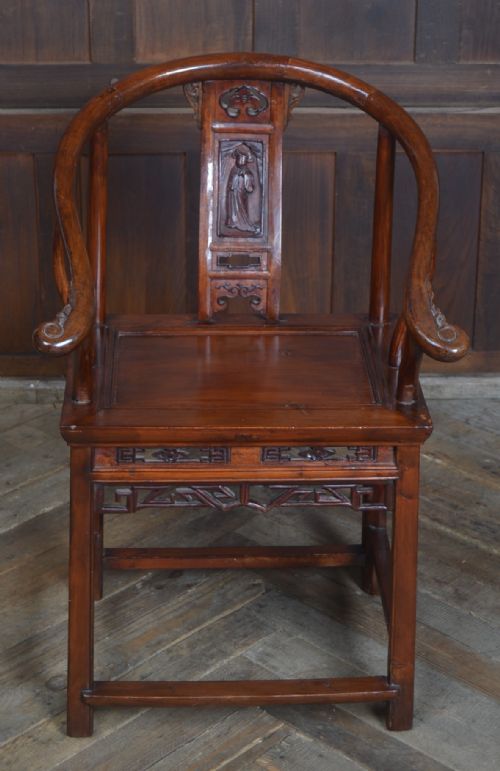

Asian Hardwood Armchairs
These asian hardwood armchairs bring centuries of sculptural form and robust joinery into a modern interior.
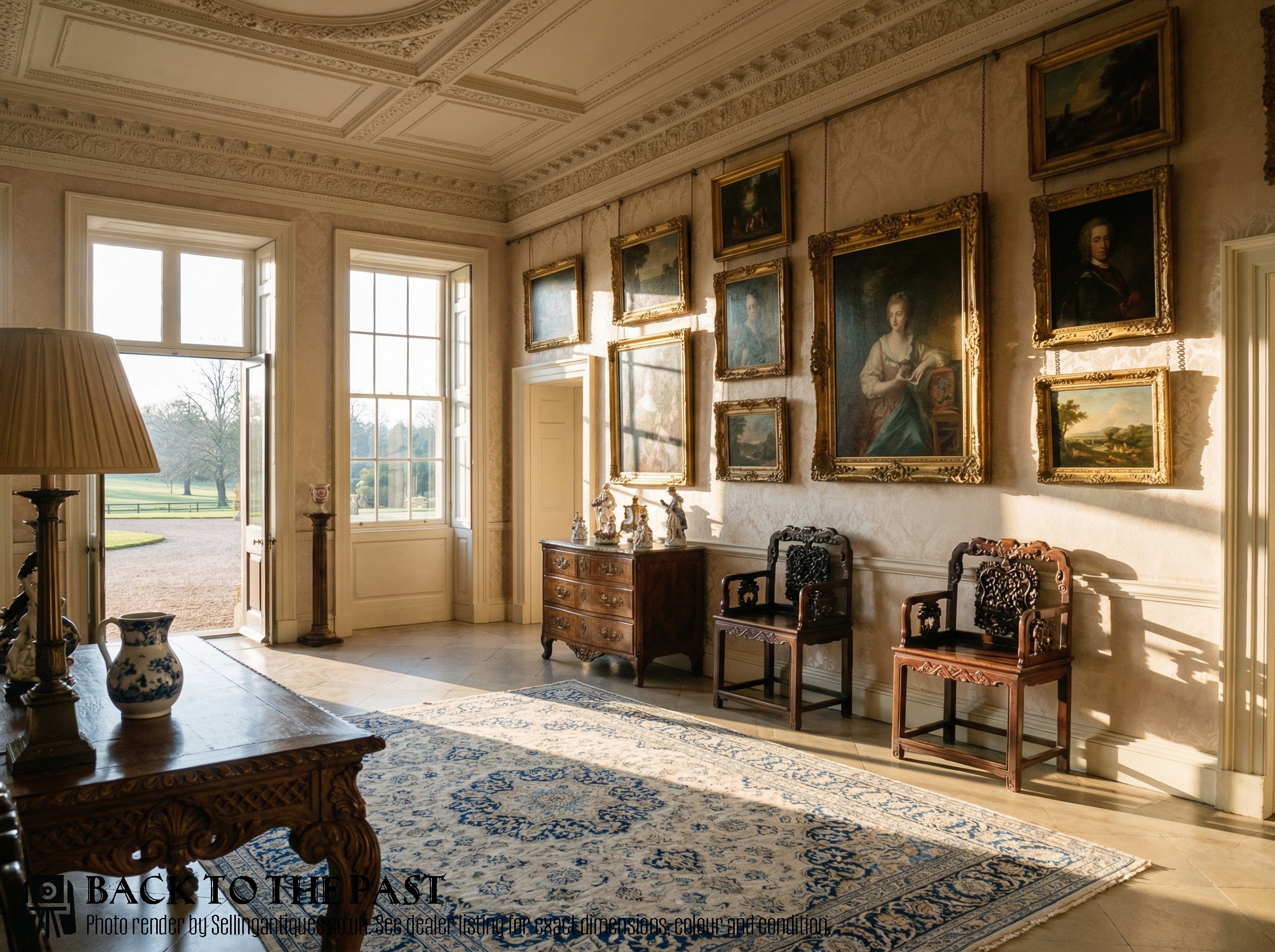
Asian Hardwood Armchairs
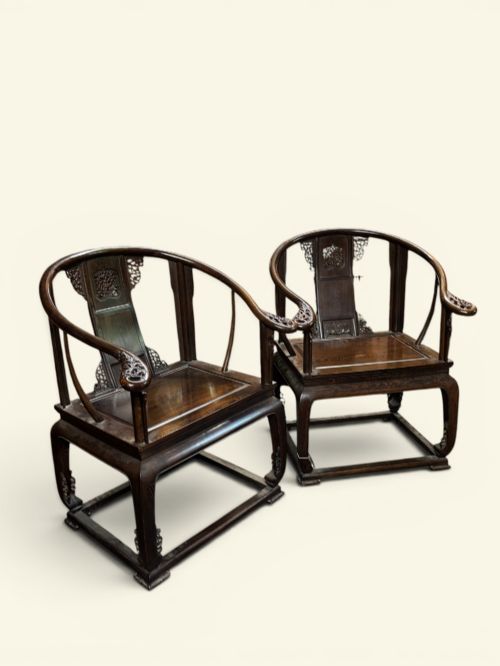
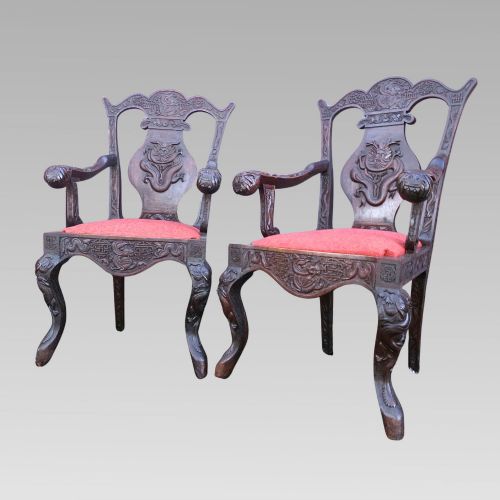
Forms vary from traditional Chinese horseshoe and wishbone backs to corner chairs, day beds, and hall benches. Many pieces originate from Chinese workshops, while others display regional variations such as Anglo-Indian or Burmese craftsmanship.
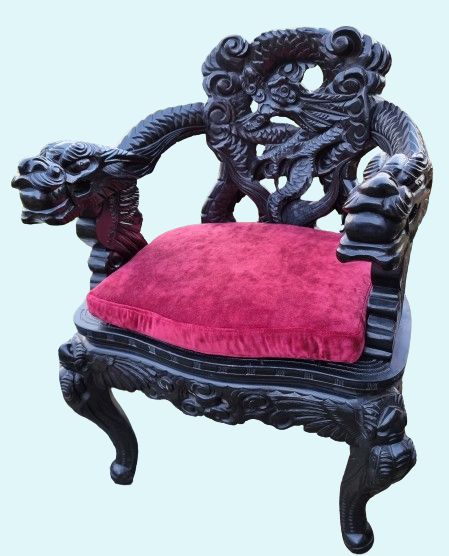
Pairs dominate the available selection alongside individual armchairs and multi-piece furniture suites. Buyers will find both unadorned timber surfaces and deeply carved frames featuring dragon motifs.
How they were made
Cabinetmakers utilised dense timbers including rosewood, elm, teak, and hongmu, often selected for their deep colour and substantial weight. These durable woods allowed artisans to construct complex frameworks reliant on precise mortise and tenon joinery rather than metal fasteners.
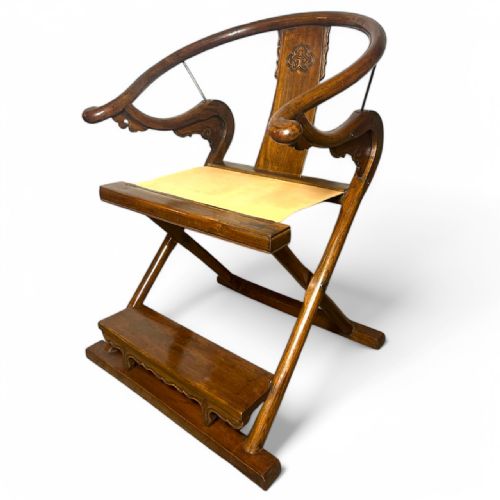
Surface decoration incorporated hand carving, lacquer work, and occasional brass inlays or marble inserts. Folding mechanisms on specific horseshoe-back models required ingenious hinged wooden engineering to maintain structural integrity under load.
Listings span the eighteenth, nineteenth, and early twentieth centuries, featuring materials from standard hardwood and elm to marble and brass.
What varies in quality
Quality rests upon the crispness of the hand carving and the selection of the timber, where denser hardwoods exhibit superior grain definition and resilience. Finer examples display balanced proportions and seamless joinery that conceal the structural complexity of curved members like the horseshoe back.
The degree of preservation in the original lacquer, brass mounts, and marble panels significantly elevates a piece. Workshop capability determines whether carved dragons and scrolling foliage remain sharp and legible or appear soft and rushed.
The Asian Hardwood Armchairs Glossary
- Hongmu
- A dense, heavy tropical hardwood prized in Chinese furniture making for its rich red-brown hue and capacity for fine carving. It translates literally as red wood.
- Horseshoe-back
- A distinctive seating form where the backrest and armrests sweep forward in a continuous curved rail. This shape offers ergonomic support and derives from ancient Chinese seating traditions.
- Qing Dynasty
- The final imperial dynasty of China, spanning from sixteen forty-four to nineteen twelve. Furniture from this era often exhibits elaborate carving and formal symmetry.
- Elm
- A resilient native timber utilised for regional Chinese seating. It provides a lighter alternative to denser exotic hardwoods while maintaining structural strength.
- Throne chair
- An imposing, high-backed seating form designed to display status. These examples often feature monumental proportions and dense ornamentation.
Asian Hardwood Armchairs: Frequently Asked Questions
How do I style an asian hardwood armchair at home?
These sculptural seats anchor a room effectively when placed individually against a plain wall or paired opposite a modern sofa. Their rich timber tones and curved silhouettes contrast well with minimalist contemporary furniture.
Allow sufficient physical space around horseshoe-back or throne designs so the sweeping arm rails remain visible from multiple angles.
How do I distinguish between different timber types?
Distinguishing woods requires observing the weight, grain pattern, and natural colour of the material. Hongmu and rosewood exhibit exceptional density and deep reddish-brown tones, whereas elm offers a more pronounced, fibrous grain pattern.
Lacquered surfaces may conceal the underlying timber entirely, requiring inspection from beneath or around joints.
Were these chairs meant for daily use?
Traditional Chinese armchairs served formal and domestic functions alike, constructed with rigid joinery designed to withstand daily habitation. Solid hardwood and elm frames provide immense structural stability.
Adding cushions can soften the wooden seats found on many traditional examples for extended sitting.