





Asian Carved Wooden Bench
An asian carved wooden bench brings dense regional timber and deep relief carving into a hallway or living space, offering both a seat and a piece of sculpture.
How they were made
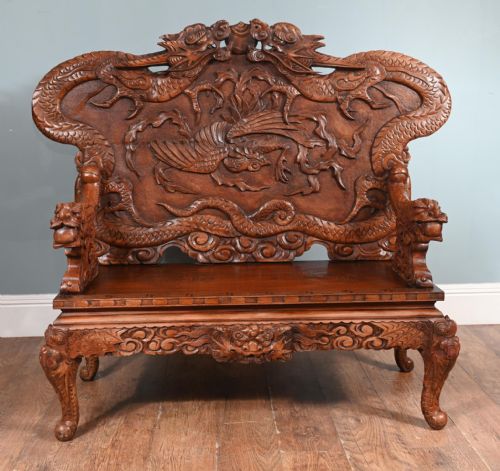
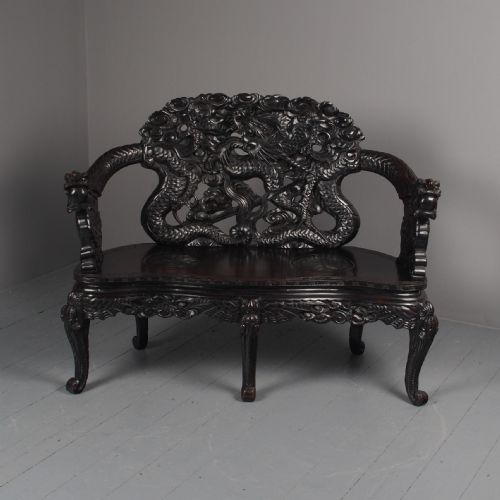
Craftsmen built these pieces from sturdy timbers such as elm, mahogany, huanghuali, huali, and general polished hardwood, occasionally applying paint, cinnabar lacquer, or gold leaf to the surfaces. The construction relies on traditional joinery that supports heavy relief carving, particularly around seats, aprons, and back panels featuring dragon or figurative motifs.
Surface treatments vary from the natural grain of blonde wood and dense hardwood to polished lacquer finishes. Many items integrate sculpted wooden elements, such as elephant bodies and tusks, combining structural joinery with intricate surface ornamentation.
What varies in quality
Quality rests in the crispness of the hand carving and the selection of the timber, where denser hardwoods like huanghuali or huali hold sharper detail than softer woods. Pieces that retain their original lacquer, paint, or gold leaf show greater fidelity to their period origins.
Proportion and scale also distinguish the work, as balanced hall benches and settle forms require precise joinery to remain stable over time. Finer examples display harmonious integration between the structural frame and the decorative figural or dragon motifs.
Asian Carved Wooden Bench Retail Price Guide 2026
Typical asking prices for asian carved wooden bench among the pieces listed under this phrase on Sellingantiques today, from the lower quarter to the upper quarter. They describe what is for sale here now, not the wider market.
Listings span periods from eighteen-sixty through nineteen-thirty, uniting nineteenth-century craftsmanship with early twentieth-century Chinese export and Qing Dynasty styles.
The Asian Carved Wooden Bench Glossary
- Hardwood
- Dense, slow-growing timber utilised for durable furniture, including elm and various exotic species. It resists wear and takes fine detail during carving.
- Cinnabar Lacquer
- A building up of multiple layers of vermilion-pigmented tree sap on a core, which artisans then carve deeply. This technique creates rich red surfaces with heavy relief.
- Kang Table
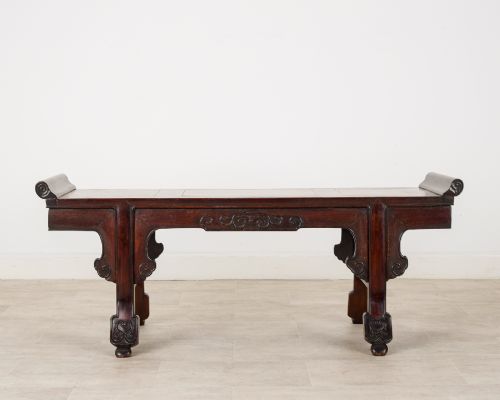
- A low platform table traditionally placed on a heated brick bed in northern China for dining or resting. They appear in smaller scales as portable seating or display pieces.
- Settle
- A wooden bench with a high back and solid arms designed to block draughts in traditional rooms. In this category, they feature extensive regional Chinese carving.
- Qing Dynasty
- The final imperial dynasty of China, lasting from sixteen-forty-four to nineteen-twelve. Furniture from this era is noted for robust proportions and elaborate decorative motifs.
Asian Carved Wooden Bench: Frequently Asked Questions
Where should I place an asian carved wooden bench?
These benches suit entrance halls, living rooms, or wide corridors where their carved details can be appreciated. They function well as standalone seating or display surfaces.
Ensure the piece sits clear of direct heat sources to protect the timber and any lacquer or gold leaf finishes from drying out.
How do I clean and maintain the wood?
Dust the surfaces regularly with a soft, dry cloth to prevent dirt settling into the deep recesses of the carving. Avoid chemical polishes that can damage older lacquer or unsealed timber.
Maintain a stable room humidity to prevent the dense hardwoods and elm from splitting or warping over time.
What is the difference between a bench and a settle?
A standard bench offers an open seat with simple or decorated backrests and arms, designed for flexible placement. A settle incorporates higher, more enclosed backs and sides.
Settles were traditionally built to shield occupants from draughts, making them more substantial pieces of furniture.
How do I identify a nineteenth-century piece?
Look for signs of traditional joinery, hand-carved tool marks, and the natural patina developed on the hardwood over decades of use. Nineteenth-century examples often display traditional Qing Dynasty motifs.
Examine the underside and joints to confirm the construction methods match the period materials.