






Asian Carved Seat
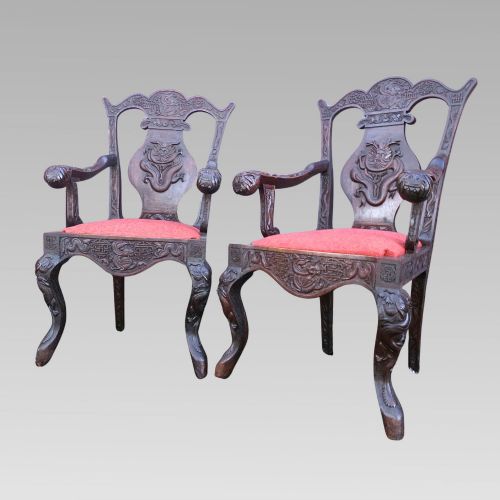
An asian carved seat brings striking timber grain, deep relief dragons, and rich lacquer into a room.
Asian Carved Seat
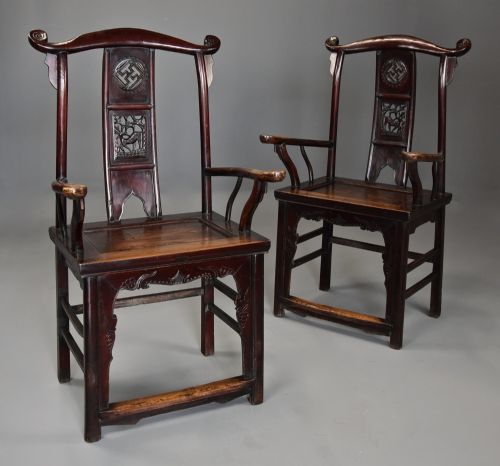
An asian carved seat encompasses sturdy elm yokeback armchairs, hardwood benches, and elaborate throne chairs spanning the nineteenth and early twentieth centuries. These pieces originate primarily from Chinese Qing Dynasty traditions and regional workshops, utilising traditional joinery and sculptural forms.
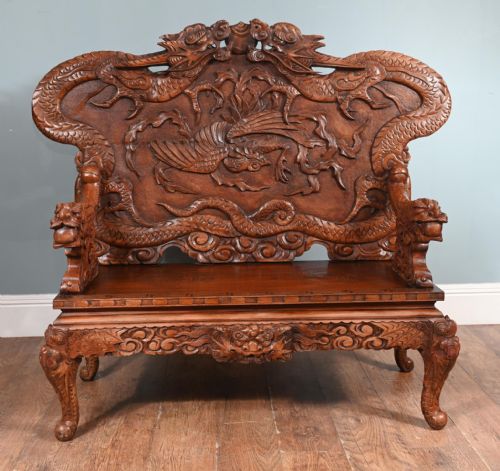
Buyers will most frequently encounter nineteenth-century hardwood armchairs and hall benches alongside elm seating finished in red lacquer. These forms range from functional window seats to imposing throne chairs bearing intricate dragon motifs and high relief carving.
How they were made
Maker-craftsmen constructed these seats from dense timbers including elm, rosewood, hongmu, and huanghuali, employing traditional joinery that avoided metal nails. Surfaces were frequently treated with red lacquer, gold leaf, or polished to a fine patina that highlights the natural grain of the wood.
Carvers worked freehand to shape elaborate panels, figures, and structural members, utilising chisels and gouges to render deep relief dragons and floral motifs. Some forms incorporate supplementary materials like marble inserts or gilt finishes to accent the primary timber structure.
Asian Carved Seat Retail Price Guide 2026
Typical asking prices for asian carved seat among the pieces listed under this phrase on Sellingantiques today, from the lower quarter to the upper quarter. They describe what is for sale here now, not the wider market.
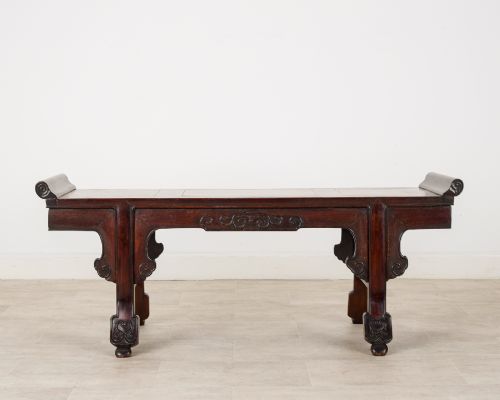
The inventory encompasses diverse seating forms including yokeback armchairs, low dressing stools, window benches, and imposing throne chairs.
What varies in quality
The degree of refinement in the relief carving distinguishes exceptional examples from simpler vernacular seating, particularly in the depth and crispness of dragon motifs. Finer pieces demonstrate superior timber selection, utilising dense hardwoods with well-matched grain and stable construction.
Original surface treatments, such as intact red lacquer or patinated hardwood, preserve historical integrity better than stripped or heavily restored finishes. The complexity of the frame, from standard yokeback chairs to elaborate throne forms, also dictates the relative ambition of the piece.
The Asian Carved Seat Glossary
- Yokeback
- A traditional chair design featuring a curved top crei-rail resembling a yoke. This form provides ergonomic support while maintaining clean structural lines.
- Hongmu
- A dense, dark tropical hardwood utilised in traditional Chinese furniture construction. It translates literally as red wood and accepts intricate carving exceptionally well.
- Lacquer
- A durable natural resin applied in multiple coats to wooden surfaces. It offers protection and a deep glossy finish, often found in red on period seating.
- Qing Dynasty
- The final imperial dynasty of China, lasting from sixteen forty-four to nineteen twelve. Furniture from this era is noted for robust proportions and deeply carved ornamentation.
Asian Carved Seat: Frequently Asked Questions
How do I care for an antique hardwood bench?
Keep wooden seating away from direct heat sources and sudden humidity changes to prevent timber splitting.
Dust regularly with a dry cloth and occasionally apply a neutral furniture wax to maintain the patina.
Where should I place a throne chair?
These imposing seats work well as statement pieces in a hallway, study, or living room. Ensure adequate space around the chair so the carved details remain visible.
Position them away from heavy foot traffic to protect delicate relief work on the arms and crest.
Are these seats comfortable for daily use?
Traditional wooden seating was designed with upright posture in mind rather than deep lounging. Adding a simple custom cushion can improve comfort for extended sitting.
The sturdy construction of elm and hardwood frames ensures they remain structurally sound for regular use.
How do I identify nineteenth-century Chinese elm?
Nineteenth-century elm exhibits a distinct, pronounced grain pattern with a warm honey or brown tone beneath original lacquer or polish. The timber is remarkably resilient and tends to show minor age-related shrinkage along the grain.
Examining the underside and joinery reveals hand-cut tenons consistent with workshop practices of the period.