








Asian Carved Plant Display
An asian carved plant display brings architectural form and natural grain to a room, holding a heavy ceramic or bronze vessel with absolute stability.
Asian Carved Plant Display
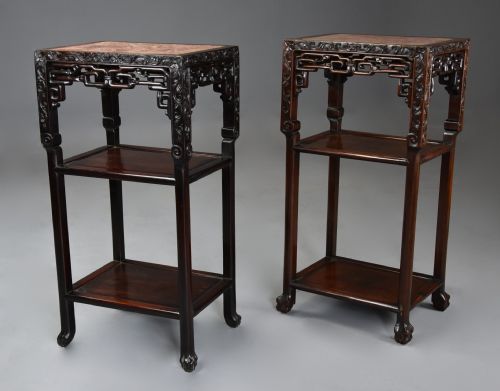
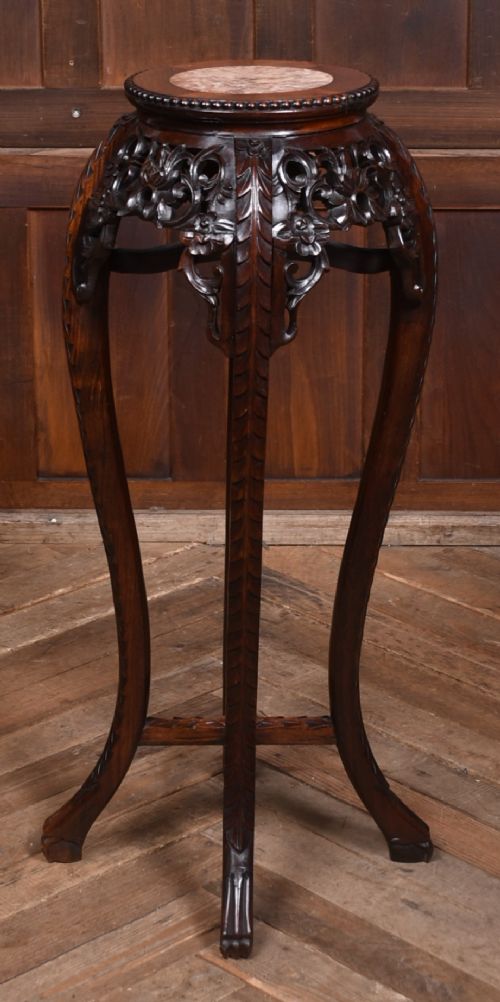
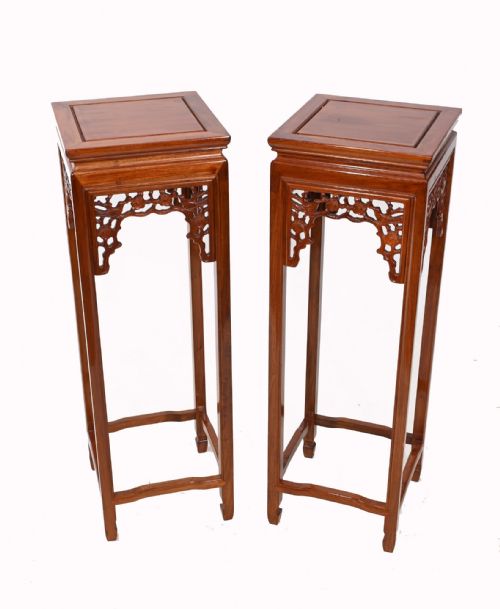
An asian carved plant display serves as a dedicated stage for horticulture, sculpture or ceramics within interiors. These pieces appear most frequently as freestanding plant stands, pedestal stands, and jardiniere stands dating from the nineteenth century.
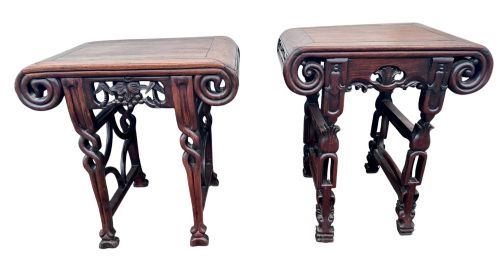
Makers shaped these items primarily as tall, columnar supports or low occasional tables designed to elevate pots and vases. The forms range from simple square tops to multi-tiered tables and nested sets originating from Chinese export and Meiji period traditions.
Buyers encounter heavy timber constructions featuring inset marble panels or mother of pearl inlay. They function practically as sturdy side tables while anchoring botanical displays in domestic spaces.
Materials and construction
Craftsmen utilised dense timbers such as rosewood, hongmu, padouk and amboyna to build these stands, ensuring sufficient weight to support heavy stone and ceramic vessels. These exotic hardwoods display deep natural colouration and fine grain without relying on applied finishes.
Marble inserts provide a cool, flat, water-resistant surface at the centre of the top, protecting the timber from damp soil and leaking water pots. Mother of pearl inlay appears on selected surfaces, creating contrasting geometric or floral patterns.
Joinery techniques allow the heavily carved aprons and legs to lock together rigidly, accommodating the natural movement of dense timber over decades. Lacquered and painted surfaces also appear, offering alternative decorative textures.
Asian Carved Plant Display Retail Price Guide 2026
Typical asking prices for asian carved plant display among the pieces listed under this phrase on Sellingantiques today, from the lower quarter to the upper quarter. They describe what is for sale here now, not the wider market.
Materials documented across the inventory include rosewood, hongmu, marble, padouk and mother of pearl.
Standards of craftsmanship
The crispness and depth of the wood carving separate standard utility pieces from exceptional examples. Finer stands display undercut foliage and pierced panels that maintain sharp relief without splintering the brittle hardwood.
The quality of the inset marble dictates the distinction at the upper end of the market, where stone panels exhibit dramatic natural veining and sit perfectly flush with the surrounding timber frame. Lower tiers and matched pairs demonstrate greater structural ambition and material selection.
Weight distribution and structural balance determine stability in taller pedestals. Superior pieces remain completely rigid under heavy loads, whereas lesser examples rely on accumulated shrinkage to hold joints tight.
The Asian Carved Plant Display Glossary
- Hongmu
- A dense, dark tropical hardwood highly prized in traditional Chinese furniture making. It translates literally as red wood and accommodates intricate, deep carving.
- Jardiniere stand
- A tall piece of furniture specifically designed to elevate a large ceramic flower pot or plant container. These stands typically feature circular or square tops positioned at comfortable viewing heights.
- Padouk
- A heavy, durable timber exhibiting reddish-brown tones that darken with age. It provides a stable foundation for heavily carved display tables.
- Mother of pearl
- The iridescent inner layer of certain mollusc shells, cut into thin pieces and set flush into timber surfaces. This material creates bright tonal contrast against dark hardwoods.
- Meiji period
- The era of Japanese history spanning from 1868 to 1912, associated with high-quality export decorative arts. Pieces from this time often show exceptional refinement in wood and lacquer work.
Asian Carved Plant Display: Frequently Asked Questions
What was the original purpose of a plant stand?
These pieces served to elevate potted plants, flowers and decorative vases within traditional interiors, bringing greenery to eye level.
They allowed heavy ceramic vessels to sit safely off damp masonry or wooden floors while displaying prized horticulture.
How do I care for a marble top stand?
Wipe the marble surface with a damp cloth and avoid harsh chemical cleaners that might etch the polished stone.
Keep wooden frames dusted with a dry cloth and protect the timber from direct heat sources and sudden humidity changes.
Can these stands support heavy items?
Dense hardwoods like rosewood and hongmu provide immense structural strength capable of bearing heavy bronze urns and large ceramic planters.
The rigid joinery and solid timber construction ensure stability under substantial downward weight.
How do I distinguish nineteenth century pieces?
Examine the timber shrinkage, patination and hand-carved details for signs of genuine age and traditional assembly methods.
Nineteenth-century examples frequently utilise heavy native hardwoods and fitted marble panels without modern mechanical fasteners.