



Asian Bronze Lighting
Asian bronze lighting brings sculptural weight and rich patination to a room, offering functional illumination through repurposed vases, lanterns, and candlesticks.
Asian Bronze Lighting
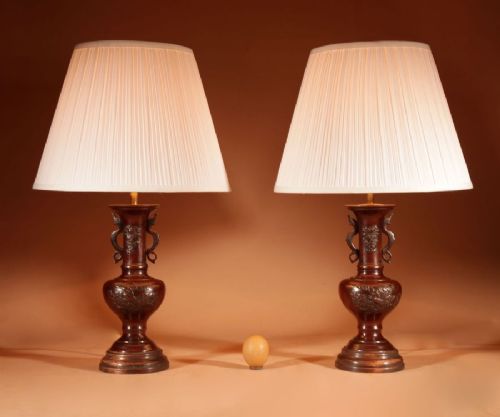
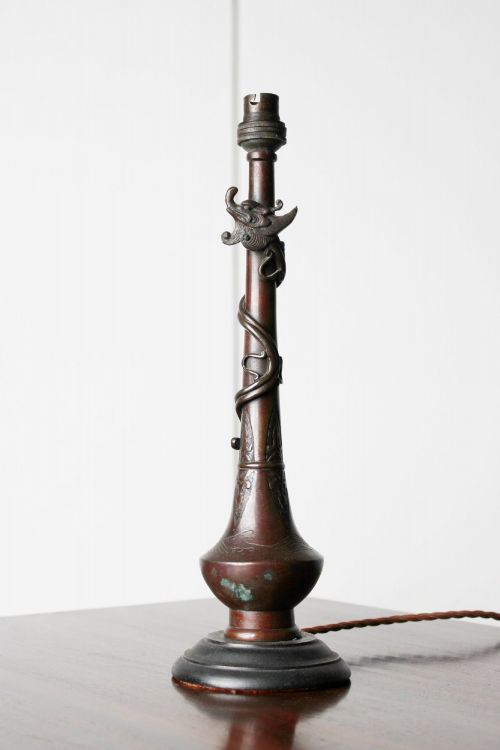
Asian bronze lighting encompasses table lamps, hanging lanterns, and candlesticks originating from China and Japan, often created by converting antique vessels. Buyers looking at this selection will find pieces ranging from Victorian imports to early twentieth-century creations.
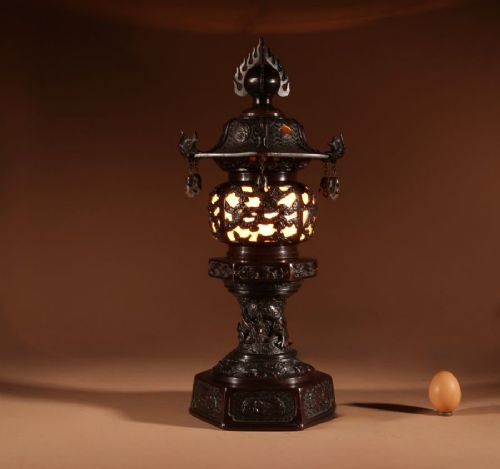
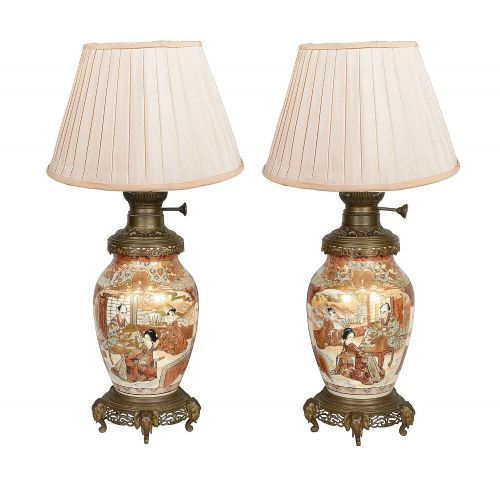
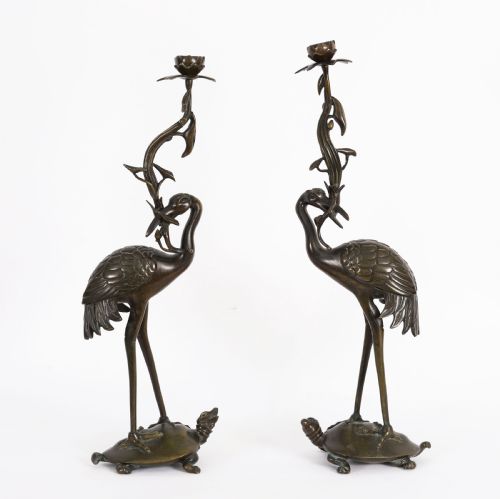
The most common forms on this page are table lamps adapted from nineteenth-century vases, alongside pricket candlesticks and hanging lanterns. These items combine Eastern artistic traditions with practical domestic illumination.
Stylistic influences span the Meiji period, Qing dynasty, and Chinoiserie aesthetics, reflecting a sustained European fascination with Asian craftsmanship. Such objects introduce varied textures and historical depth into modern interiors.
Materials and construction
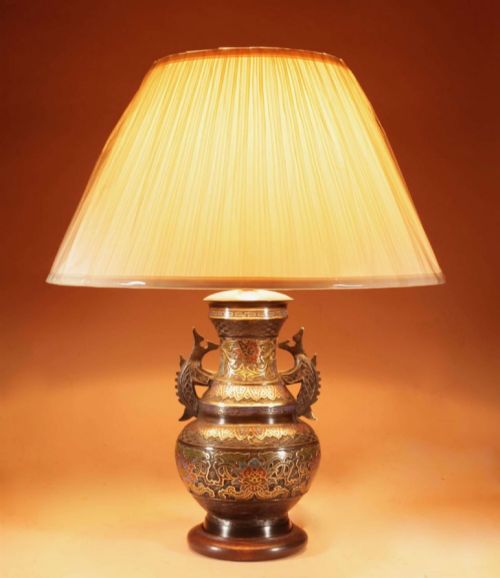
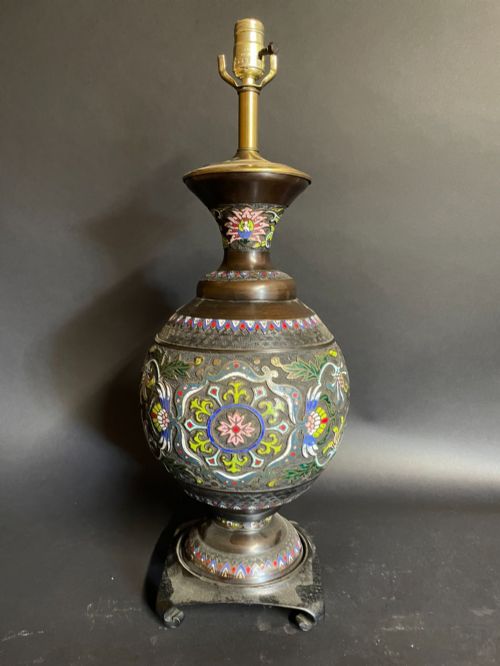
Foundations rely heavily on cast bronze and brass, frequently enhanced with enamel, cloisonné, or champlevé detailing. Many pieces incorporate porcelain or celadon elements alongside the metal structure.
Lamps often utilise secondary materials such as silk, fabric, and wood for shades or bases. Artisans combined traditional vessel-making techniques with later electrical adaptations to suit Western homes.
The selection includes Japanese Meiji period works, Chinese export pieces, and Edwardian Chinoiserie adaptations.
Assessing quality
Quality rests in the crispness of the bronze casting and the precision of surface decoration such as cloisonné or enamel work. Finer examples display meticulous attention to detail in sculptural elements like dragons or elephants.
The integrity of the original vessel dictates the overall merit of the converted lamp. Pieces that retain their original form without excessive structural alteration command greater appreciation from collectors.
The Asian Bronze Lighting Glossary
- Meiji Period
- The era in Japanese history spanning 1868 to 1912, known for opening trade with the West and producing intricate metalwork. Many decorative lamps and vases originate from this distinct span.
- Cloisonné
- An enamelling technique where metal wire is soldered to a metal body to create compartments filled with paste and fired. This method produces vibrant, patterned surfaces often seen on lamp bases.
- Champlevé
- An enamelling process where troughs are gouged into a metal surface and filled with enamel before firing. It creates bold coloured designs on bronze vessels.
- Pricket Candlestick
- A candlestick featuring a sharp central spike designed to hold a candle in place rather than a socket. These items are frequently converted into distinctive table lamps.
- Celadon
- A term for ceramics denoting a pale green jade-like glaze originating in China. These vases are commonly repurposed into lighting fixtures.
Asian Bronze Lighting: Frequently Asked Questions
How do I identify a Meiji period piece?
Meiji period items date between 1868 and 1912, a time when Japanese metalworking reached a high point for international export. Look for dynamic sculptural forms like dragons or elephants alongside precise bronze casting.
These pieces reflect the artistic shifts occurring in Japan during the late nineteenth and early twentieth centuries, tailored for Western aesthetic tastes.
What is the difference between cloisonné and champlevé?
Cloisonné involves soldering thin metal wires onto a bronze base to form enclosed cells that hold coloured enamel. This creates a detailed network of patterns across the surface.
Champlevé relies on recessing troughs directly into the thick bronze body itself before applying enamel. Both techniques produce durable, highly decorated surfaces found on antique lighting.
How do I style an Asian bronze lamp?
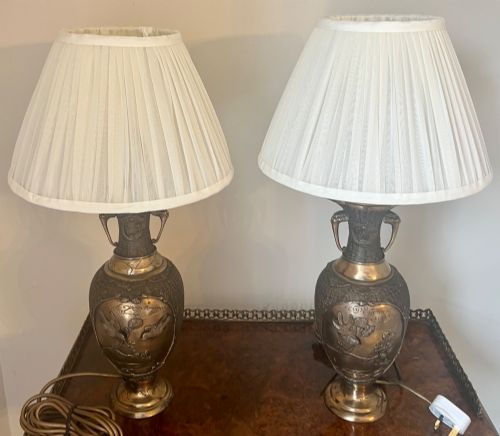
These lamps function well as focal points on sideboards, desks, or living room tables where their rich patination can be appreciated. Pairing them with simple fabric or silk shades allows the ornate bronze base to remain the visual centrepiece.
Their varied heights and sculptural silhouettes suit both traditional interiors and minimalist modern spaces seeking a touch of historical contrast.