


Asian Stoneware
Asian antique stoneware pieces span centuries of kilns, taking forms from celadon dishes to incense burners that collectors prize for their rich glazes.
Asian Stoneware
When you search for asian antique stoneware, you encounter vessels and figures shaped across numerous dynasties and periods. These objects include massive censers, jardinieres, jars, and decorative dishes originating from Chinese, Japanese, and Southeast Asian kilns.
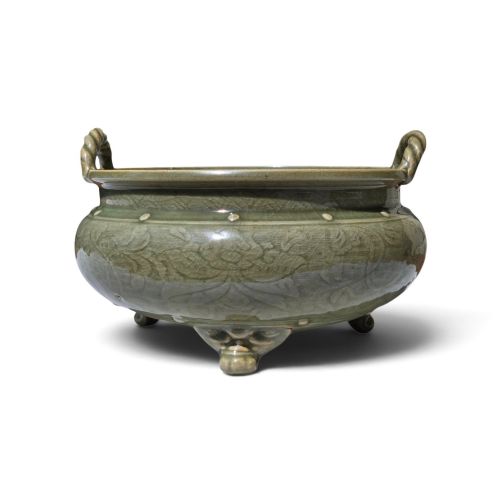
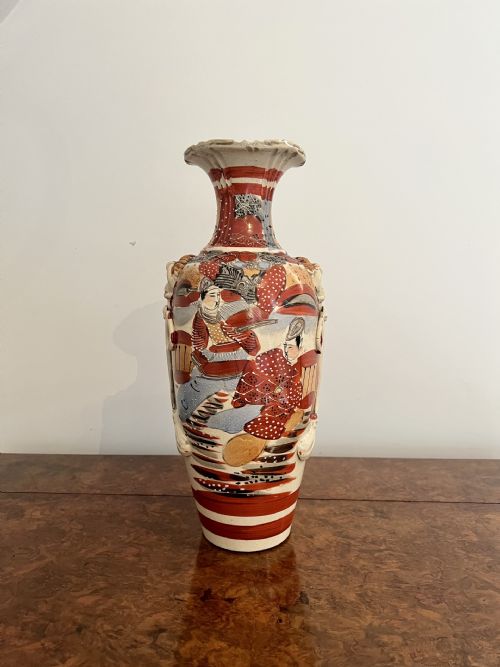
The selections available here range from early Song and Yuan dynasty celadons to later Ming pieces, alongside Meiji and Taisho-Showa Japanese works. Buyers frequently find large dishes bearing moulded floral scrolls, tripod censers, and figural jars.
Forms stretch from utilitarian vessels to highly ornamental jardinieres and decorative figures like Buddhistic lion dogs. Each piece carries the distinct regional traits of its specific production era, from Siamese Si Satchanalai kilns to imperial Chinese workshops.
Materials and Techniques
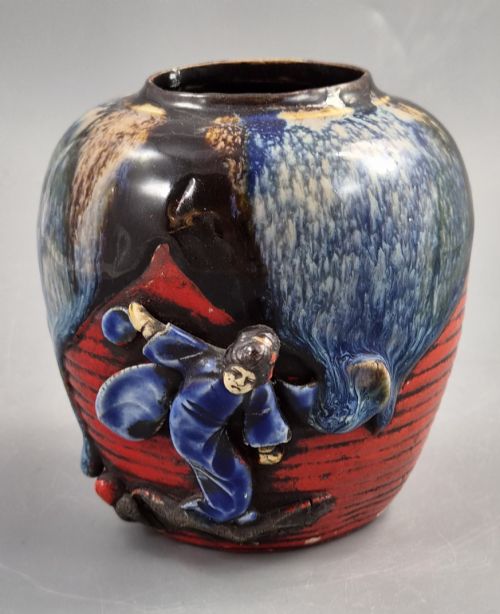
Potters shaped these items from dense clay bodies, finishing them with specialised finishes such as celadon glaze, blue flambé glaze, or enamel. Many vessels received carved, incised, or moulded ornamentation beneath the liquid coat before firing.
Kiln workers executed high-temperature firings that fused the ceramic body with its glassy coating, producing durable surfaces suited for daily utility or ornamental display. Certain pieces incorporate additional decorative layers like gold leaf over the fired base.
Listings feature stonewares from the Song, Yuan, and Ming dynasties, alongside Japanese Meiji and Taisho-Showa periods.
Distinctions in Quality
Superior examples display crispness in moulded or carved details, such as clearly articulated floral scrolls and evenly distributed celadon glazes free of heavy pooling or dry spots. The control exerted over reduction firings dictates the depth and consistency of the final surface colour.
Attribution to documented makers or specific historic kilns elevates a piece's standing among collectors. The structural integrity of large forms, such as heavy jardinieres and tall vases, further separates standard production items from masterworks.
Makuzu Kozan II·Hattori
The Asian Stoneware Glossary
- Jardiniere
- A large decorative ceramic pot designed to hold live plants or floral arrangements. These vessels frequently sit on prominent display tables.
- Censer
- A ritual vessel used for burning incense, typically supported by three or more feet. Historic examples often take heavy tripod forms.
- Flambé glaze
- A streaked or mottled high-fired ceramic finish produced by controlled kiln atmospheres. It creates dramatic colour transitions across the vessel body.
Asian Stoneware: Frequently Asked Questions
What is Asian antique stoneware?
Asian antique stoneware encompasses durable ceramic vessels and figures produced across China, Japan, and Southeast Asia using high-firing clay bodies. These objects include utilitarian storage jars, ritual incense burners, and ornamental jardinieres.
Items are typically finished with glazes like celadon or blue flambé, reflecting the technological advancements of periods ranging from the Song dynasty to the twentieth century.
How do I identify a celadon glaze?
A celadon glaze is characterised by its jade-green or olive coloration, resulting from iron oxide reacting within a reduction kiln. The translucent layer often reveals carved or moulded patterns beneath.
Collectors look for subtle variations in tone and depth across the surface of plates, bowls, and jars.
Where were these stonewares made?
Production centres spanned numerous regions, including imperial Chinese kilns, Japanese Meiji period workshops, and Southeast Asian sites like the Si Satchanalai kilns in Thailand. Each location utilised local clays and distinct stylistic traditions.
Specific regional characteristics help experts attribute pieces to particular centuries and dynasties.
How should I display a jardiniere?
Jardinieres were originally created to house plants or display cut branches, acting as substantial decorative focal points within interior spaces. Their heavy stoneware construction provides stable support for large floral arrangements.
Placing them on sturdy stands or low tables allows proper viewing of their exterior glazes and moulded reliefs.