


Ash Windsor Kitchen Chairs
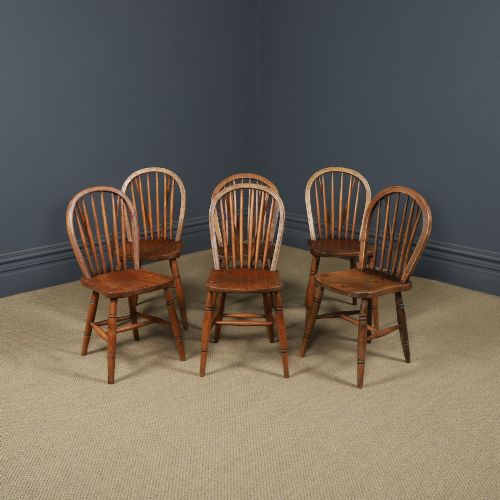
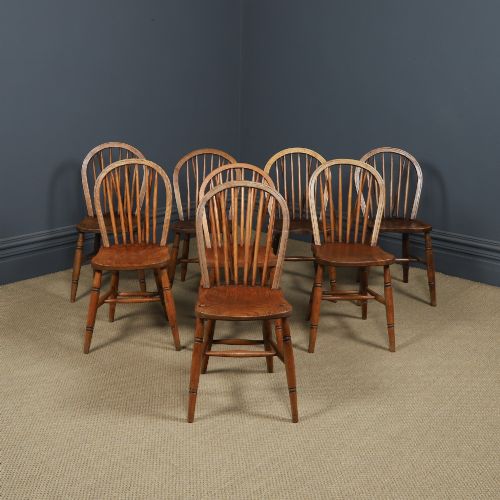
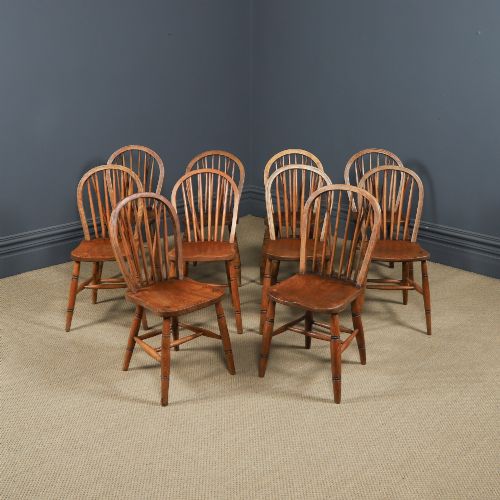
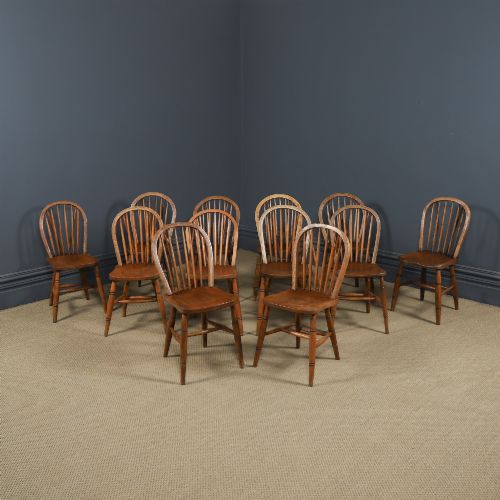
These ash windsor kitchen chairs combine sturdy regional carpentry with shaped seats and comfortable stick backs.
Ash Windsor Kitchen Chairs
Ash windsor kitchen chairs appear across nineteenth-century and early twentieth-century periods, spanning Victorian and Edwardian country styles. Buyers meet single armchairs, carvers, and matching sets of various sizes intended for everyday dining.
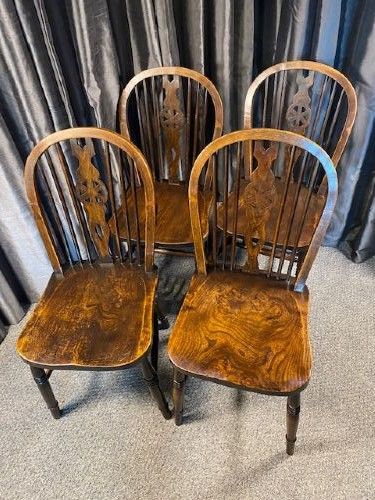
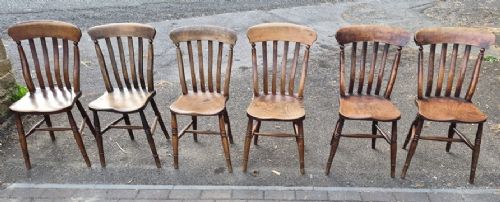
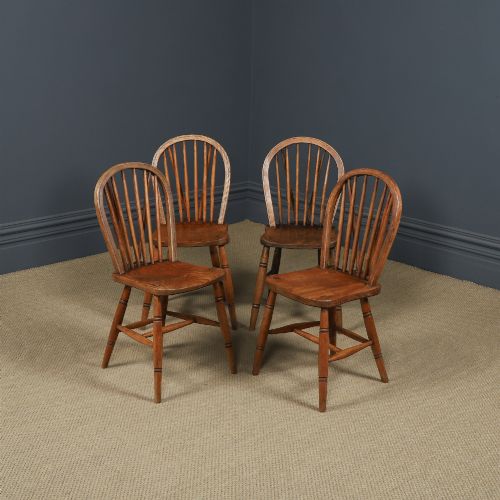
Regional workshops produced distinct variations including hoop backs, stick backs, wheel backs, and Thames Valley designs. These utilitarian seats served farmhouse kitchens and domestic spaces with robust timber construction.
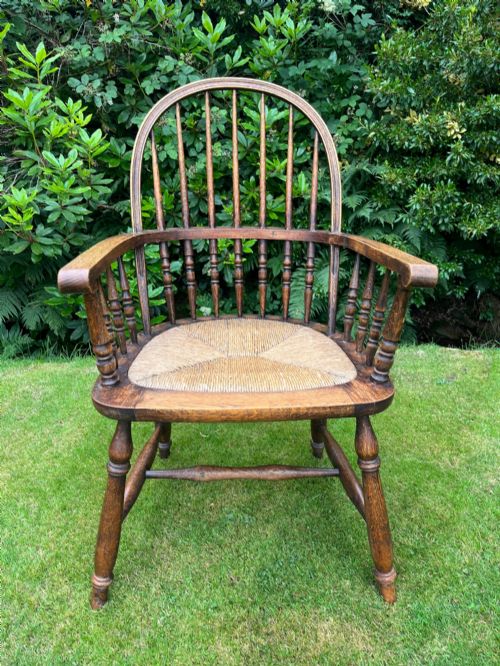
Makers shaped heavy wooden seats from solid planks and inserted slender spindles to form supportive backrests. Surviving examples range from simple low-back formats to broader armchairs designed for heavier daily use.
Materials and Construction
Carpenters utilised ash for its strong, flexible bending qualities in the bow frames and spindle components. Elm provided the thick, stable seat planks necessary to resist splitting under upright tenon joints.
Additional framing elements frequently incorporated beech for turned legs and stretchers, creating a mixed-timber structure. Traditional wedged joints and steam-bent members held the rigid wooden parts firmly together.
Many seats bear the subtle indentations of generations sitting down to supper.
Craftsmanship and Consistency
Quality differences depend on the thickness of the carved elm seat and the purity of the turned ash spindles. Uniformity across larger dining sets distinguishes carefully matched workshop production from assembled groups.
Subtle details such as the sweep of the arm bow and the depth of the saddle seat separate standard utility items from finer regional interpretations. Well-preserved surface patination indicates careful handling over generations of domestic use.
The Ash Windsor Kitchen Chairs Glossary
- Windsor chair
- A wooden chair constructed with a thick solid timber seat into which the legs and back spindles are independently inserted. This method creates a sturdy, rigid frame without relying on a conventional box underframe.
- Hoop back
- A continuous bentwood bow forming the upper backrest and arm supports of the chair. Steam is applied to the timber to achieve this curved structural shape.
- Stick back
- A chair back composed of multiple plain vertical wooden spindles secured into the seat and top rail. These slender members provide simple structural support.
- Wheel back
- A chair design featuring a pierced wooden splat carved in the shape of a spoked carriage wheel. This decorative central element sits within the stick or hoop backrest.
- Carver
- An armchair version of a dining chair, typically featuring elbow rests. These pieces often accompanied larger sets of matching single chairs at a table head.
Ash Windsor Kitchen Chairs: Frequently Asked Questions
Were these chairs used only in kitchens?
These pieces served practical roles in farmhouse kitchens, cottage dining rooms, and general domestic interiors where durable seating was required.
Their robust timber construction allowed them to withstand heavy daily wear across dining and working environments.
How do I identify elm and ash timbers?
Elm typically displays a pronounced interlocking grain pattern that resists splitting, making it ideal for carved plank seats.
Ash offers a pale colour with a straight, tough grain suited for steam-bent hoops and slender turned spindles.
Are large sets harder to find than single chairs?
Single armchairs and smaller pairs appear frequently, reflecting typical household attrition and individual replacement over time.
Matched sets of six, eight, or more pieces require careful pairing of workshop styles and timber characteristics.
What distinguishes Thames Valley examples?
Thames Valley workshop pieces often exhibit specific turning details and refined timber selection originating from southern English regional traditions.
These regional variations show distinct shaping in the arm supports and saddle seats compared to other localities.