



Ash Chest on Chest
Ash chest on chest pieces offer striking timber grain and generous vertical storage, combining sturdy hardwood construction with understated period elegance.
Ash Chest on Chest
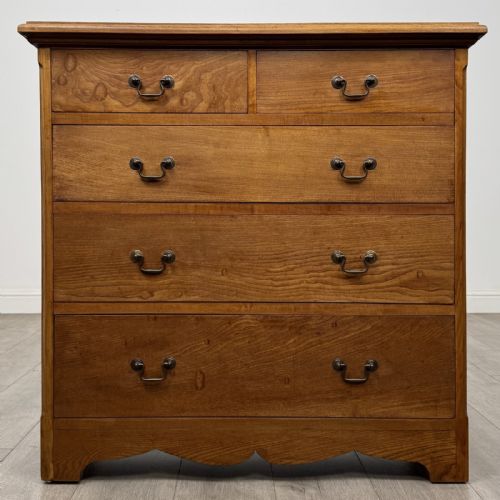
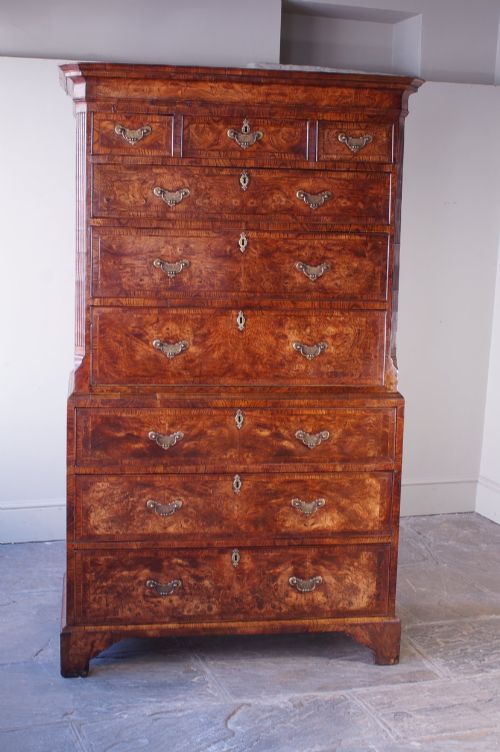
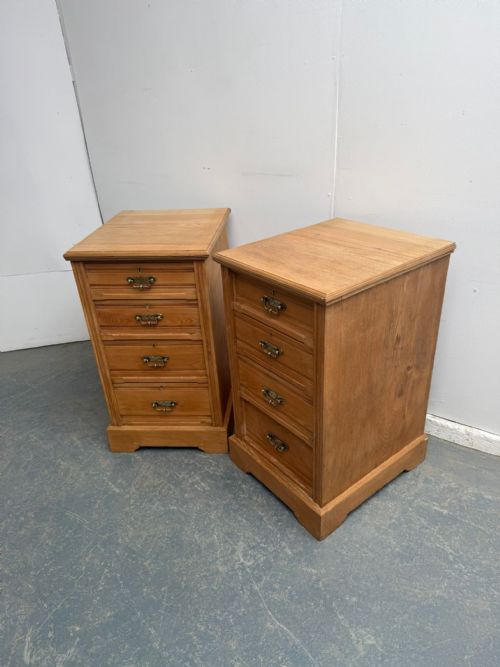
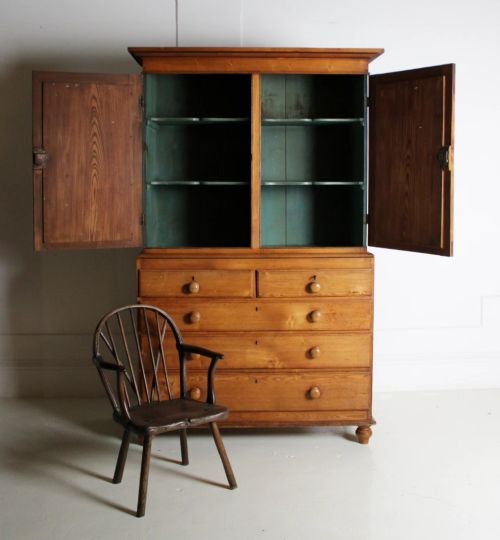
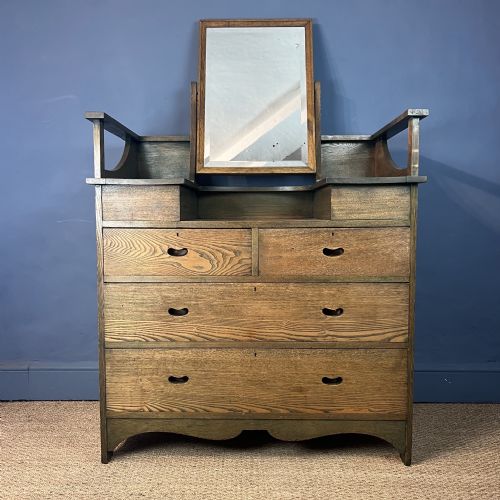
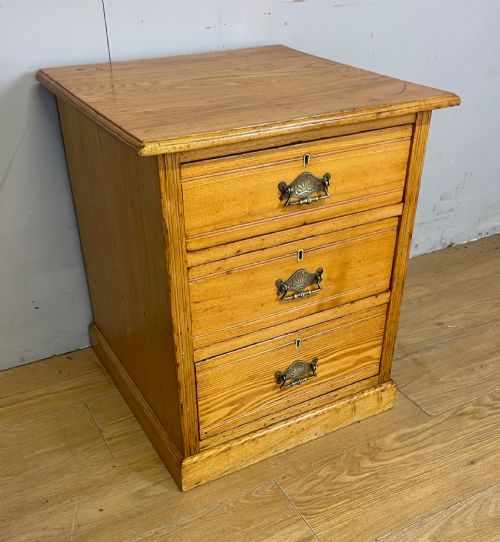
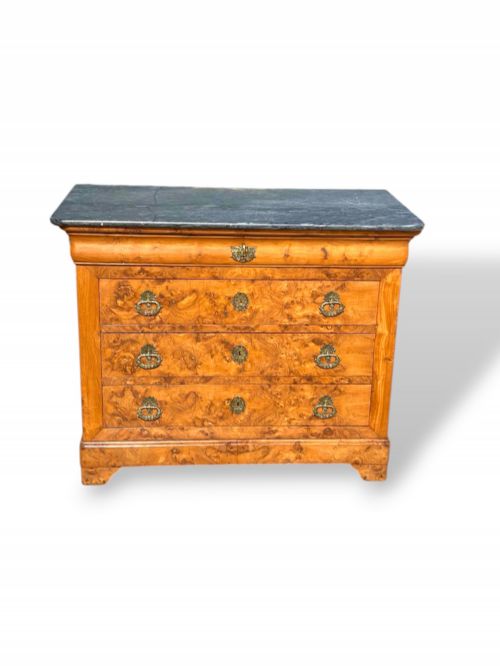
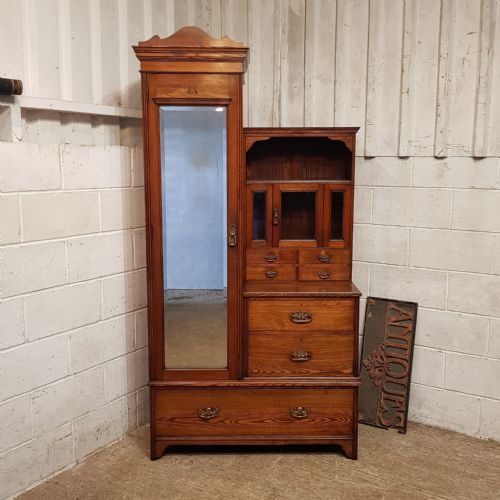
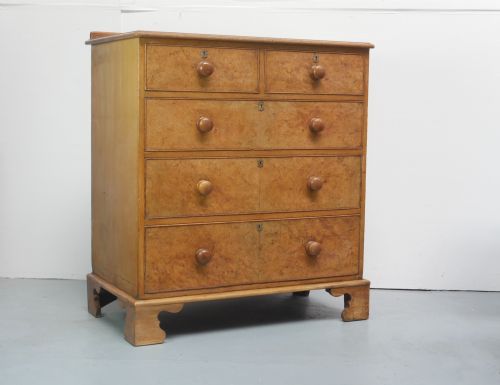
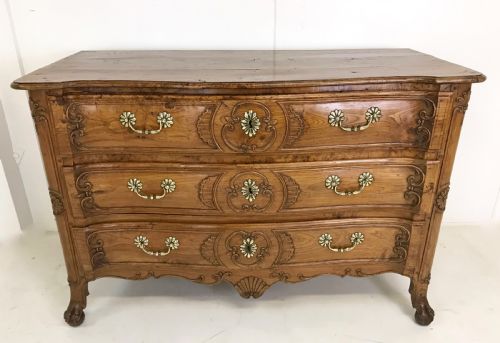
An ash chest on chest is a substantial tall storage piece formed by stacking a smaller set of drawers directly upon a deeper base section. The pieces seen here span from the 18th century through to the early 20th century, encompassing Georgian, Victorian, and Arts and Crafts design movements.
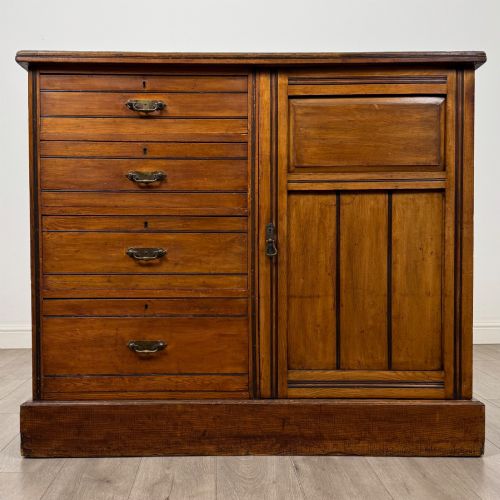
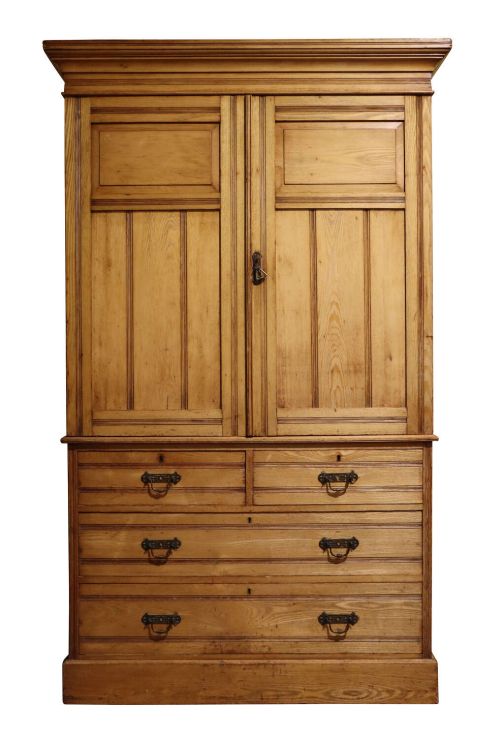
While the literal form is the stacked chest, the broader selection of ash storage furniture on this page includes related linen presses, tall wardrobes, and compact commodes. These items suit bedrooms and living spaces where tall vertical furniture provides maximum storage without consuming excessive floor space.
Materials and construction
Cabinet makers utilised solid ash alongside decorative veneers such as burr ash and figured ash to create varied surface movement and texture. Secondary timbers like oak often provide structural integrity to internal framing and drawer linings.
Fittings typically include cast brass handles and escutcheons, while occasional examples incorporate glass, hand-applied paint finishes, or marble tops. Wax polishes and traditional stains, such as green stain, finish the exposed timber surfaces.
Listings span from the 18th century through the Victorian era to early 20th-century Arts and Crafts examples, utilising brass, burr ash, and oak.
Evaluating quality in ash furniture
Quality rests primarily in the selection of the timber, where highly figured burr ash veneers or carefully matched solid boards distinguish finer examples from plain utility pieces. The crispness of the drawer construction, the neatness of the dovetails, and the retention of original brass hardware elevate a piece.
The integrity of the structural joinery and the survival of original surface treatments, whether waxed, stained, or painted by hand, dictate the standing of an individual item within its period.
G. Bartholomew & Co·Maple & Co·George Walton
The Ash Chest on Chest Glossary
- Ash
- A tough, pale British hardwood prized for its strong grain pattern and flexibility. It takes polish well and forms robust structural frames.
- Burr ash
- A decorative wood veneer taken from the growth excrescences on ash trees, showing swirling knot formations. This material is used on high-status drawer fronts and commodes.
- Commode
- A low cabinet or chest of drawers designed for bedroom storage. The term covers continental styles like Louis Philippe as well as English variations.
- Linen press
- A tall cupboard featuring upper sliding trays or shelves for textiles above lower storage drawers. These pieces often match the stacked profile of a chest on chest.
- Wellington chest
- A tall, narrow set of drawers secured by a hinged vertical locking sidebar on one side. This clever mechanism keeps all drawers safely locked with a single key.
Ash Chest on Chest: Frequently Asked Questions
What is an ash chest on chest?
An ash chest on chest is a tall, two-part storage unit made from ash timber, featuring a smaller set of drawers stacked securely upon a larger base section.
This vertical format maximises storage capacity while maintaining a relatively compact floor footprint within a bedroom or dressing room.
How do I care for ash furniture?
Maintain waxed ash surfaces by applying natural beeswax periodically and buffing gently with a soft cloth to nourish the grain.
Keep these pieces away from direct sunlight and radiators to prevent the timber from drying out or splitting.
Are these pieces solid ash?
The selection includes items made from solid ash timber as well as pieces featuring decorative burr ash or figured ash veneers applied to secondary woods.
Cabinet makers used veneers to display complex grain patterns that would be unstable if constructed entirely from solid timber.
How do I date an ash chest?
Dating relies on observing construction methods, handle styles, and design characteristics associated with periods from the eighteenth century to the early twentieth century.
Details such as dovetail construction, brass hardware, and the presence of Arts and Crafts or Georgian styling help determine the era of manufacture.