
Arts Crafts Oak Bureau
An arts crafts oak bureau brings honest utility and vernacular design into a room, offering a drop-front writing surface combined with storage.
Arts Crafts Oak Bureau
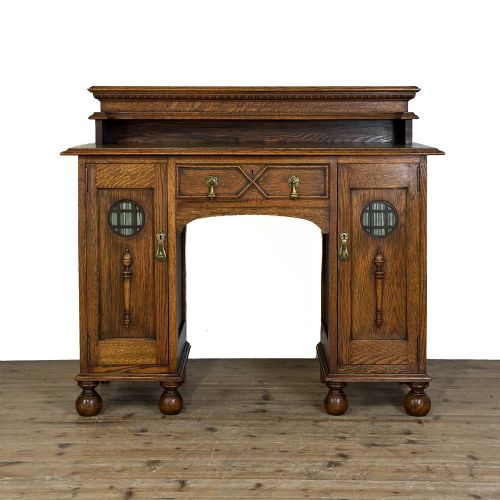
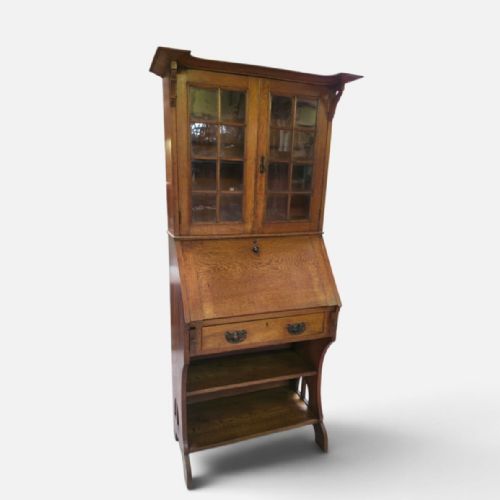
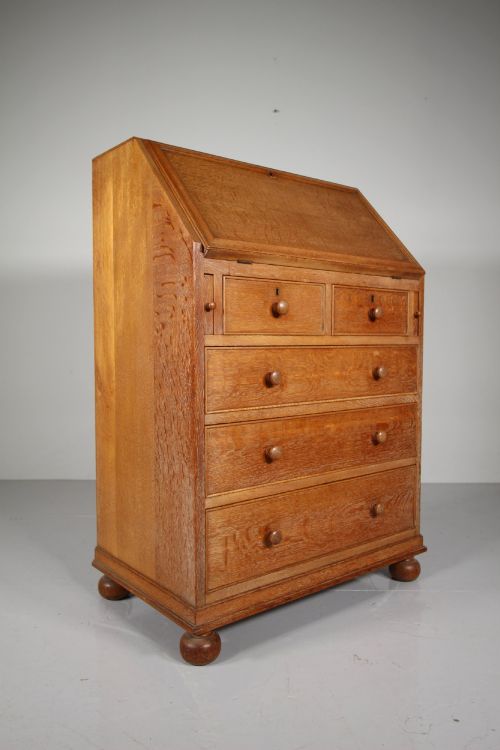
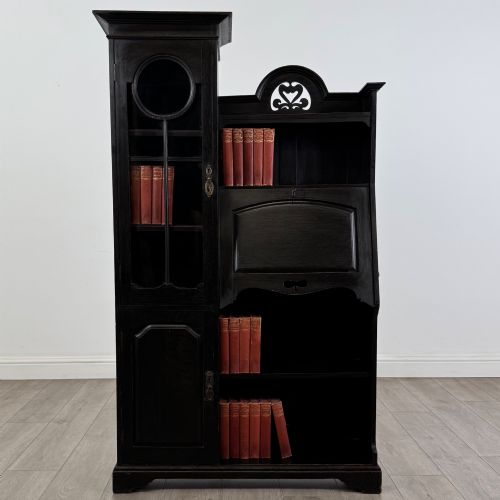
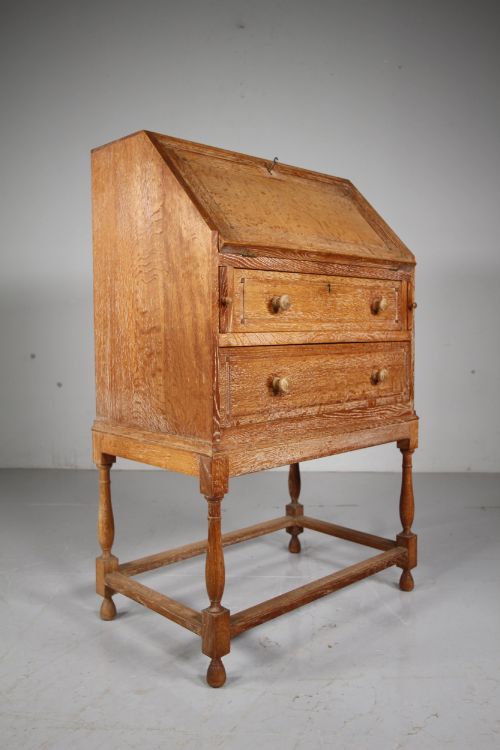
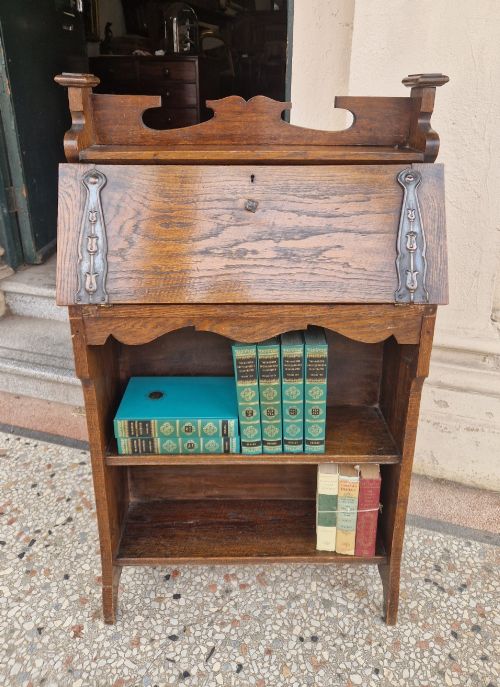
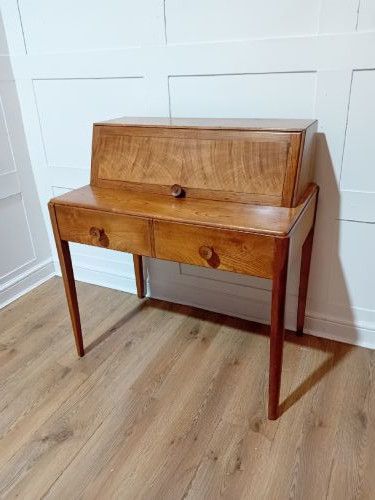
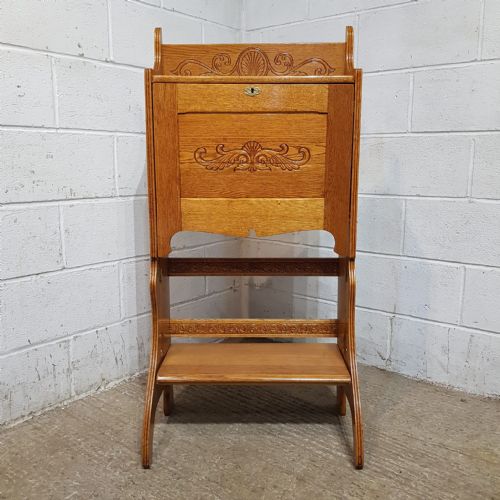
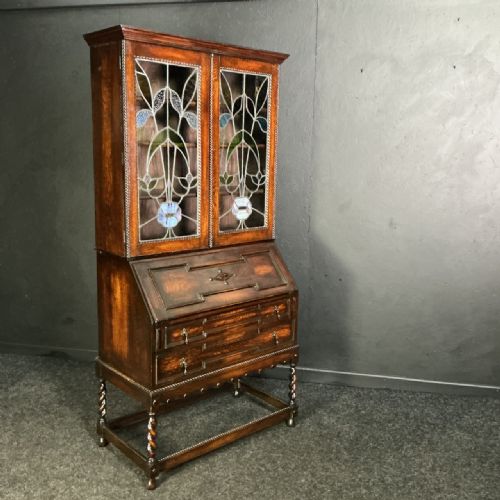
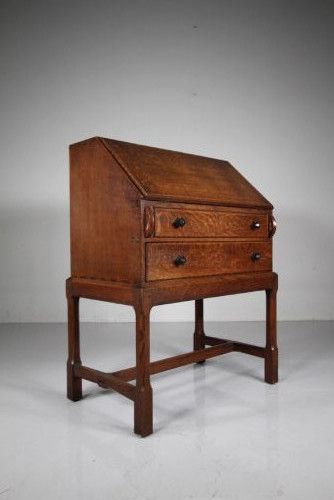
When you search for arts crafts oak bureau, you encounter compact writing desks and upright bureau bookcases dating from the late Victorian and Edwardian eras through to the 1930s. The most common versions on this page are Edwardian writing desks and bureau bookcases that display straightforward construction.
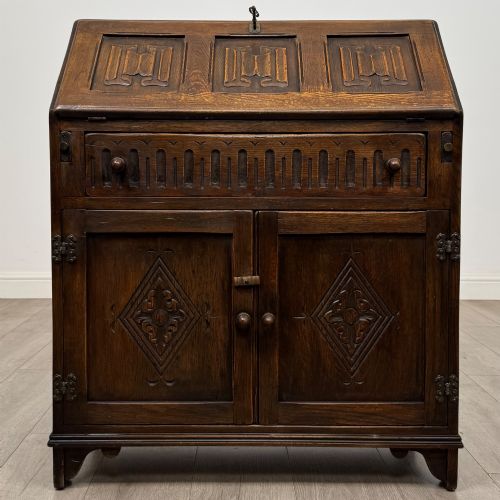
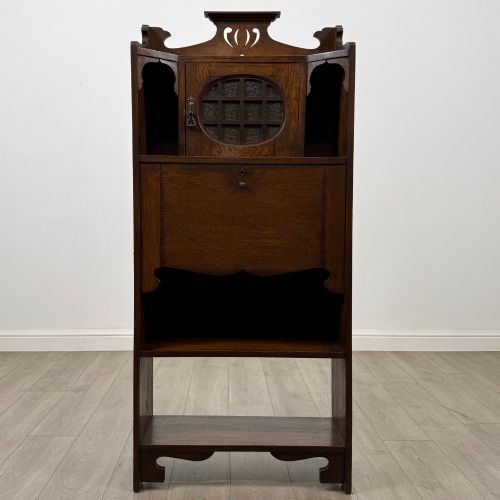
Forms range from narrow student models and davenports to large bureau bookcases fitted with leaded glass display cabinets and internal pigeonholes. Many pieces integrate revival styles such as Jacobean, Tudor, or Moorish details alongside the dominant Arts and Crafts aesthetic.
Materials and construction methods
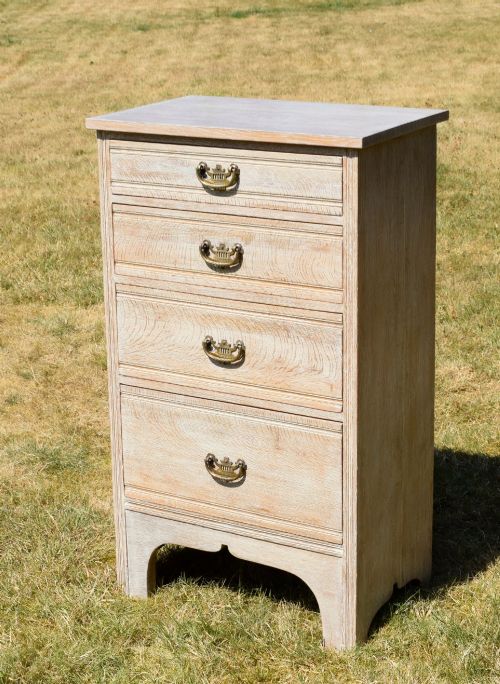
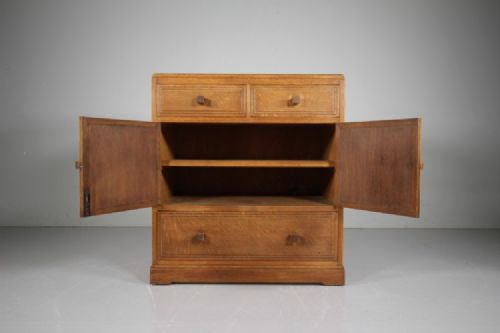
Makers built these pieces primarily from solid oak and golden oak, occasionally utilising oak veneers or limed finishes to alter the surface texture. Timber selection prioritised visible grain and natural warmth over uniform perfection.
Hardware played a structural and decorative role, with heavy copper, brass, and iron hinges, handles, and escutcheons secured to the wood. Secondary elements incorporated leaded glass panels and leather writing inserts.
One listed piece carries a carved wooden mouse signature, marking the distinctive output of a well-known Yorkshire workshop.
Differentiating quality in construction and design
The distinction between standard commercial items and superior examples lies in the integrity of the joinery and the selection of timber. Hand-beaten metalwork and thoughtful proportions separate workshop pieces from mass-produced catalogue items.
Signed items or labelled pieces from notable makers demonstrate superior hand-finishing in the interior drawers and drop-front mechanisms. Plain utilitarian versions rely entirely on the quality of the raw oak rather than decorative elaboration.
Heals of London·Arthur Basil Reynolds·Stanley Webb Davies·Bryn Mawr·Morris And Co·George W Jack·Robert Mouseman Thompson·Harris Lebus·Peter Waals·Liberty And Co·James Shoolbred And Co·Shapland And Petter
The Arts Crafts Oak Bureau Glossary
- Bureau bookcase
- A writing bureau combined with an upper section of shelving enclosed by doors. These doors frequently feature glass panels.
- Students bureau
- A smaller, narrower form of writing desk designed for limited space. It usually incorporates open bookshelves beneath or beside the writing flap.
- Linenfold
- A carved wooden panel moulding that imitates folded linen cloth. This motif appears frequently on Edwardian oak furniture.
- Pigeonhole
- A small open compartment placed inside the bureau interior for sorting letters and papers. These compartments sit above the main writing surface.
- Escutcheon
- A flat plate of metal surrounding a keyhole to protect the surrounding wood. In these pieces, they are typically made from brass, copper, or iron.
Arts Crafts Oak Bureau: Frequently Asked Questions
How were these bureaux used originally?
These desks served as household writing centres for correspondence, household accounts, and reading. The drop-front design allowed owners to conceal writing materials and papers when not in use.
Larger bureau bookcases combined this writing function with upper display space for books and decorative objects in domestic interiors.
How do I live with an oak bureau?
An oak bureau functions well as a working desk in a home office or as a compact writing station in a living room. The interior pigeonholes and drawers help keep modern stationery organised within a traditional footprint.
Position the piece away from direct heat sources and strong sunlight to protect the oak timber and any leather writing inserts from drying out.
How do I identify the period of a bureau?
Dating relies on observing construction details, hardware materials, and stylistic influences present in the woodwork. Pieces from the 1880s and 1900s often display distinct Arts and Crafts movement characteristics, while 1930s examples show Cotswold School influences or plain vernacular forms.
Labels, stamps, and stamps from retailers or makers provide definitive evidence of origin and date.