


Arts Crafts Kerb
These arts crafts kerb pieces are robust metal hearth surrounds that anchor a period fireplace with honest craftsmanship.
Arts Crafts Kerb
An arts crafts kerb provides a functional and decorative metal boundary around a fireplace hearth. Buyers seeking an arts crafts kerb encounter sturdy surrounds that double as fireplace fenders or fire curbs.
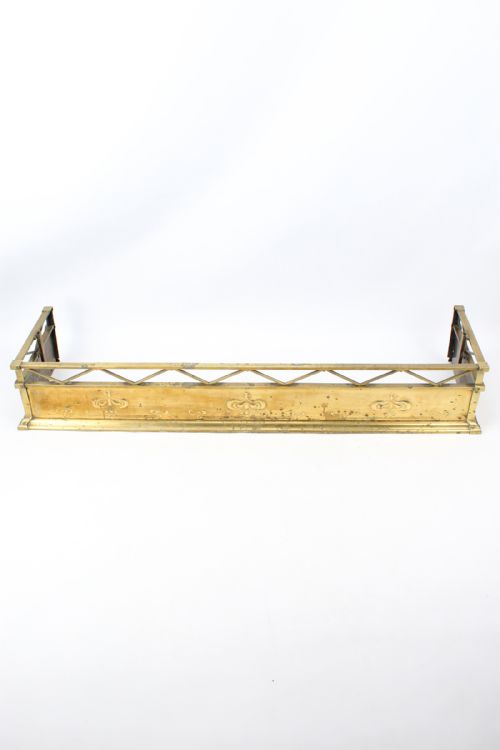
The pieces listed span the Victorian and Edwardian eras, reaching back to eighteen ninety and nineteen hundred. Most examples take the form of heavy brass or copper frames designed to contain ash and embers.
Origins stretch from English workshops to Scottish makers, occasionally reflecting the distinct style associated with Newlyn metalwork. These hearth furnishings bridge domestic utility and decorative arts.
Materials and construction
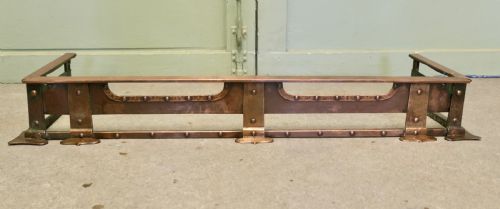
Makers utilised heavy sheet copper, solid brass, and forged iron to build these durable hearth surrounds. Riveted construction and visible fixings give the metalwork an unpretentious, industrial character.
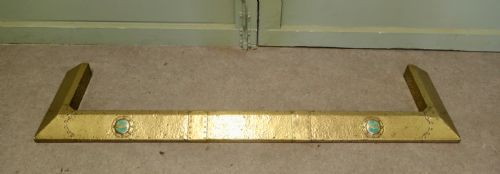
Beaten surfaces display deliberate hand-hammered texturing produced by skilled metalworkers. Enamel cabochons and brass mounts frequently accent the primary copper or iron structures.
Some copper kerbs hide bright green enamel cabochons that catch the flickering hearth fire just right.
Assessing quality and character
Superior examples distinguish themselves through substantial metal gauge and confident hand-beating rather than thin sheet construction. The integration of decorative elements like coloured enamel cabochons lifts certain pieces above utilitarian designs.
Integrity of the original riveting and the weight of the brass or copper frame dictate the structural grade of a kerb. Unfussy, honest assembly without extraneous ornamentation marks the better workshop productions.
The Arts Crafts Kerb Glossary
- Fender
- A low metal guard placed in front of a fireplace to keep stray coals off the floor. It serves the same domestic function as a fire kerb.
- Cabochon
- A polished gemstone or enamel inset shaped with a convex, rounded top rather than faceted edges. These often highlight the corners of a brass or copper frame.
- Riveted
- Joined together using metal pins hammered flat at the ends. This technique provides visible structural strength in nineteenth century metalwork.
- Beaten copper
- Sheet metal shaped by hand hammering, which leaves subtle surface facets and texture. It is a defining finish of the period style.
- Art Nouveau
- A design movement characterised by flowing, organic lines and stylised natural forms. It heavily influences the decorative motifs found on these metal kerbs.
Arts Crafts Kerb: Frequently Asked Questions
What is an arts crafts kerb?
An arts crafts kerb is a heavy metal frame placed on the floor around a hearth. It acts as a barrier to contain ash and sparks while defining the fireplace area.
Most examples combine brass, copper, or iron with hand-beaten finishes. They reflect the domestic metalworking traditions of the late nineteenth and early twentieth centuries.
How were these fire kerbs used?
These pieces sat directly on the hearthstone in front of open coal or wood fires. They stopped rolling embers from damaging carpets and wooden flooring.
Some designs also functioned as fender seats or provided a sturdy rail to warm feet. Their heavy construction allowed them to withstand daily hearth maintenance.
How do I clean a copper kerb?
Copper and brass components respond best to gentle dusting and occasional cleaning with appropriate metal care products. Aggressive scouring should be avoided to preserve the historic patina and hand-beaten texture.
Leaving minor surface wear intact often maintains the authentic character of nineteenth century metalwork. Heavy chemical polishes can strip away desirable age.
How do I date a brass kerb?
Dating relies on observing construction methods, material choices, and stylistic cues such as Art Nouveau motifs. Pieces marked by riveted copper, heavy gauge brass, and enamel cabochons typically point to the Victorian and Edwardian eras.
Comparing structural joints and fastener types helps distinguish nineteenth century production from later reproductions. Archival records and dealer notes provide additional contextual clues.