


Arts Crafts Fire Fender
An arts crafts fire fender grounds a hearth with metalwork and detail, bringing character and period integrity to a room.
Arts Crafts Fire Fender
An arts crafts fire fender forms a protective barrier around the hearth, combining practical function with distinct period design. These pieces appear in forms such as fire curbs, fireplace accessories, and adjustable surrounds.
The versions most commonly met on this page span the Victorian, Edwardian, and nineteen-hundreds periods, reflecting the height of the movement. Examples range from compact kerbs to large fixtures measuring over five feet in width.
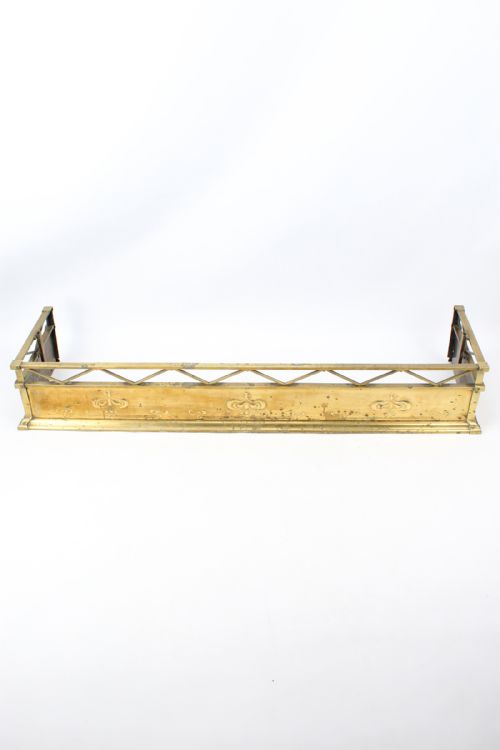
Originating in Britain, these fenders utilise traditional materials and regional craftsmanship, occasionally exhibiting specific provenance such as Scottish manufacture. Buyers encounter various configurations, including club fenders and pierced brass designs.
Materials and Construction
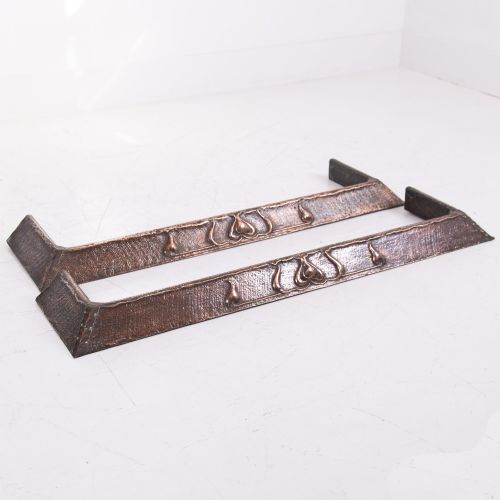
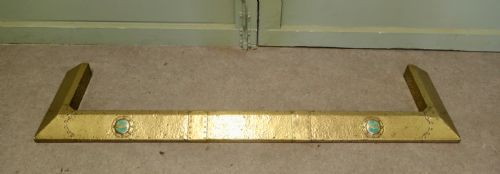
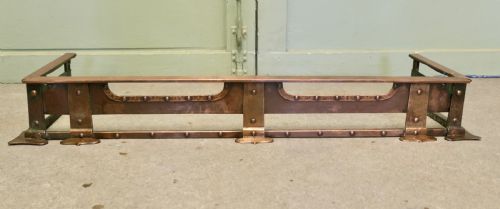
Makers shaped these fenders primarily from copper and brass, often employing beaten, hammered, or riveted techniques to create textured surfaces. Iron and oak also feature significantly in the construction, providing sturdy structural foundations for the metal components.
Decorative elements include green enamel cabochons, carved woodwork, and pierced detailing that align with Art Nouveau aesthetics. Construction methods range from heavy riveting to adjustable frames and carved club fender designs.
One stubborn fender still refuses to reveal whether it prefers a roaring coal fire or a quiet evening by candlelight.
Judging Quality
The distinction between standard and superior pieces lies in the depth of hand-working evident on the metal surfaces and the complexity of the design. Heavy gauge copper or brass, combined with meticulous hammering and riveting, separates finer examples from simpler production.
The integration of decorative components, such as enamel cabochons or carved oak elements, indicates the level of craftsmanship invested in the piece. Scale also plays a part, with larger or adjustable formats demonstrating more ambitious workshops.
The Arts Crafts Fire Fender Glossary
- Fender
- A low metal or wooden guard placed in front of a fireplace to contain sparks and ash. It frames the hearth and often incorporates seating or decorative kerbs.
- Cabochon
- A polished gemstone or enamel piece cut in a convex, unfaceted form. These often highlight the corners or decorative points of metalwork.
- Club fender
- A fire fender featuring upholstered seats on either end, creating a bench close to the fire. They are frequently adjustable.
- Kerb
- An alternative term for a fire fender, denoting the low stone or metal border enclosing the hearth area. It keeps fuel and embers contained.
- Pierced brass
- Metalwork decorated by cutting or piercing patterns through the sheet. This technique allows light to pass through and adds intricate detail.
Arts Crafts Fire Fender: Frequently Asked Questions
What is an arts crafts fire fender?
An arts crafts fire fender is a hearth surround made during the late nineteenth or early twentieth century, characterised by handcrafted metalwork like hammered copper or brass.
These pieces protect the room from stray embers while adding distinct period style through materials such as enamel cabochons and oak.
How do I choose the right size?
Measure the width and depth of your hearth area carefully before selecting a fender, noting that some pieces offer adjustable frames.
Consider the scale of the fireplace surround, as larger openings require wider fenders to maintain proper visual balance in the room.
Are these fenders adjustable?
Some designs, particularly club fenders and certain metal frames, feature adjustable mechanisms to fit varying hearth widths.
Checking the specific description helps determine whether a particular piece can be altered to fit your exact fireplace dimensions.
How do I care for copper and brass?
Copper and brass require gentle dusting and occasional cleaning with appropriate metal care products to maintain their finish.
Avoid harsh abrasives that might remove the historic patina or damage hand-beaten textures developed over the decades.
What styles accompany these fenders?
These pieces frequently incorporate Art Nouveau motifs, featuring organic lines, whiplash curves, and stylised floral elements.
Brutalist or riveted industrial finishes also appear, showing the broader range of metalworking styles popular during the period.