





Arts Crafts Elbow Chair
An arts crafts elbow chair brings honest construction and simple lines into a room, offering both everyday utility and enduring design.
Arts Crafts Elbow Chair
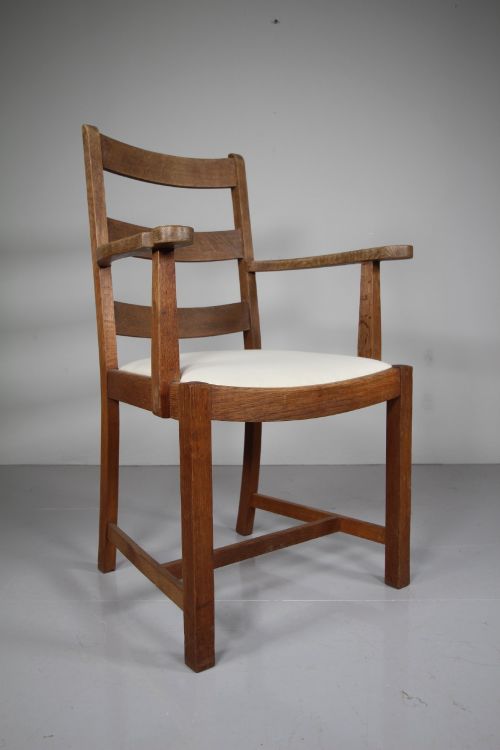
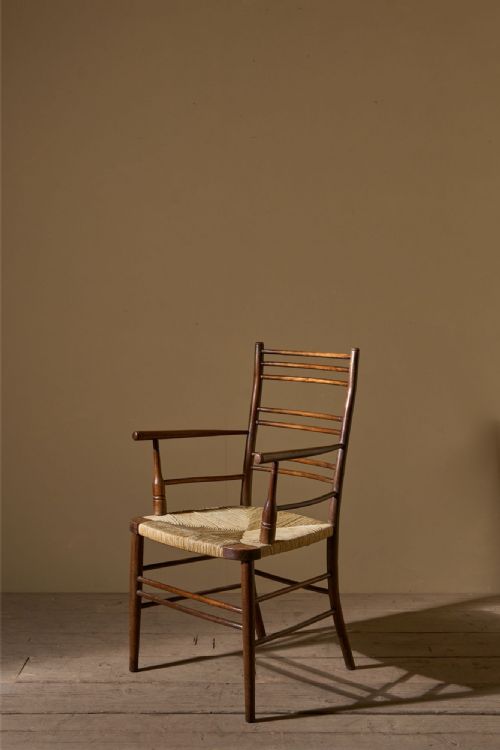
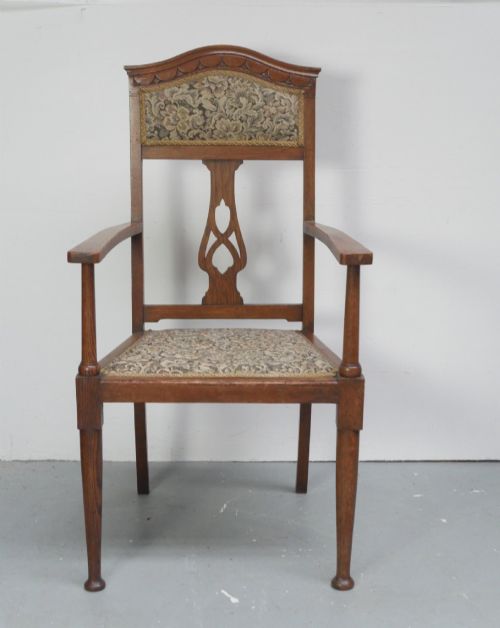
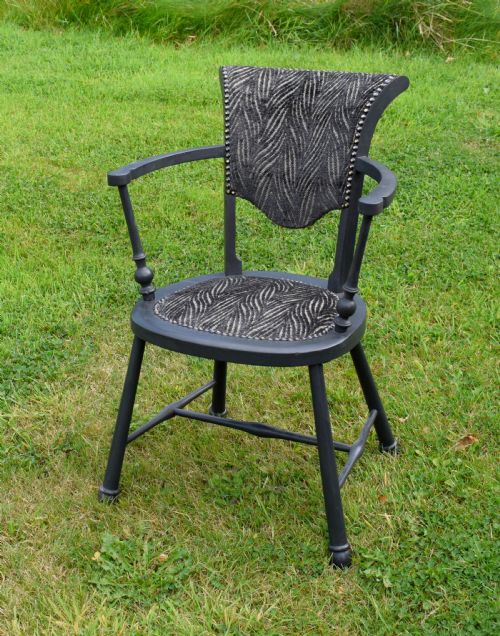
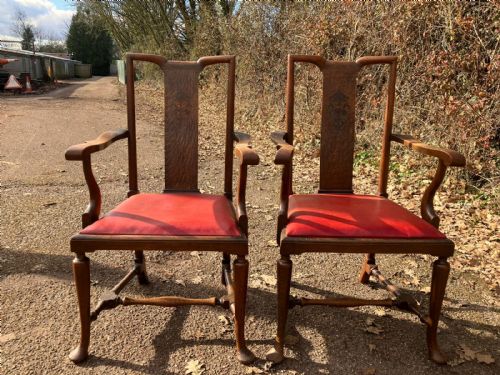
When you search for an arts crafts elbow chair, you encounter sturdy seating designed around the turn of the twentieth century, with Edwardian, Victorian, and later periods also represented. The examples meeting you on this page range from plain oak dining carvers to rush-seated low armchairs and desk chairs.
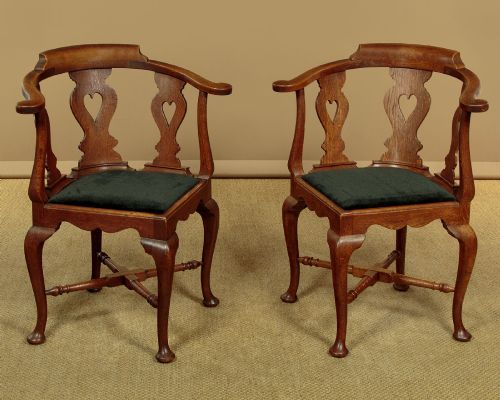
Forms include spindle backs, ladder backs, and corner chairs, often identified as carver chairs or elbow chairs. They derive from English country traditions and workshop designs, appearing in oak, mahogany, elm, and satinwood.
Makers and retailers such as Liberty and Co, Morris and Co, William Birch, and Shapland and Petter produced notable pieces. The construction prioritises utility and structural honesty over excessive ornamentation.
How they were made
Solid timber forms the primary structure, with oak dominating alongside mahogany, elm, and satinwood. Joinery relies on traditional methods like tenoning and pegged joints to maintain strength without metal fasteners.
Seats employ woven rush, drop-in fabric upholstery, or leather inserts attached to timber frames. Decorative touches include pewter inlay, marquetry, and carved slot backs rather than heavy applied moulding.
Schoolmaster chairs sneaked into the lineup, proving that stern authority also required a comfortable elbow rest.
What varies in quality
The distinction between standard commercial production and finer workshop output rests on the selection of timber and the crispness of the hand-finishing. Better examples show careful attention to grain matching and proportion, whereas simpler versions rely on heavier, utilitarian scantlings.
Original seating materials such as hand-woven rush or high-grade leather indicate higher workshop standards. The integrity of the frame joints and the retention of maker stamps or paper labels separate ordinary chairs from those with documented provenance.
Liberty and Co·Morris and Co·William Birch·Shapland and Petter·E W Godwin
The Arts Crafts Elbow Chair Glossary
- Elbow chair
- An armchair with low rests for the arms, often used at a desk or at the head of a dining table. These pieces provide compact support compared to bulky upholstered armchairs.
- Carver chair
- A traditional term for an armchair that matches a set of single dining chairs. They generally feature open arms and sturdy wooden frames.
- Rush seat
- A seating surface woven from dried marsh grass or similar fibrous material around a wooden frame. This technique creates a resilient, textured platform common in country chairs.
- Ladder back
- A chair back featuring horizontal slats arranged vertically between the upright posts. This design supports the sitter while keeping the furniture light in appearance.
- Spindle back
- A chair back constructed from multiple turned wooden rods. It distributes weight evenly across the frame.
Arts Crafts Elbow Chair: Frequently Asked Questions
How do I identify an arts and crafts elbow chair?
Look for exposed construction methods, straight or gently curved wooden frames, and an emphasis on materials like oak and rush. The design usually avoids ornate carving in favour of structural simplicity.
Check for maker marks or workshop labels under the seat rails, though many unsigned regional pieces exist.
Were these chairs used at desks or dining tables?
They served multiple functions in domestic interiors, appearing as desk chairs, bedroom chairs, and head-of-table dining carvers. Their compact proportions made them versatile for various rooms.
Lower models worked well near firesides, while taller versions suited writing desks and libraries.
How do I care for a rush seat?
Keep rush seats away from excessive moisture and direct sunlight to prevent the natural fibres from becoming brittle. Regular dusting with a soft brush helps maintain the material.
Avoid sitting on them with sharp objects that could catch and snap the woven strands.
Are these chairs comfortable for daily use?
Their supportive upright backs and sturdy arms make them practical for sitting during meals or desk work. They lack deep padding, offering firm support instead.
Upholstered drop-in seats or leather pads provide additional comfort where fitted.