



Arts Crafts Dresser Mirror
An arts crafts dresser mirror brings together honest timber and reflective glass, offering both practical utility and the distinctive hand-crafted aesthetic of the period.
Arts Crafts Dresser Mirror
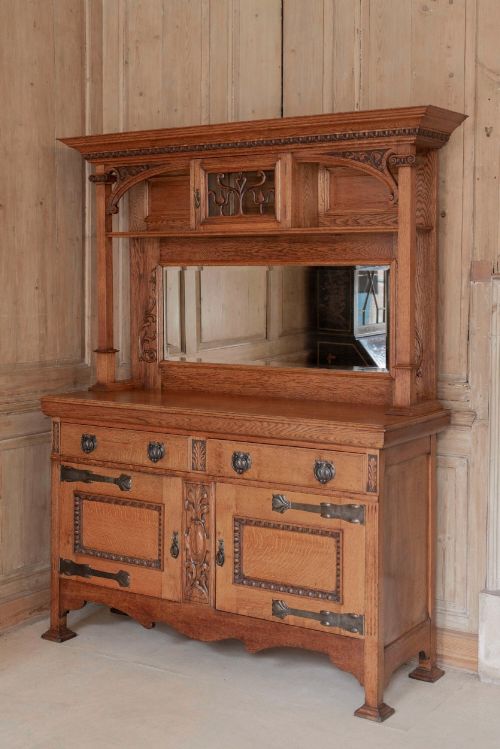
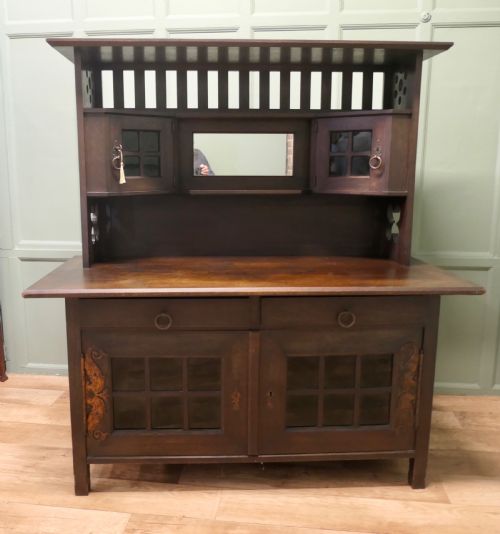
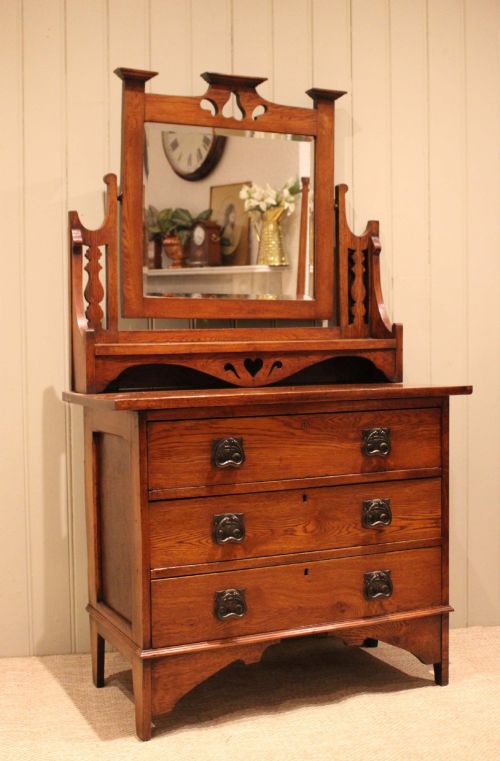
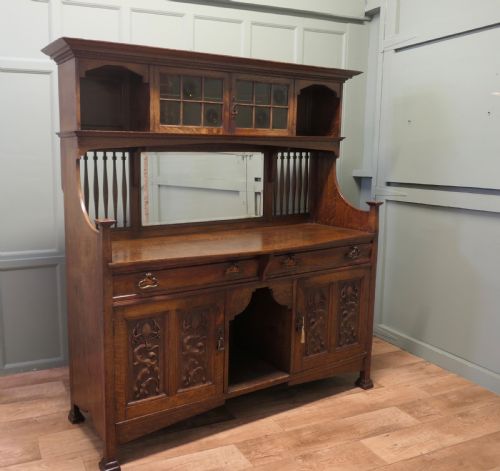
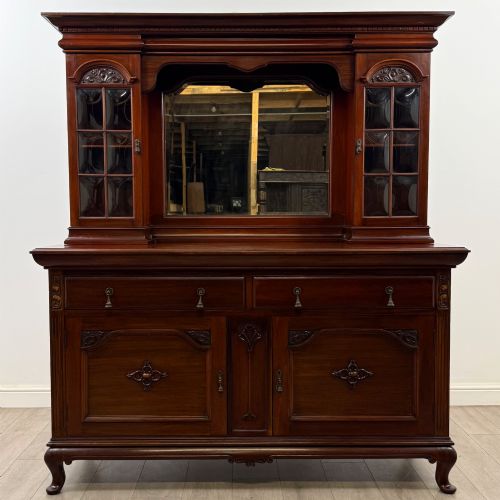
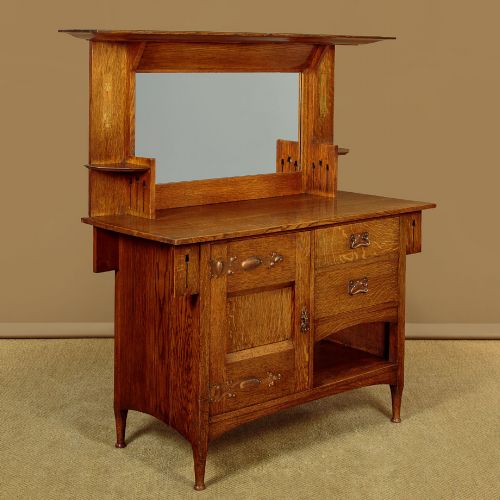
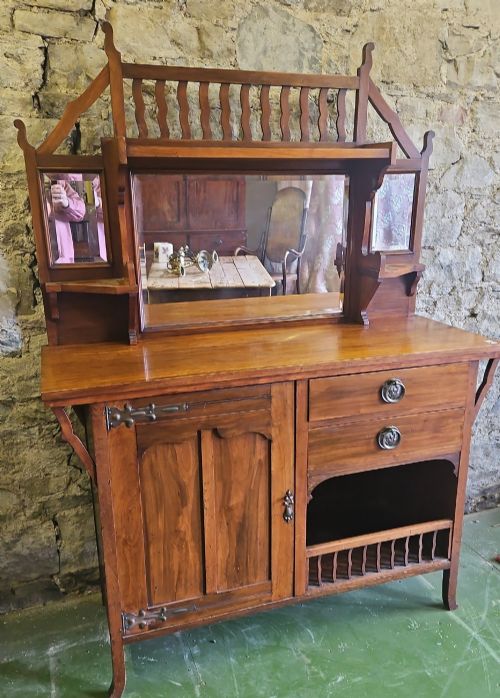
When you search for an arts crafts dresser mirror, you encounter pieces spanning the late nineteenth century through to the Edwardian era. These forms typically manifest as mirrorback sideboards, dressing tables, and dressing chests rooted in the Arts and Crafts movement.
Oak is the dominant timber seen across these listings, alongside mahogany and walnut, frequently paired with bevelled mirror glass and brass or copper hardware. The overall design prioritises structural integrity and visible craftsmanship over excessive ornamentation.
Sideboards with integrated mirror backs and smaller dressing chests represent the most common variations on this page. They reflect the domestic interior of the early twentieth century, combining storage with display space.
How they were made
Cabinet makers utilised solid oak and mahogany for the primary carcases, employing traditional joinery such as mortise and tenon joints to ensure durability. Timber surfaces were often waxed or polished to highlight the natural grain.
Metalwork details in brass, copper, and iron were utilised for hinges, handles, and strapwork, frequently displaying hand-hammered textures typical of the period. Mirror glass was securely fitted into wooden frames, sometimes accompanied by leaded glass door panels.
Arts Crafts Dresser Mirror Retail Price Guide 2026
Typical asking prices for arts crafts dresser mirror among the pieces listed under this phrase on Sellingantiques today, from the lower quarter to the upper quarter. They describe what is for sale here now, not the wider market.
What varies in quality
The choice of timber grade and the execution of the joinery set higher quality pieces apart from simpler workshop output. Selected quarter-sawn oak reveals prominent medullary rays, indicating superior timber selection.
Hand-finished hardware and original bevelled mirror glass contribute to the distinction of individual pieces. Maker attribution through stamped signatures or labels adds further differentiation within the surviving examples.
T Simpson and Son·Shapland & Petter
The Arts Crafts Dresser Mirror Glossary
- Arts & Crafts
- A design movement advocating for craftsmanship and traditional materials over mass production. It influenced furniture design from the late nineteenth century onwards.
- Edwardian
- Dating from the reign of King Edward VII, this period produced lighter domestic furniture often retaining earlier stylistic influences. It is well represented among these listings.
- Mirrorback
- A sideboard or cabinet featuring an integrated mirror and shelf superstructure above the main surface. This form allowed for the display of ceramics while reflecting light into the room.
- Quarter-sawn
- A method of cutting logs that produces a distinct grain pattern with visible flecks, frequently utilised in high quality oak furniture of this era.
- Bevelled glass
- Glass with an angled edge cut around the perimeter, creating a decorative border. It is a common feature on mirrors from the Victorian and Edwardian periods.
Arts Crafts Dresser Mirror: Frequently Asked Questions
How do I date an arts crafts dresser mirror?
Dating relies upon examining construction methods, timber choice, and hardware styles found on the piece. Edwardian and late Victorian examples often show characteristic joinery and specific brass or copper fixings.
Period labels or stamped signatures from workshops can provide precise confirmation of origin when present.
Where should I place a mirrorback sideboard?
These pieces function well in dining rooms or entrance halls where their storage capacity and display surfaces remain useful. Positioning them opposite windows allows the mirror glass to reflect natural light.
Sufficient wall space is necessary to accommodate the height of the mirror superstructure safely.
What is the difference between oak and mahogany versions?
Oak examples dominate the Arts and Crafts aesthetic, displaying visible grain patterns and a lighter tone. Mahogany variants tend to offer a smoother, darker surface finish.
Both timbers provide robust structural support for the integrated mirrors.
How do I care for the timber and mirror glass?
Regular dusting with a soft cloth helps preserve the polished wood surface without requiring heavy intervention. Traditional beeswax can be applied periodically to nourish the grain.
Glass cleaner applied to a cloth rather than directly onto the mirror prevents moisture seepage into the wooden frame.