
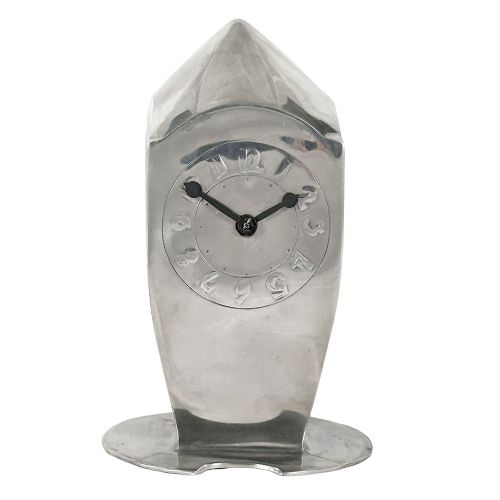
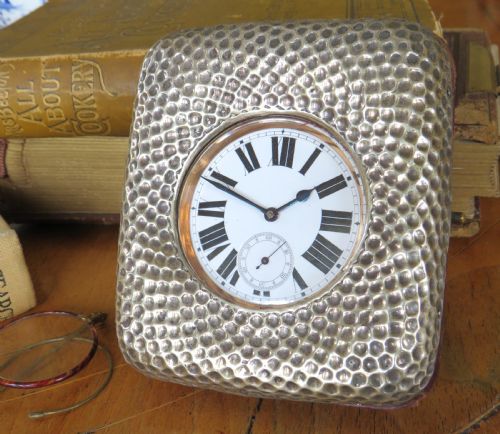


Arts and Crafts Silver Clock
These arts and crafts silver clock examples combine honest hand-working with striking period design, offering a functional centrepiece for the mantel.
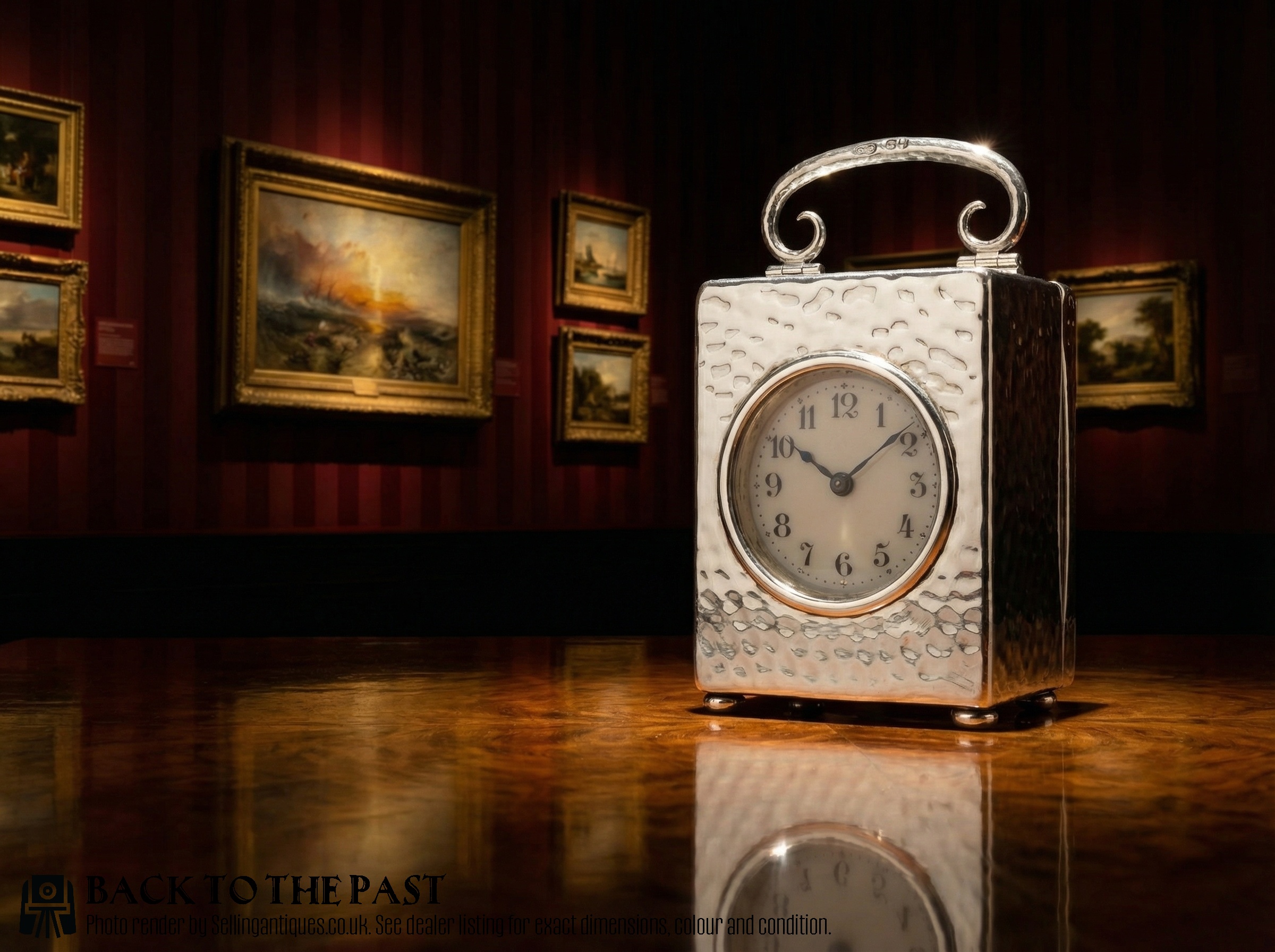
Arts and Crafts Silver Clock
Most examples date from around 1900 to 1920, taking the form of compact carriage clocks or small desk timepieces. The aesthetic relies on clean architectural forms or organic decorative elements rather than heavy Victorian ornamentation.
How they were made
Silversmiths utilised sterling silver and pewter sheet, often shaping the metal through manual hammering to create tactile surface textures. Cases incorporate secure bezels and handle fittings designed for daily travel or domestic movement.
Maker details and decorative schemes frequently integrate contrasting materials such as enamel, glass, and abalone shell. These accents are set directly into the metal framework to highlight the distinct craftsmanship of the period.
The listings show pieces dated across the Edwardian period, predominantly utilising sterling silver, pewter, and enamel.
What varies in quality
The distinction between standard production and superior work rests on the clarity of the hand-hammered surface and the crispness of any applied decoration. Finer pieces demonstrate careful integration of materials like enamel or shell without excess filler.
The presence of clear hallmarks and distinct attribution to notable designers elevates an object above unmarked commercial alternatives. Overall weight and the structural integrity of the silver or pewter case dictate the enduring merit of the timepiece.
Archibald Knox·Liberty and Co·David Veasey
The Arts and Crafts Silver Clock Glossary
- Sterling silver
- A standard alloy consisting of silver and other metals to ensure durability in domestic items. This material forms the primary casing for many carriage clocks.
- Tudric pewter
- A proprietary brand of pewter utilised for decorative domestic wares during the early twentieth century. It often mimics the appearance of silver while supporting complex cast or hammered designs.
- Carriage clock
- A small, portable spring-driven timepiece originally designed for travel. These items feature a flat base and a viewing glass or crystal panel.
- Hallmark
- An official stamp applied to precious metals indicating purity, origin, and assay office. These marks provide reliable dating for silver travel clocks and timepieces.
Arts and Crafts Silver Clock: Frequently Asked Questions
What defines an arts and crafts silver clock?
These timepieces reflect the design philosophies of the early twentieth century, prioritising simple construction and visible hand-craftsmanship over machine-stamped ornamentation.
Cases are typically formed from solid sterling silver or Tudric pewter, frequently accented with enamel work, hammered textures, or inset abalone shell.
How do I wind a vintage carriage clock?
Most period examples utilise a small key fitted to arbours on the back plate for the mainspring and sometimes the platform escapement. Care must be taken not to overwind the mechanism.
Regular servicing by a professional horologist ensures the internal gear train continues to keep accurate time after a century of use.
Were these clocks meant for travel?
Many smaller silver timepieces and carriage clocks were specifically constructed with sturdy cases and swinging handles for portability during Edwardian journeys.
Travel clocks often included fitted leather or velvet-lined cases to protect the exterior metal and glass panels from knocks.
How can I date an Edwardian silver timepiece?
Dating relies heavily on the assay office hallmarks stamped directly onto the silver casing, which record the exact year of testing and manufacture.
Stylistic indicators such as hammered surfaces, enamel panels, and specific maker marks also help place a clock within the wider movement.