
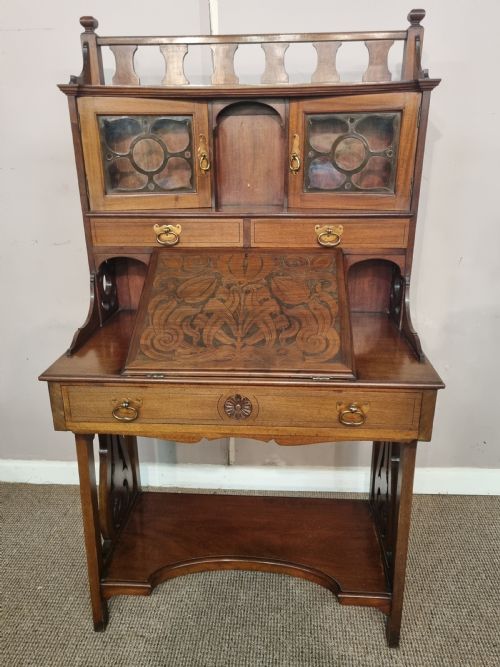
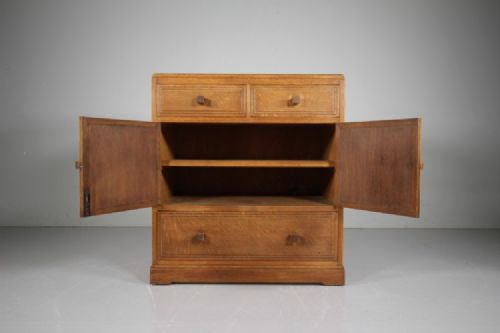


Arts and Crafts Secretary
An arts and crafts secretary brings honest woodwork and drop-front utility into a room, offering a compact writing surface built to last.
Arts and Crafts Secretary
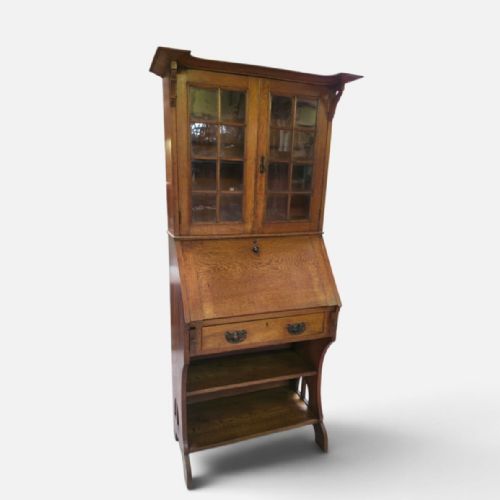
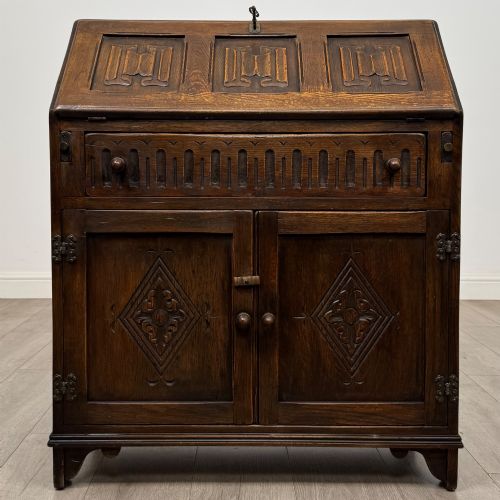
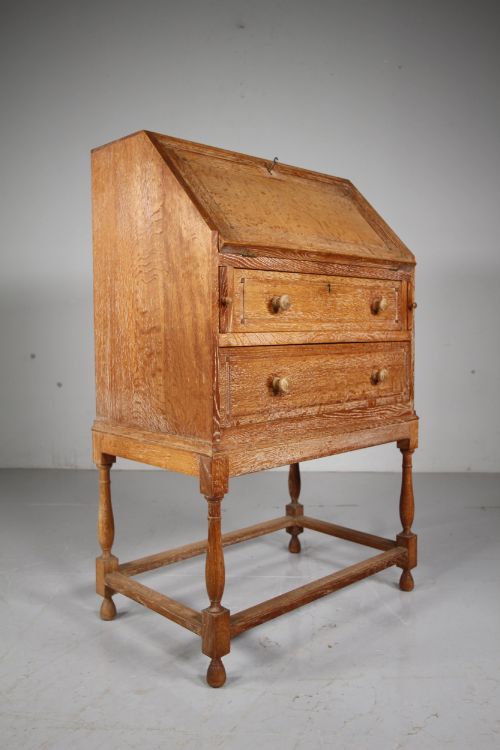
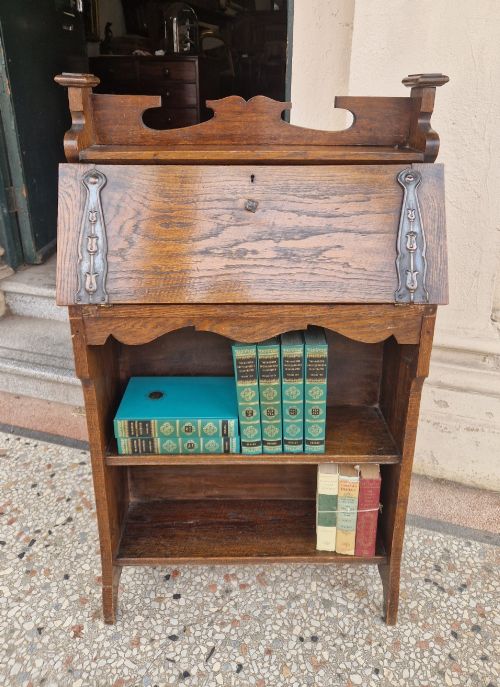
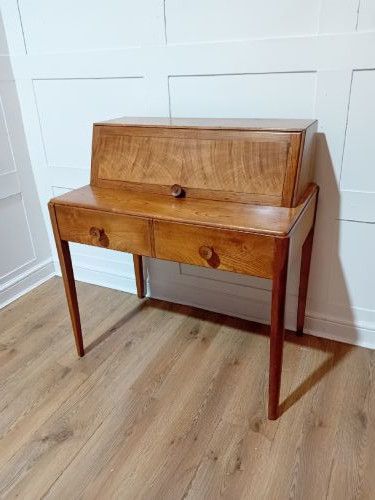
When you search for arts and crafts secretary furniture, you encounter practical drop-front desks and bureau bookcases designed for domestic writing and storage. The examples on this page span the Victorian era, the Edwardian period, and the early decades of the twentieth century, reflecting a movement towards simpler forms.
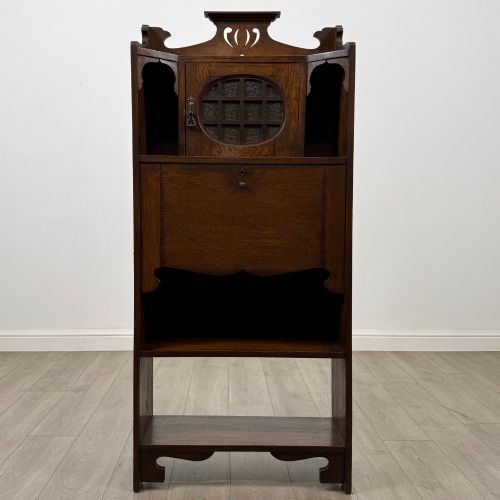
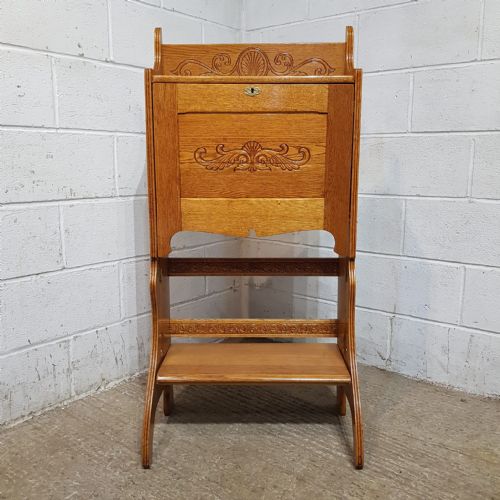
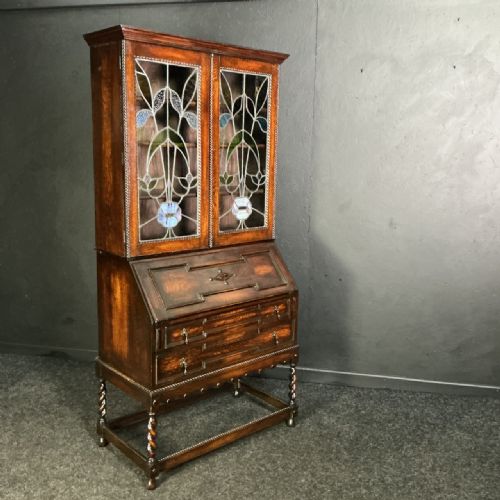
You are most likely to meet solid oak writing bureaux featuring fitted interior compartments and fall fronts. These range from narrow Edwardian desks to larger bureau bookcases combined with display cabinets or shelving.
Makers and workshops of the period produced variations that incorporated styles such as Tudor Revival, Jacobean Revival, and Art Nouveau alongside straightforward Arts and Crafts designs. Oak predominates, though mahogany pieces also appear among the listings.
Materials and construction
Joiners relied heavily on oak, alongside mahogany and occasional wood veneers, building carcases that relied on visible grain and structural honesty rather than heavy ornamentation. Brass, copper, lead, and glass frequently appear in hardware, hinges, leaded panels, and cabinet doors.
Cabinetmakers utilised traditional jointing methods, sometimes incorporating carved linenfold panels, inlaid details, or distinctive carved motifs like the signature mouse. Metal fittings in brass and copper provide functional contrast to the timber surfaces.
Listings feature pieces spanning from the eighteen-eighties Victorian era through Edwardian times up to the nineteen-forties, constructed primarily in oak and mahogany with brass and copper hardware.
Evaluating quality and origin
The distinction between standard commercial production and finer work often lies in the attribution to notable makers, workshops, or retailers such as Morris & Co, Liberty & Co, Heals of London, or Harris Lebus. Labelled or receipted pieces carry documented provenance that elevates their standing among collectors.
Construction depth and detailing set individual pieces apart, from plain Edwardian writing desks to elaborate bureau bookcases with integrated display shelving and specialised hardware. The handling of timber, whether golden oak, Welsh oak, or carved mahogany, dictates the visual weight of the desk.
Arthur Basil Reynolds·Bryn Mawr·George W Jack·Harris Lebus·James Shoolbred and Co·Liberty and Co·Morris and Co·Robert Mouseman Thompson
The Arts and Crafts Secretary Glossary
- Bureau
- A desk with a sloping hinged lid that covers compartments for papers and writing materials. It often sits above a set of drawers.
- Bureau bookcase
- A combination piece comprising a writing bureau on the lower section and enclosed shelving or a display cabinet above.
- Linenfold
- A carved wooden panel motif resembling folded fabric, frequently seen on panels of the period. It reflects a revival of historic Tudor and Jacobean styles.
- Fall front
- The hinged writing flap of a bureau that pulls down to form a horizontal desk surface. It conceals pigeonholes and small drawers when closed.
- Leadlight
- Glass panes held together by narrow strips of lead, common in the cabinet doors of bureau bookcases from this era.
Arts and Crafts Secretary: Frequently Asked Questions
What is an arts and crafts secretary?
An arts and crafts secretary is a drop-front desk or writing bureau produced during the late nineteenth or early twentieth century. These pieces emphasise straightforward utility and honest timber construction.
They combine a fold-down writing surface with internal compartments and drawers, occasionally incorporating shelving or display space above.
How do I date these pieces?
Dating relies on stylistic clues, materials, and documented labels from makers or retailers active between the Victorian era and the nineteen-forties. Oak pieces from the Edwardian period and nineteen-twenties are common.
Construction details, hardware in brass or copper, and revival influences like Jacobean linenfold carving help narrow down the period of manufacture.
Where were they used?
These desks served as domestic workspace furniture in studies, libraries, and living rooms where letter writing and household administration took place. Their compact footprint suited smaller Victorian and Edwardian homes.
Bureau bookcases also functioned as dual-purpose furniture, storing books behind glass doors while providing a concealed writing desk.
How do I care for oak furniture?
Solid oak surfaces benefit from occasional waxing with natural beeswax to nourish the timber and maintain a soft sheen. Avoid placing desks near direct heat sources or strong sunlight to prevent wood splitting.
Dusting regularly with a soft dry cloth preserves the finish and prevents grime accumulation in carved details and hardware recesses.