


Arts and Crafts Rack
An arts and crafts rack brings utility and distinct period design to domestic spaces through honest timber and metalwork.
Arts and Crafts Rack
When you search for an arts and crafts rack, you encounter a varied selection of domestic fittings designed for utility, ranging from magazine holders and book troughs to umbrella stands and coat storage. These pieces date predominantly from the late nineteenth century through to the Edwardian period and the nineteen-twenties.
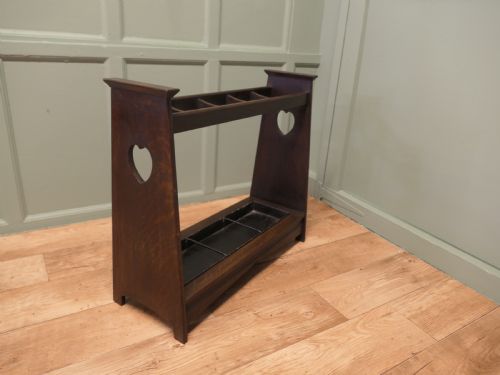
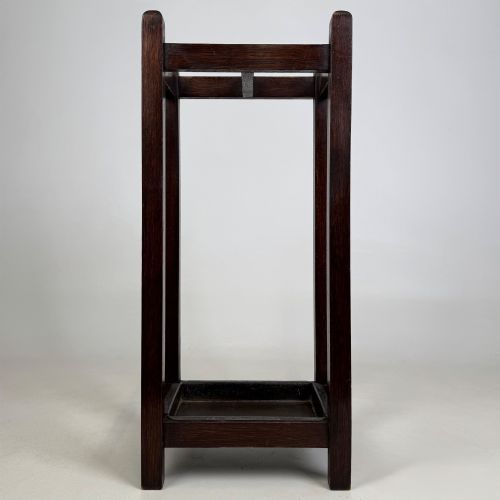
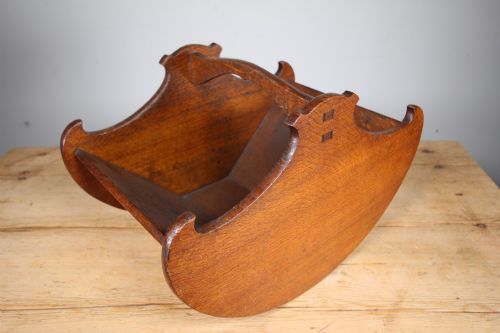
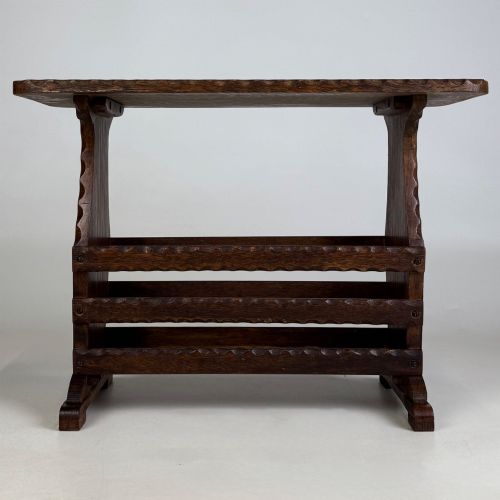
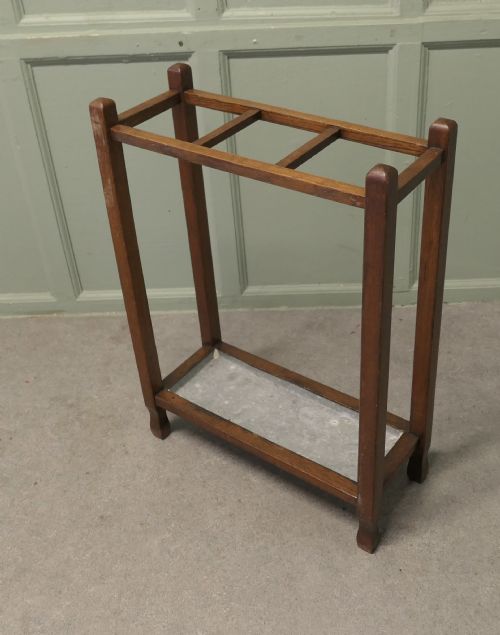
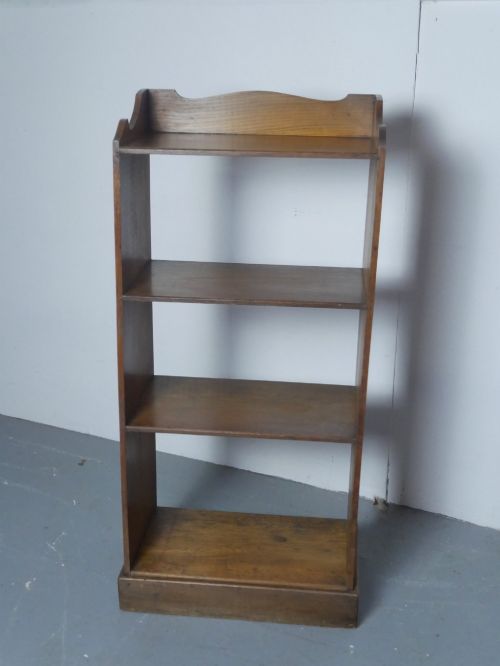
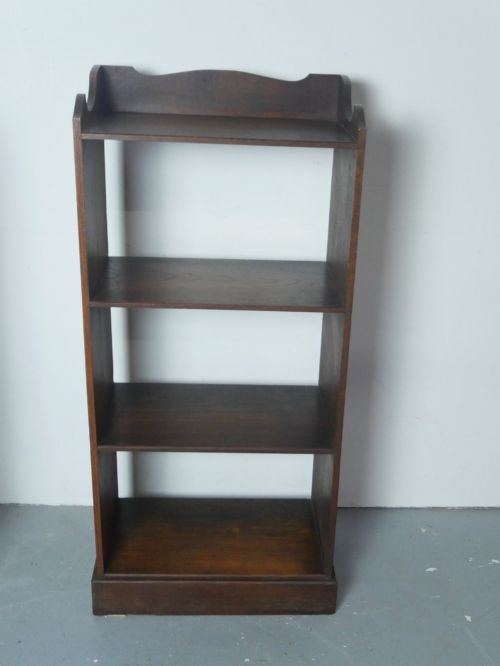
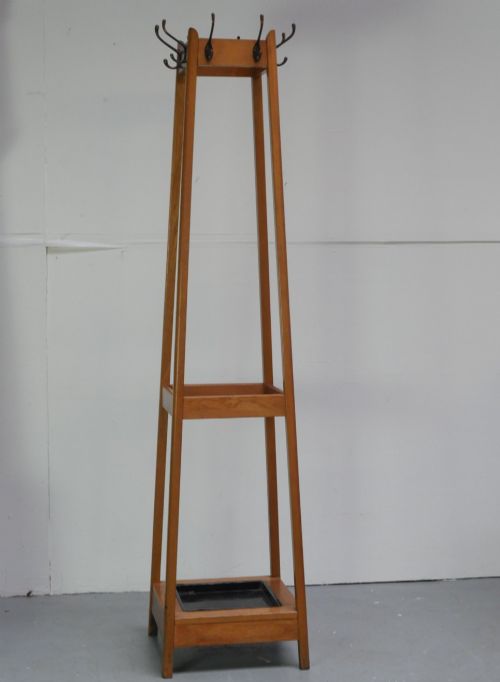
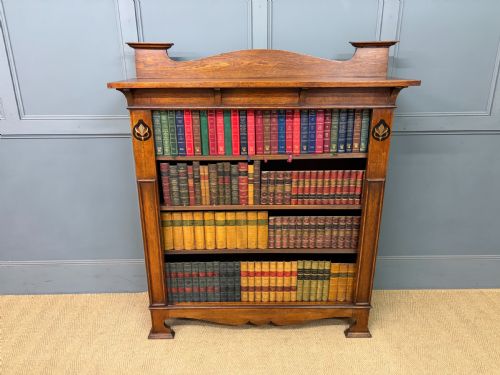
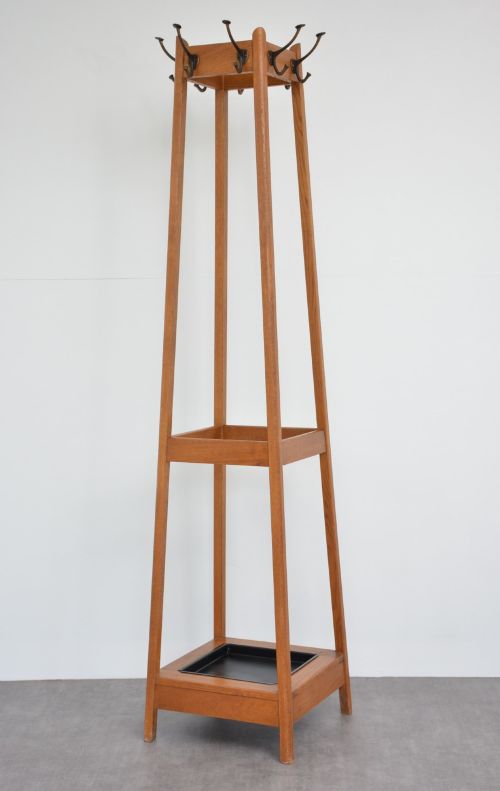
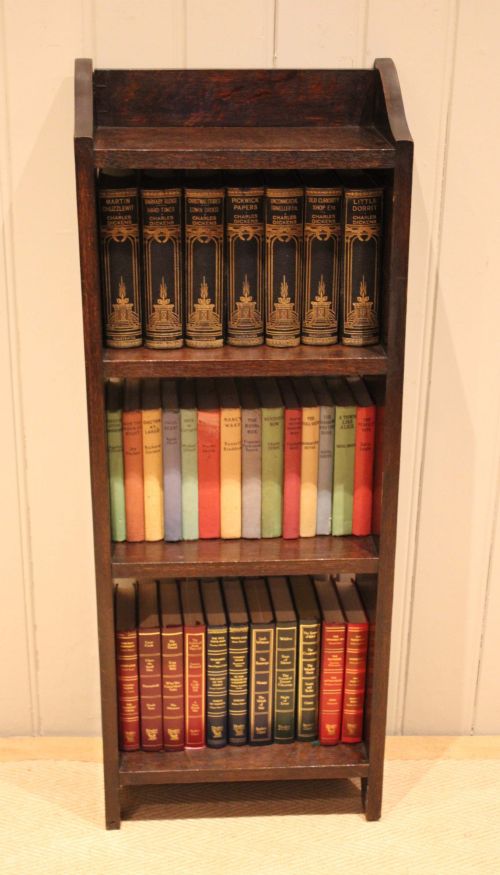
The version you are most likely to meet on this page is constructed from oak, reflecting the movement's preference for native timbers and visible grain. They take many functional forms, including wall-hanging letter racks, floor-standing magazine paper racks, and combined hat and coat stands with integrated stick holders.
Makers and designers of the period applied straightforward construction methods to everyday items, ensuring that storage for books, newspapers, and garments possessed artistic integrity. Whether intended for a country house hallway or a compact Edwardian parlour, these pieces combine practical purpose with characteristic design details.
Materials and construction
Makers relied heavily on solid oak, frequently finished in honey or golden tones, alongside contrasting metals such as brass, copper, and wrought iron for hooks, trays, and structural supports. Mahogany and walnut appear less frequently, while glass and mother-of-pearl occasionally provide decorative inlay.
Construction techniques emphasise traditional joinery and visible structural elements rather than concealed fixings. Metal components often feature hammered surfaces or patinated finishes that complement the warm tones of the timber.
Object forms span book troughs, magazine racks, umbrella stands, and comprehensive hall stands.
Distinguishing quality
Quality in these pieces rests upon the balance between robust utility and thoughtful design, distinguishing standard workshop production from pieces bearing the mark of notable makers. The weight of the timber, the integrity of the joinery, and the calibre of the metalwork dictate the standard.
Examples that retain original copper or brass fittings, integrated drip trays, or maker labels demonstrate superior provenance. Decorative cut-outs, subtle carving, and well-executed inlay separate utilitarian items from more ambitious artistic commissions.
Arthur Simpson·Jas. Shoolbred·Heals of London·Liberty Design
The Arts and Crafts Rack Glossary
- Canterbury
- A low, partitioned stand used for holding sheet music, newspapers, or books. They often feature carrying handles and small castor wheels.
- Book trough
- An open-topped receptacle designed to hold a selection of volumes upright on a desk, table, or floor. These often incorporate sloping sides for easy title viewing.
- Hall stand
- A large furniture piece combining a mirror, coat hooks, umbrella storage, and frequently a glove drawer or drip tray. They anchor the entrance hallway of a home.
- Luggage rack
- A folding or fixed stand with wooden slats or webbing, intended for holding suitcases or travel bags. They are designed for guest bedrooms.
- Glasgow School
- A circle of designers and architects active in Scotland during the late nineteenth and early twentieth centuries. Their work is known for distinctive linear forms and stylised motifs.
Arts and Crafts Rack: Frequently Asked Questions
What is an arts and crafts rack used for?
These pieces served practical storage needs in domestic interiors, holding coats, hats, umbrellas, newspapers, and books. Their exact function depended on the room they occupied, from hallway stands to fireside book troughs.
Today, they continue to fulfil these original storage roles while acting as focal points for period interiors. Their robust construction makes them as functional in modern homes as they were a century ago.
How do I date an arts and crafts rack?
Dating relies on observing material choices, construction methods, and stylistic indicators such as decorative cut-outs or metalwork patination. Pieces from the eighteen-eighties and nineties often display heavier proportions and distinct Gothic or Art Nouveau influences.
Later pieces from the Edwardian era and nineteen-twenties tend toward lighter golden oak frames and simpler lines. Maker labels or stamps, when present, provide the most precise chronological anchor.
Where should I place a hall stand?
A hall stand belongs in an entrance hall or vestibule where coats, hats, and wet umbrellas require immediate placement upon entry. Their mirrored backs and integrated umbrella drip trays were specifically engineered for this transitional space.
Ensure the piece has adequate clearance from doorways and sufficient wall support if it includes hanging elements. Positioning it in a well-lit area also highlights the grain of the oak and any decorative metalwork.
Are these racks suitable for everyday use?
Solid timber construction and sturdy metal hardware ensure these pieces easily withstand daily domestic demands. Oak frames and wrought iron or brass hooks are inherently durable.
Routine maintenance involves minimal care, such as occasional waxing for the timber and gentle dusting for metal surfaces. They offer a practical and visually engaging alternative to modern flat-pack storage.