

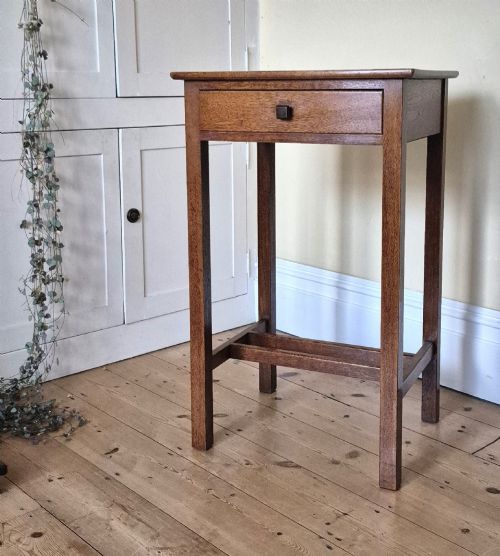
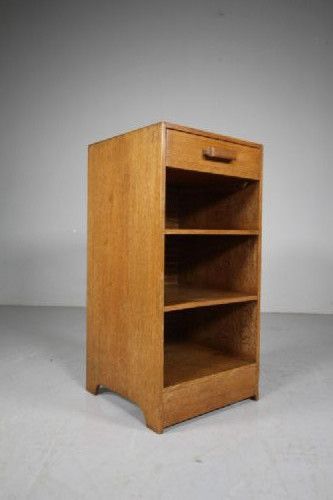
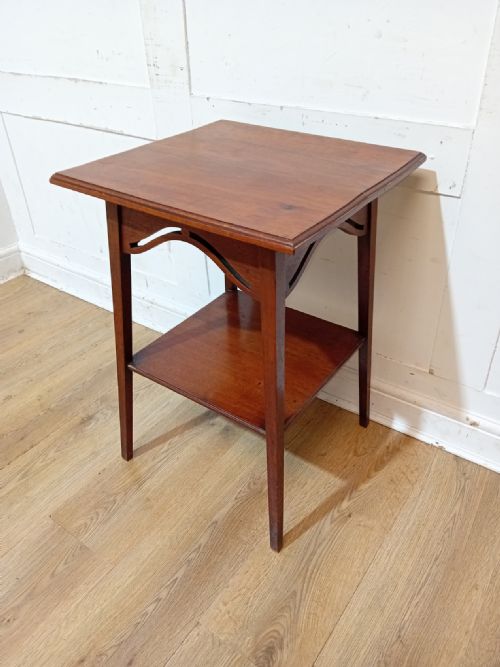
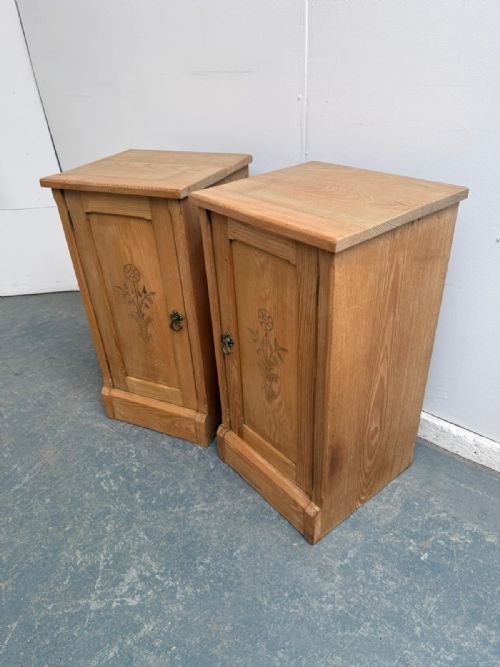
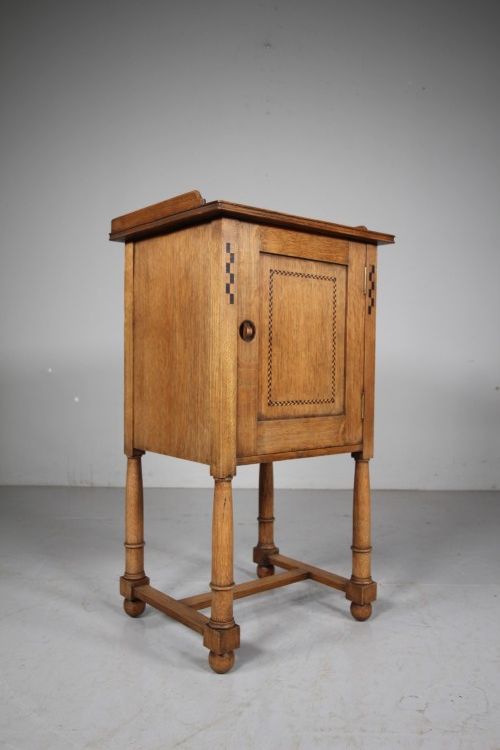


Arts and Crafts Nightstand
These arts and crafts nightstands and bedside pieces bring honest timber and metalwork right beside your bed.
Arts and Crafts Nightstand
When you search for arts and crafts nightstand, you find bedside cabinets, side tables, and pot cupboards built to serve the bedroom. These pieces date from periods spanning the late nineteenth century through the nineteen-thirties, embracing Edwardian examples alongside pieces from the nineteen-twenties and nineteen-thirties.
The selection extends to occasional tables and table lamps in brass and metal which offer surface space and illumination. Makers and workshops of the period, from Liberty and Heals to the Cotswold School, shape the variety seen across these utilitarian forms.
How they were made
Makers built these pieces primarily in solid oak, ash, and walnut, often finishing the timber with wax to highlight the natural grain. Metal components, particularly brass and copper, appear as handles, hinges, and Pullman lamps.
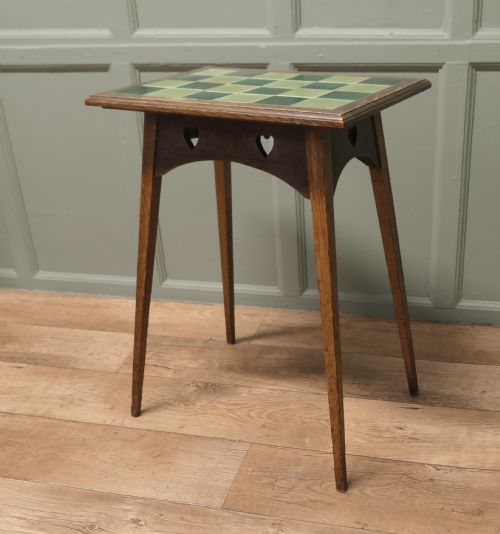
Ceramic tiles are integrated into table and cabinet tops to provide a heat-resistant surface for jugs and candlesticks. Construction relies on straightforward joinery suited to the domestic workshop and larger commercial houses alike.
Listings for this phrase feature pieces spanning from the eighteen-nineties through the nineteen-thirties, incorporating oak, ash, walnut, brass, and ceramic tiles.
What varies in quality
The distinction between standard workshop production and exceptional pieces lies in the choice of materials and the refinement of the timber. Selected grain, careful waxing, and substantial timber thickness set superior cabinets apart from simpler utility items.
Attribution to notable firms or distinctive regional schools introduces another layer of distinction. Pieces carrying specific design details, such as heart-carved motifs or integrated tile tops, demonstrate greater ambition in their execution.
Liberty London·Hubert Simpson of Kendal·Heals·WAS Benson·Shapland and Petter
The Arts and Crafts Nightstand Glossary
- Pot cupboard
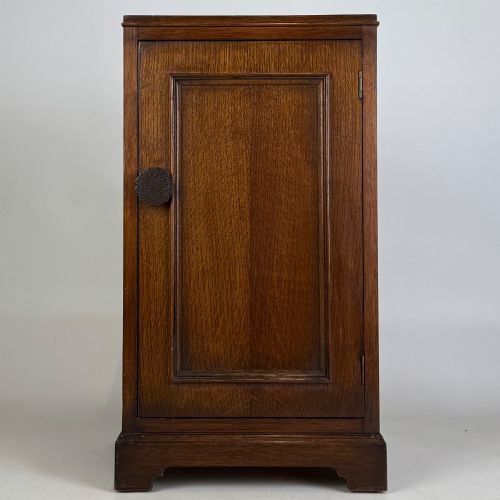
- A small bedside cabinet originally designed to house a chamber pot behind a single door. These compact pieces now serve well as standard nightstands.
- Tile top
- A tabletop inset with decorative ceramic tiles, providing a durable and heat-resistant surface. This feature appears frequently on occasional tables and washstands from the period.
- Cotswold School
- A twentieth-century design movement focused on traditional hand-craftsmanship in wood. Furniture from this circle values visible construction and local materials.
- Pullman lamp
- A type of adjustable metal desk or table lamp, often in brass, designed for focused illumination. Examples from this era incorporate heavy weighted bases and swivelling shades.
- Waxed finish
- A traditional wood treatment that seals the timber while preserving a natural matte appearance. This finish requires periodic maintenance with soft wax.
Arts and Crafts Nightstand: Frequently Asked Questions
What is an arts and crafts nightstand?
An arts and crafts nightstand is a bedside cabinet, pot cupboard, or small side table produced during the late nineteenth or early twentieth century. These pieces emphasise sturdy construction and honest materials over ornate decoration.
They provide practical surface space and storage beside the bed, often utilising solid oak or ash with simple hardware.
How do I date an arts and crafts nightstand?
Dating relies on observing the materials, construction methods, and stylistic cues present in the piece. Pieces from the eighteen-nineties often share characteristics with Victorian furniture, while Edwardian and nineteen-twenties examples trend towards simpler lines.
Makers' marks, brass fittings, and the presence of ceramic tiles also help narrow down the period of manufacture.
Are these nightstands made of solid wood?
Many of the pieces listed are constructed from solid oak, ash, or walnut. The movement prioritised natural timber and visible grain over heavy veneers.
Buyers will also encounter secondary woods and occasional metal or ceramic elements integrated into the design.
How do I care for a waxed oak cabinet?
Maintenance involves applying a suitable beeswax polish periodically to nourish the wood and protect the surface from moisture. Avoid placing these cabinets in direct sunlight or near heat sources to prevent the timber from drying out.
Regular dusting with a soft, dry cloth keeps the waxed finish in good condition.