


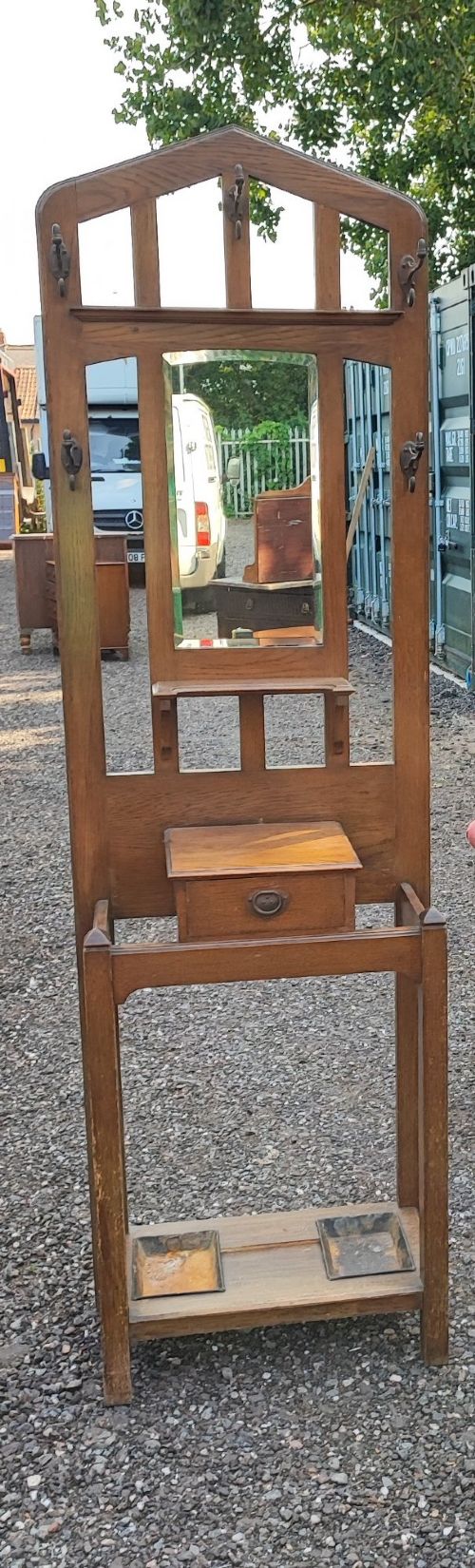


Arts and Crafts Hat Stands
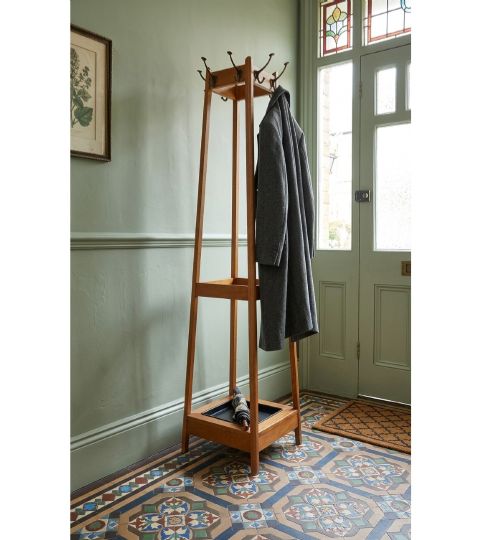
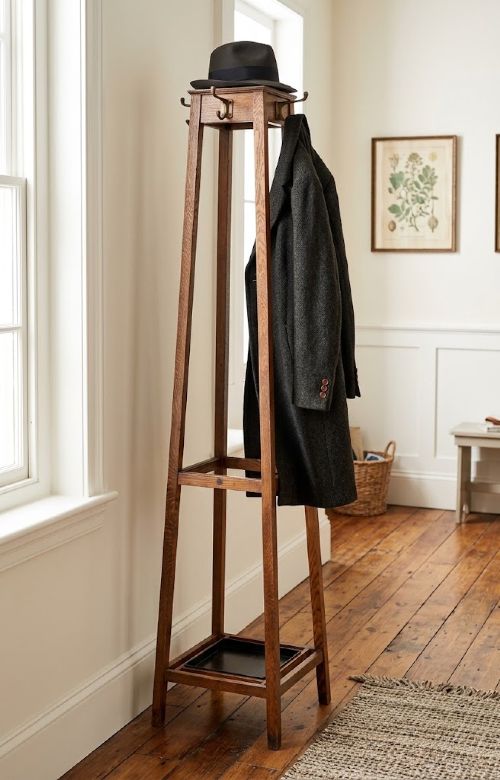
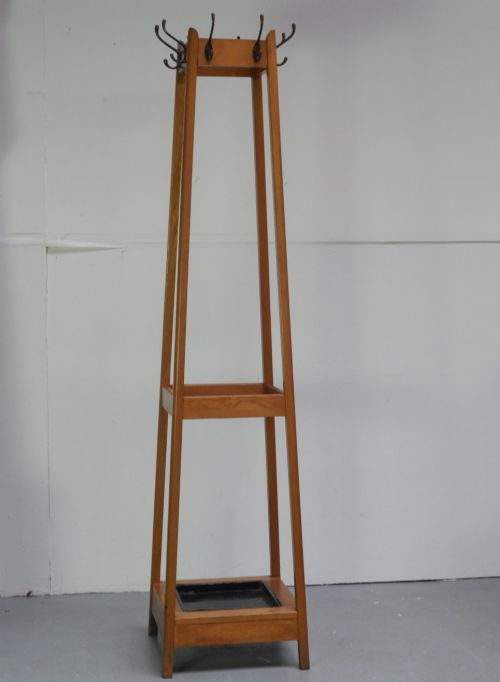
These arts and crafts hat stands bring honest timber and functional design straight to the hallway, offering a practical place for daily wear.
Arts and Crafts Hat Stands
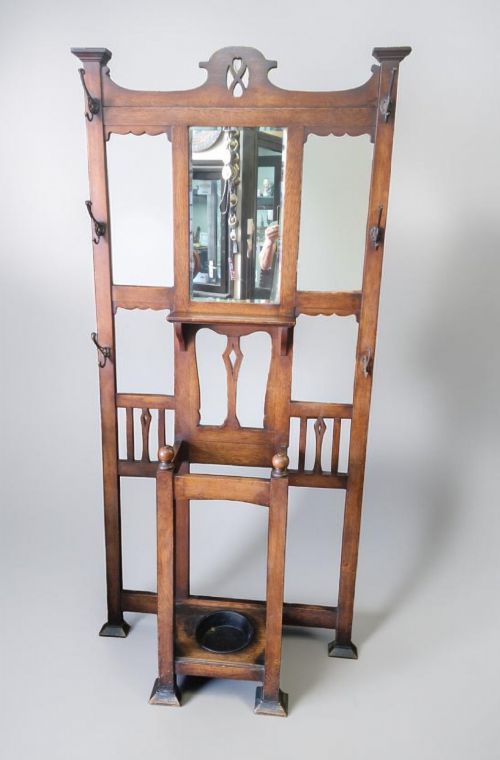
When you search for arts and crafts hat stands, you encounter sturdy pieces designed for the hallway, often combining coat hooks, umbrella holders, and central mirrors. The selection here spans from the late Victorian period through the Edwardian era into the nineteen twenties, showing how domestic entrances were furnished across decades.
You are most likely to meet oak hall stands carrying the straightforward lines of the movement, alongside occasional walnut and mahogany examples. These items served a purely utilitarian purpose in homes, accommodating hats, coats, and walking sticks as visitors entered.
The assortment also includes specialised shop display stands, smaller pin cushion stands, and hanging rails rather than just standard freestanding furniture. Such variety reflects both domestic household requirements and commercial or workshop uses of the period.
How they were made
Makers relied heavily on solid oak, walnut, and mahogany, utilising the natural grain of the timber as the primary decoration rather than heavy carving. Many pieces integrate brass, iron, and cast iron for hooks and umbrella drip trays, combining structural wood with durable metalwork.
Surfaces sometimes incorporate ceramic tiles, such as those by Minton, alongside inlaid woodwork and glass mirror plates. Construction methods prioritized everyday durability, resulting in solid frames capable of bearing the heavy weight of winter garments.
Arts and Crafts Hat Stands Retail Price Guide 2026
Typical asking prices for arts and crafts hat stands among the pieces listed under this phrase on Sellingantiques today, from the lower quarter to the upper quarter. They describe what is for sale here now, not the wider market.
Recorded periods span from the eighteen eighties through the Edwardian era up to nineteen twenty.
What varies in quality
The distinction between standard utility items and finer examples lies in the selection of materials and the integrity of the maker's workshop. Pieces bearing attribution to recognised firms or guilds generally display more thoughtful timber selection and refined metal hardware.
Design complexity also separates the ranges, moving from plain functional oak frames to those featuring decorative inlaid details, specialised ceramic tile inserts, or double-sided hanging configurations.
Jas Shoolbred·GW Evans London·Artificer s Guild·Ellen E Houghton of Minton
The Arts and Crafts Hat Stands Glossary
- Hallstand
- A piece of hallway furniture combining storage for coats, hats, and umbrellas, frequently featuring a central mirror and glove box. These items anchored the entranceway in British homes.
- Oak
- A dense, durable hardwood favored in the movement for its prominent grain and strength. It forms the primary structural material for the majority of these pieces.
- Art Nouveau
- A stylistic influence appearing alongside the movement, characterised by organic, flowing lines and natural motifs. It shares timeline space with early twentieth-century domestic design.
- Inlay
- A technique where contrasting pieces of wood or other materials are inserted into depressions in the base wood to form decorative patterns. This method enhances the visual appeal of mahogany and oak surfaces.
- Pin Cushion Stand
- A small tabletop or dresser accessory designed to hold hat pins safely. These miniature stands often incorporate silver or specialised fabric elements.
Arts and Crafts Hat Stands: Frequently Asked Questions
What is an arts and crafts hat stand?
These items are hallway furnishings built to hold hats, coats, and umbrellas, grounded in the principles of honest construction and utility.
They reflect the design priorities of the late nineteenth and early twentieth centuries, favoring visible timber grain over ornate veneer.
How do I date a hall stand?
Dating relies on identifying material choices, stylistic overlaps like Art Nouveau, and construction techniques typical of Victorian or Edwardian workshops.
Makers marks and specific timber finishes also help narrow the decade of production.
Where were these stands placed?
They stood in the entrance hall or vestibule of a home to receive outdoor garments immediately upon arrival.
Their design kept everyday wear organised and accessible near the front door.
Are these stands suitable for modern hallways?
Their compact vertical footprint makes them practical for organising coats and hats in contemporary entryways.
Solid wood construction ensures they remain capable of handling daily domestic use.