





Antique Oak Haberdashery Fittings
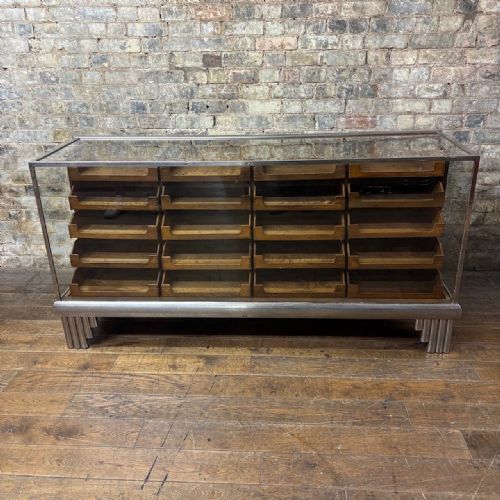
These antique oak haberdashery fittings are commercial fixtures built to display and store dry goods, offering robust joinery and period utility for modern spaces.
Antique Oak Haberdashery Fittings
Antique oak haberdashery fittings comprise commercial shop furniture designed for retail display and storage. Buyers searching for antique oak haberdashery fittings encounter items originating from the Victorian era, the Edwardian period, and the 1920s and 1930s commercial decades.
The selections on this page centre on practical forms used in trade and tailoring. These include haberdashery cabinets, shop display counters, countertop display cabinets, hat stands, and shop dressing mirrors.
The majority of pieces utilise solid or framed oak construction, often incorporating glass, brass, bronze, and chrome hardware. Regional origins span British commercial workshops alongside French provincial examples.
How they were made
Makers built these commercial fittings from heavy timber, selecting oak for its durability in busy retail environments. Frames were joined to withstand daily customer interaction and support heavy glass or timber shelving.
Metal components such as brass, bronze, and chrome were integrated into handles, trims, and structural supports. Glazing methods utilised large panes of glass to maximise visibility for merchandise display.
Antique Oak Haberdashery Fittings Retail Price Guide 2026
Typical asking prices for oak haberdashery fittings among the pieces listed under this phrase on Sellingantiques today, from the lower quarter to the upper quarter. They describe what is for sale here now, not the wider market.
Several pieces preserve the quiet dignity of tailors and hatters who measured collars long before synthetic fibres existed.
What varies in quality
The distinction between standard commercial joinery and superior execution lies in the refinement of the timber framing and the selection of secondary materials. Finer examples display harmonious grain patterns in golden oak and sophisticated proportions suited to high-end shop interiors.
Hardware integration dictates the overall grade of a fitting. Superior pieces retain original bronze, brass, or chrome mounts and smoothly operated glazed doors that reflect careful original commissioning.
Dudley & Co
The Antique Oak Haberdashery Fittings Glossary
- Haberdashery cabinet
- A multi-drawer or glazed storage unit originally designed for selling small articles of dry goods and sewing items. These pieces frequently feature banks of shallow drawers or glass fronts.
- Countertop display cabinet
- A smaller enclosed showcase placed upon a shop counter to protect delicate merchandise while remaining at eye level for customers. They rely on wood frames and glass panels.
- Arts and Crafts
- A design movement prioritising traditional craftsmanship, visible construction, and simple forms. In these listings, it appears in golden oak hat stands.
- French Provincial
- A rural or regional style of furniture originating in France. Pieces from this tradition show lighter local interpretations of commercial display tables.
Antique Oak Haberdashery Fittings: Frequently Asked Questions
What are antique oak haberdashery fittings?
These pieces are commercial fixtures originally used in shops and tailoring establishments for storing and displaying goods. They include counters, cabinets, mirrors, and stands built from oak.
Today, buyers repurpose them for domestic storage and display, valuing their durable construction and period character.
How do I date an oak shop counter?
Dating relies on stylistic clues, hardware materials, and construction methods visible in the woodwork. Victorian and Edwardian examples typically show heavier timber framing and traditional brass fixtures.
Later pieces from the 1920s and 1930s frequently incorporate chrome elements, streamlined Art Deco lines, or specific commercial configurations.
Where were these shop fittings used?
They originated in nineteenth and early twentieth-century retail environments, including drapery shops, haberdasheries, tailors, and general merchant stores. Their primary purpose was to keep small goods organised while presenting merchandise clearly to shoppers.
Commercial workshops and specialised furnishers supplied these robust fixtures to high street retailers.
Can I use a haberdashery cabinet at home?
Yes, collectors and homeowners frequently integrate these cabinets and counters into domestic interiors for storage. Their shallow drawers and glass display areas suit the organisation of modern collections and clothing.
Placing them in hallways, kitchens, or living spaces adds practical surface area and period utility.