

Arts and Crafts Handles
Arts and crafts handles represent the tactile detail of a movement that prized metalwork and fitted joinery above mass production.
Arts and Crafts Handles
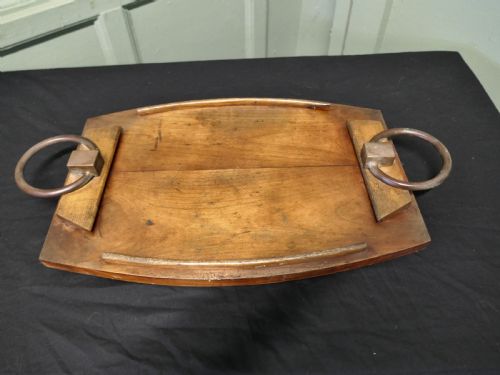
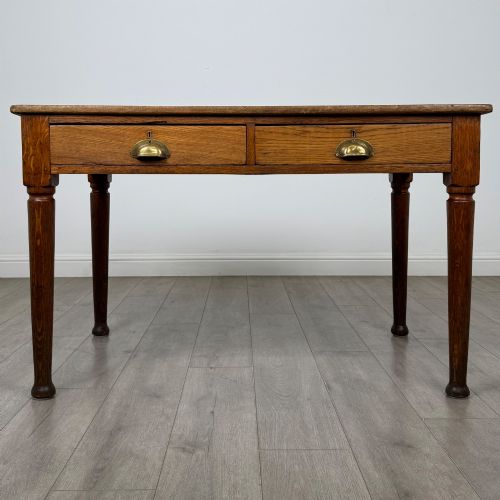
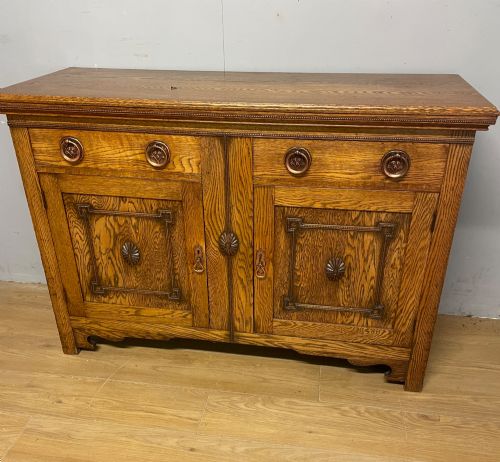
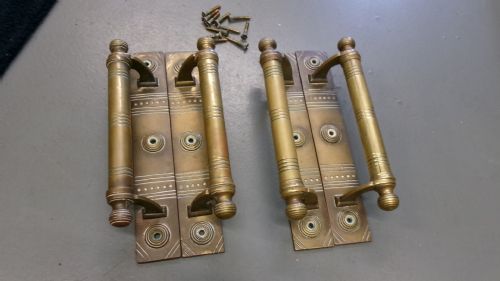
When searching for arts and crafts handles, collectors typically encounter brass and copper door hardware, alongside original metal fittings attached to oak chests of drawers, cabinets, and serving trays from the late nineteenth and early twentieth centuries. These pieces reflect the shift from industrial standardisation to hand-finished domestic metalwork.
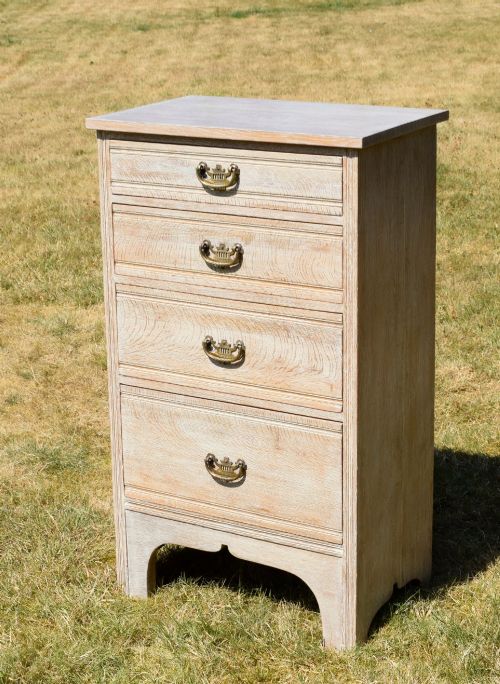
The objects available range from pairs of heavy brass door finger plates and knobs to specialised door pulls and integrated drawer furniture on walnut and satinwood furniture. Most examples date from the Victorian, Edwardian, and subsequent decades, demonstrating functional utility combined with distinct stylistic ornament.
Materials and Working Methods
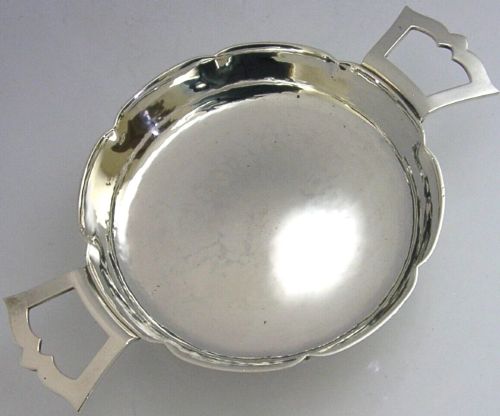
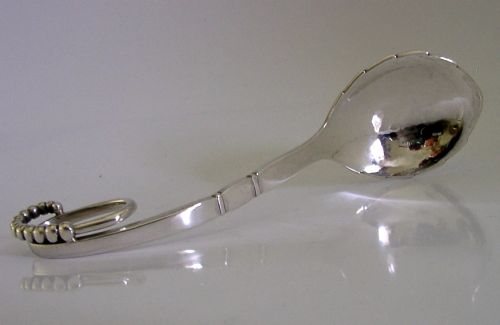
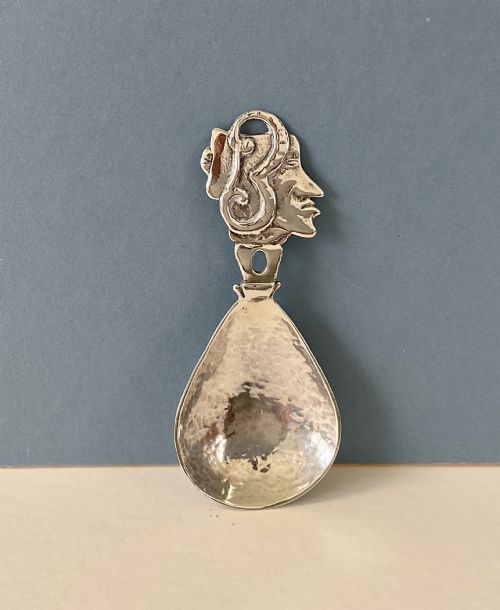
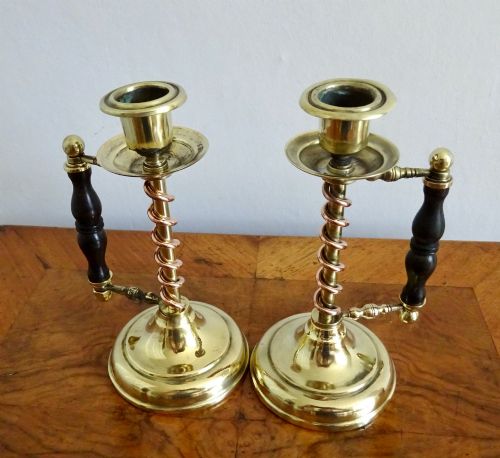
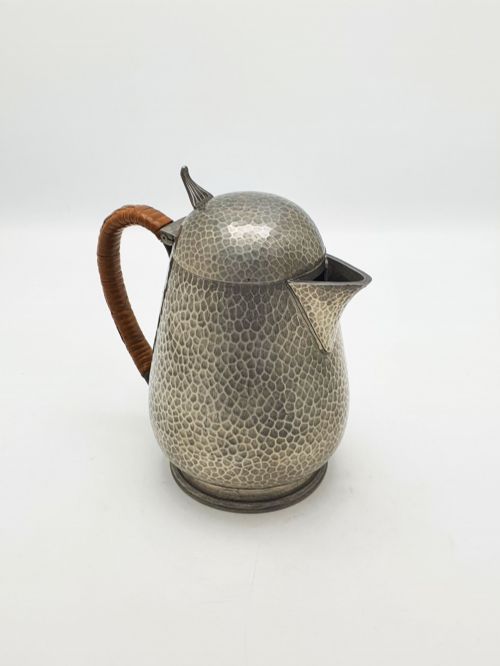
Makers utilised malleable metals such as brass, copper, and pewter, often shaping them through hand-beating and planishing rather than machine stamping. This technique left visible hammer marks across the surface, giving each handle or plate an individual texture that caught the light differently.
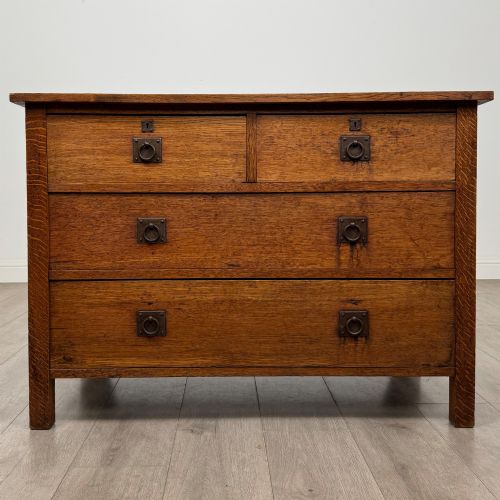
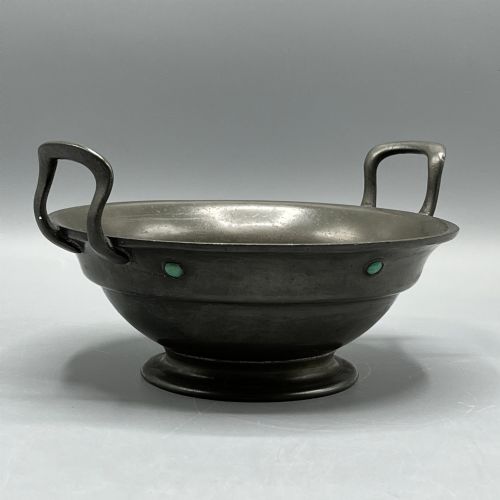
Where handles were fitted to furniture, they were fixed to solid timbers like oak, walnut, and elm using traditional joinery methods. Metals were frequently combined with enamel cabochons or cane bindings, particularly in pieces produced by prominent Birmingham and London workshops.
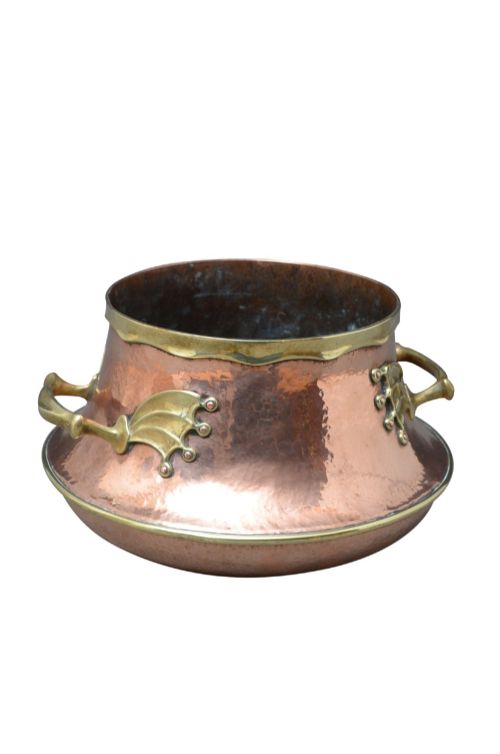
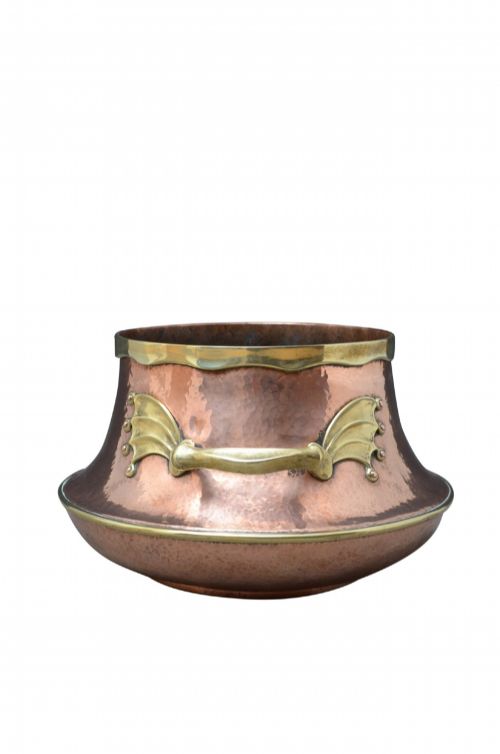
Some copper vessels served dual lives as Gladstone bags and planters.
Assessing Quality and Execution
Quality rests primarily on the depth of hand-working in the metal and the integrity of the original mountings. Superior handles exhibit crisp, deliberate hammer texturing and substantial weight, whereas lesser examples rely on shallow pressed patterns that lack physical definition.
The relationship between the metal fitting and its wooden substrate dictates overall success. Original handles preserved on their correct oak or walnut backplates carry greater historical weight than loose items later adapted to unrelated furniture.
Liberty and Co·Hukin and Heath·John Pearson·Page and Co Norwich
The Arts and Crafts Handles Glossary
- Planishing
- A metalworking technique involving light hammering with a flat-faced tool to smooth and texture the surface. This process hardens the metal while creating a distinctive faceted finish.
- Tudric
- The trade name used by Liberty & Co for their range of pewter ware, introduced around the turn of the twentieth century. It frequently incorporated stylized floral motifs and cabochons.
- Cabochon
- A polished, unfaceted gemstone or coloured glass set smooth into the metal surface rather than faceted. These elements provided vibrant focal points on pewter and silver metalwork.
- Finger Plate
- A protective metal sheet mounted around a door handle to prevent fingermarks on the surrounding wood or paint. They were often decorated with characteristic organic motifs.
Arts and Crafts Handles: Frequently Asked Questions
How do I clean antique brass handles?
Clean brass gently with a soft cloth and mild soapy water to preserve the aged surface patination. Avoid harsh chemical polishes that strip away the historical character accumulated over decades of use.
Dry the metal thoroughly after washing to prevent moisture spotting. Preserving the natural tone ensures the hand-finished quality remains visible.
Were these handles made for doors or furniture?
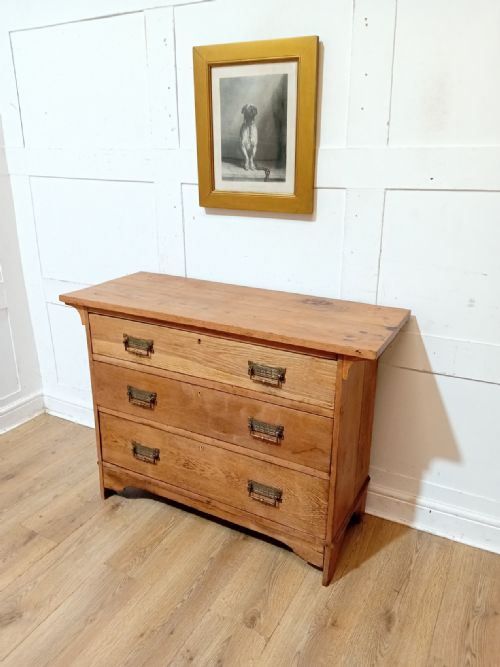
Makers produced hardware for both domestic doors and fitted furniture such as chests of drawers, sideboards, and cupboards. Door versions include larger finger plates and robust knobs, while furniture examples comprise drop pulls and smaller backplates.
Examining the scale and screw fixings usually reveals the intended application. Furniture pieces are generally lighter and designed for close interaction.
How do I date an arts and crafts handle?
Dating relies on stylistic markers, material choices, and the accompanying woodwork if the handle remains attached. Pieces from the late nineteenth century often reflect Aesthetic Movement influences, while items from the nineteen-tens display simpler geometric forms.
Comparing the manufacturing technique against known workshop production timelines helps narrow the period. Hallmarks on silver or pewter components provide definitive production years.
Can I fit old handles to modern doors?
Fitting antique hardware to contemporary doors is possible, though spindle sizes and fixing hole spacings often require careful adjustment. Consideration must be given to the structural weight of the metal and the depth of the door stile.
Matching the screw types to the period of the hardware maintains historical consistency. Professional installation prevents damage to fragile antique brass or copper components.