





Architectural Salvage Handles
Architectural salvage handles are period fittings that add history and character to a door, spanning styles from Victorian and Edwardian to Art Deco.
Architectural Salvage Handles
Architectural salvage handles encompass a diverse array of period hardware, from Victorian brass door knobs and Edwardian centre door knobs to shop door handles and bell pulls.
The selections span multiple eras, including Georgian, Regency, Victorian, Edwardian, and Art Deco, reflecting the changing design priorities of buildings over centuries.
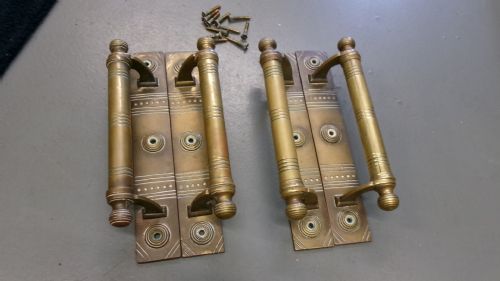
Forms range from simple brass beehive knobs and sash lifts to large bronze ballroom door pulls and Arts and Crafts designs, suiting both restoration projects and decorative display.
Materials and construction
Metalworking dominates the evidence, with items cast or forged in brass, bronze, cast iron, and wrought iron to withstand daily handling.
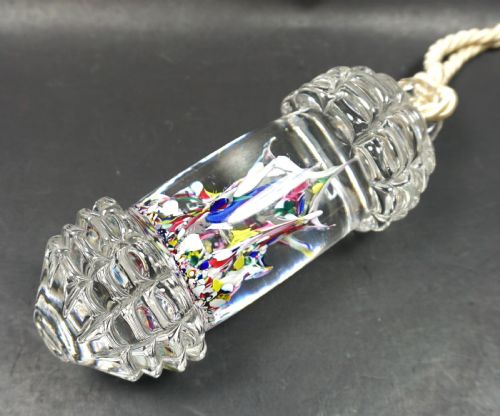
Other materials appear alongside metal, including glass used in bell pulls, wood in doors, stone in millstone tethers, and horn paired with brass in ringers.
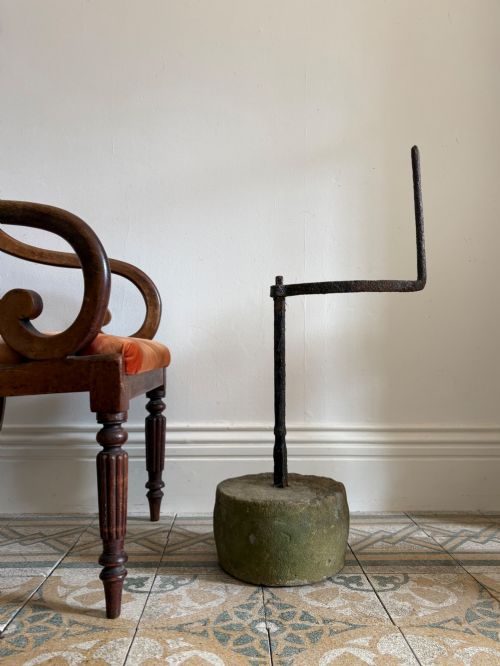
An eighteenth-century millstone includes a forged iron handle, doubling as a remarkably sturdy tethering stone.
Judging quality in salvage hardware
Quality depends upon the heft and purity of the metal, distinguishing solid cast bronze or brass from lighter compositions.
The crispness of detail in ornamentation, such as ornate Georgian or Art Nouveau casting, dictates the fineness of the piece.
Gerwin & Co Birmingham
The Architectural Salvage Handles Glossary
- Bell pull
- A mechanical lever or handle wired to ring a bell elsewhere in a property. These often feature glass or brass grips.
- Centre door knob
- A stationary handle mounted in the middle of a grand entrance door rather than the latch side. Edwardian and Victorian examples are typical.
- Sash lift
- A small flush handle or grip screwed to the bottom rail of a sliding window sash to aid raising and lowering. Brass is a common material.
- Beehive knob
- A turned metal or wooden door knob characterised by concentric stepped rings resembling a traditional beehive. Victorian pairs are frequent examples.
- Architectural salvage
- Building components rescued from demolition or renovation for reuse. These range from door hardware to stone millstones.
Architectural Salvage Handles: Frequently Asked Questions
How do I date an architectural salvage handle?
Dating relies on stylistic clues, manufacturing techniques, and the metal alloys used across different periods like the Georgian era or the Art Deco movement.
Comparing the form and ornamentation to established historical periods helps place the hardware within a specific century or decade.
Can I use antique door handles on modern doors?
Many salvage handles adapt well to modern doors, though spindle sizes and backplates may require careful measurement or minor adjustment.
Matching the operational mechanism to the era of the handle ensures smooth daily use without damaging the historic components.
What is the difference between a door knob and a door pull?
Door knobs generally rotate to operate a latch mechanism inside a lock case, making them functional for standard opening.
Door pulls remain stationary and serve to haul heavy doors open, often found in pairs on grand ballroom or shop entrances.
How should I clean antique brass hardware?
Gentle washing with warm soapy water removes accumulated dirt while preserving the aged surface patina valued by collectors.
Harsh chemical polishes strip away historical character, so cleaning should focus solely on removing grime rather than achieving a bright shine.