

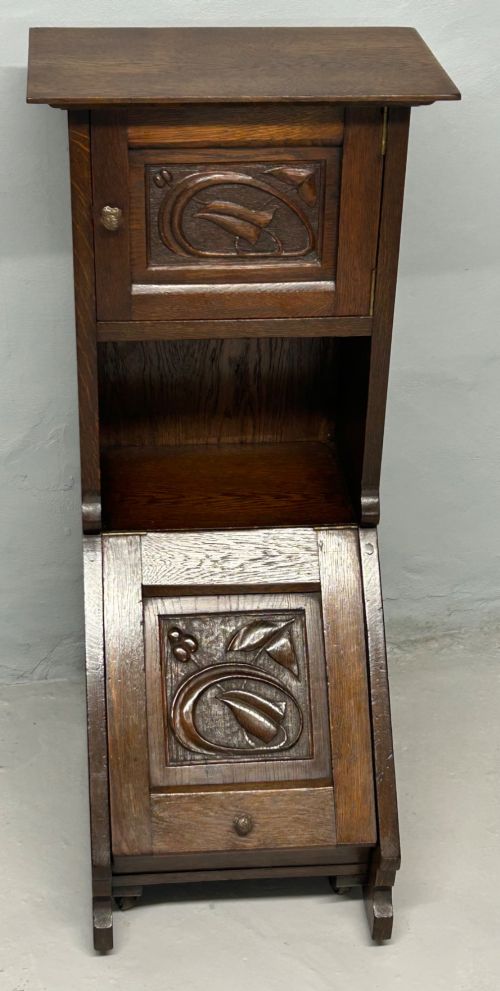


Arts and Crafts Fuel Bin
These arts and crafts fuel bin options bring robust utility and striking metalwork straight to the hearth.
Arts and Crafts Fuel Bin
When you search for an arts and crafts fuel bin, you are looking at practical hearth storage shaped by the design movements of the late nineteenth and early twentieth centuries. These pieces serve to house coal, logs, or kindling neatly beside the fireplace while doubling as decorative furnishings.
The versions you are most likely to meet on this page span the period from the late nineteenth century through to the Edwardian era and the nineteen-thirties. They appear primarily as oak or copper coal boxes, purdoniums, and log carriers with distinctive fireside character.
Makers often drew inspiration from the Arts and Crafts philosophy and Art Nouveau aesthetics, resulting in solid timber construction paired with hammered or beaten metal panels. Every example balances domestic utility with the honest craftsmanship valued during the period.
Materials and construction
Makers built these vessels using sturdy hardwoods like oak combined with resilient metals such as copper, brass, iron, and wrought iron. Wood provides the primary structural carcase for boxes and purdoniums, while metal sheeting protects the surfaces from fuel wear.
Arts and Crafts Fuel Bin Retail Price Guide 2026
Typical asking prices for arts and crafts fuel bin among the pieces listed under this phrase on Sellingantiques today, from the lower quarter to the upper quarter. They describe what is for sale here now, not the wider market.
Listings span the nineteenth century, Edwardian era, and the nineteen-thirties, utilising oak, copper, iron, and brass.
Judging quality and design
The distinction between standard utility items and finer examples rests upon the ambition of the metalwork and the integrity of the woodwork. Heavier gauge copper panels with hand-hammered detailing indicate superior workshop production compared to plain sheet linings.
Design sophistication also marks out the better pieces, such as those originating from notable retailers like Liberty of London or featuring integrated iron fittings. Superior construction ensures that joints remain tight and handles support the heavy weight of coal or logs without strain.
LIBERTY LONDON
The Arts and Crafts Fuel Bin Glossary
- Purdonium
- A specialised cabinet or box designed specifically for storing coal indoors, usually featuring a sloping front or a tipping hopper mechanism. This term often appears interchangeably with coal box in nineteenth-century listings.
- Repoussé
- A metalworking technique where the artisan hammers the design from the reverse side to form a raised relief on the front. It is commonly found on the copper panels of Arts and Crafts fireside boxes.
- Log Carrier
- An open or semi-enclosed container intended for hauling and storing firewood rather than small coal pieces. These items frequently incorporate robust iron carrying handles and wooden frames.
- Art Nouveau
- A stylistic movement characterised by flowing, organic lines and motifs inspired by nature. This aesthetic heavily influences the decorative metal panels seen on many Edwardian fuel containers.
Arts and Crafts Fuel Bin: Frequently Asked Questions
How were these fuel containers used?
Households placed them next to the fireplace to keep coal and firewood close at hand while maintaining a tidy room. The enclosed boxes kept soot and dust contained away from the main living space.
Many designs included internal metal liners or shovels to make transferring fuel into the grate cleaner and more efficient. They functioned as both heavy-duty storage and prominent fireside furniture.
How do I care for copper and oak?
Oak surfaces benefit from occasional application of natural wax to nourish the grain and protect against dry heat from the fire. Gentle dusting preserves the timber without stripping its historical patina.
Copper panels should be left unpolished or treated very lightly to maintain their aged character rather than achieving a bright modern shine. Avoid harsh chemical cleaners that can damage the original metal finish.
How can I tell the period apart?
Earlier nineteenth-century pieces often display heavier ironwork and simpler structural forms associated with traditional country workshops. Edwardian and later examples tend to incorporate more pronounced Art Nouveau curves and lighter decorative motifs. Nomenclature also shifts across decades, moving from traditional terms like purdonium towards simpler descriptions like log box or fireside store. Maker stamps, where present, help confirm precise chronological origins.