



Arts and Crafts Coat Stand
These arts and crafts coat stand pieces combine practical hallway storage with honest woodwork, offering a sturdy focal point for an entrance hall.
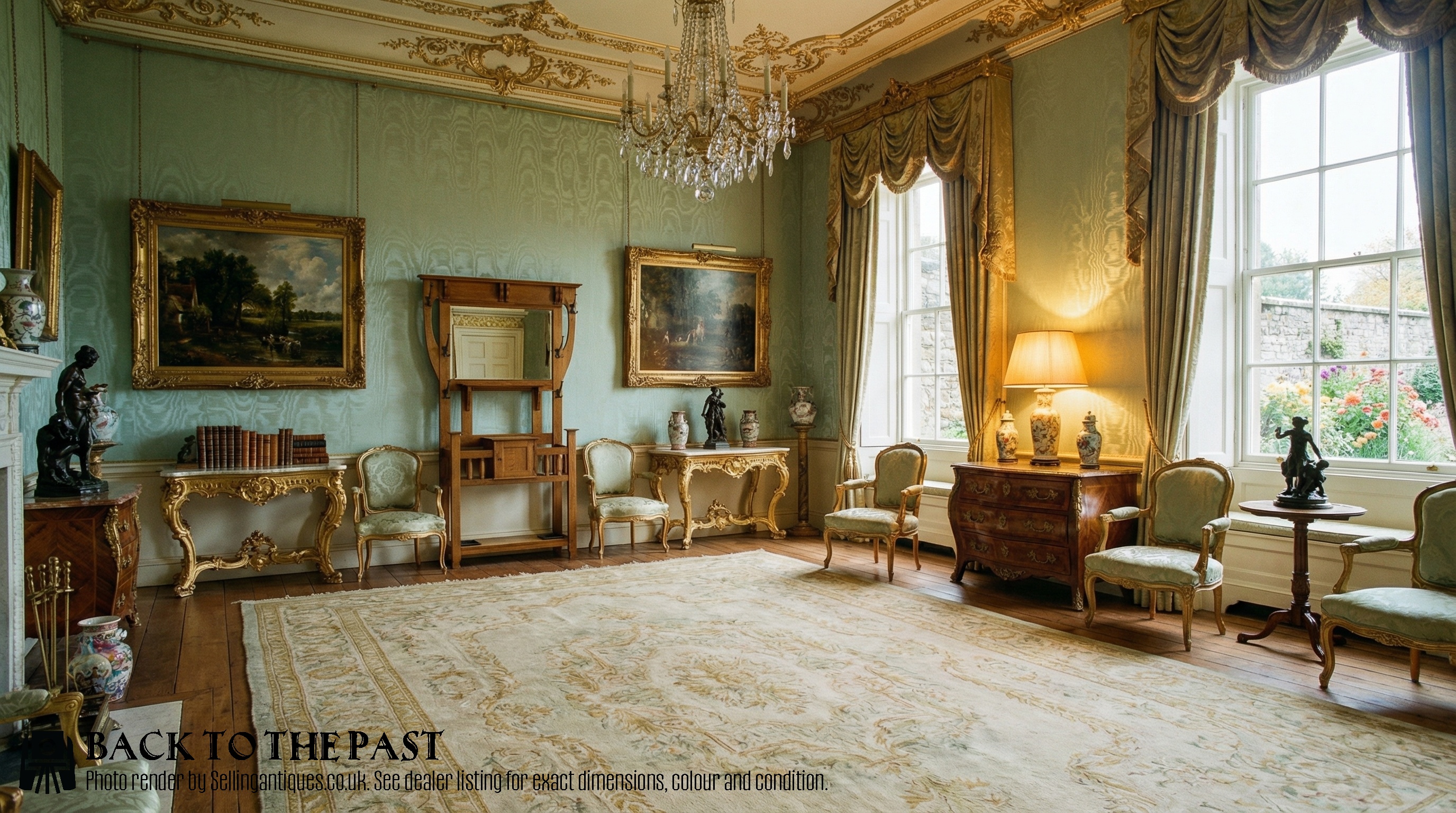
Arts and Crafts Coat Stand
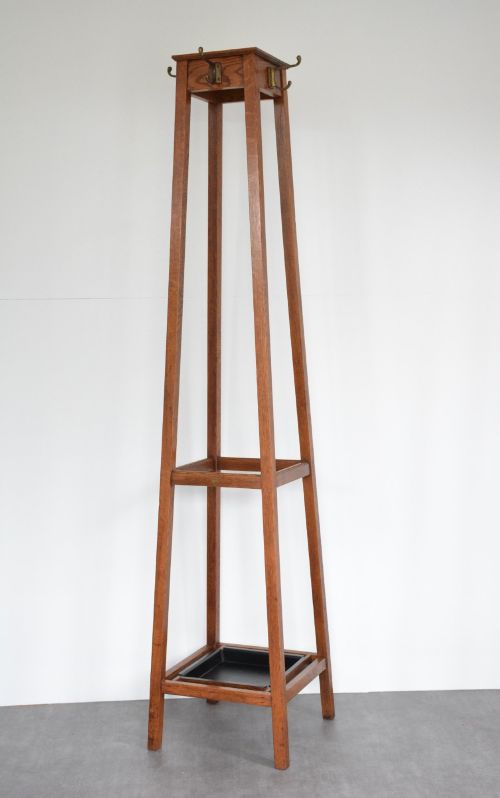
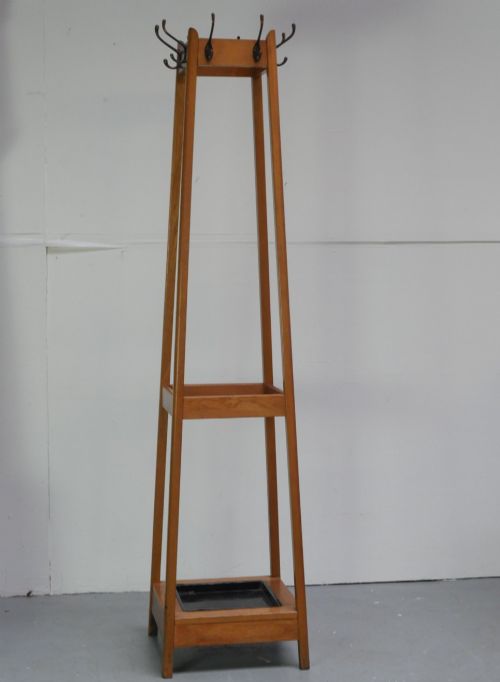
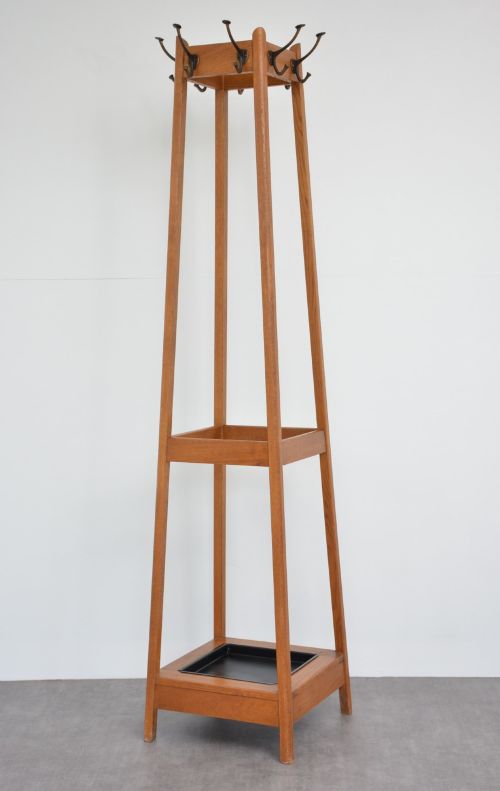
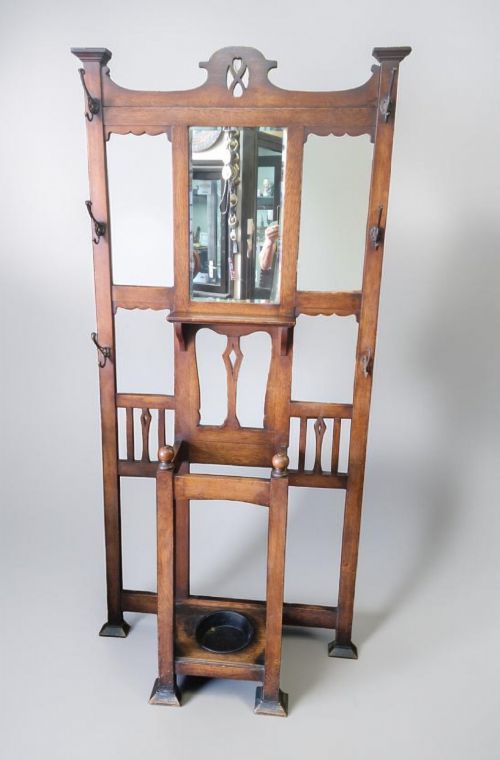
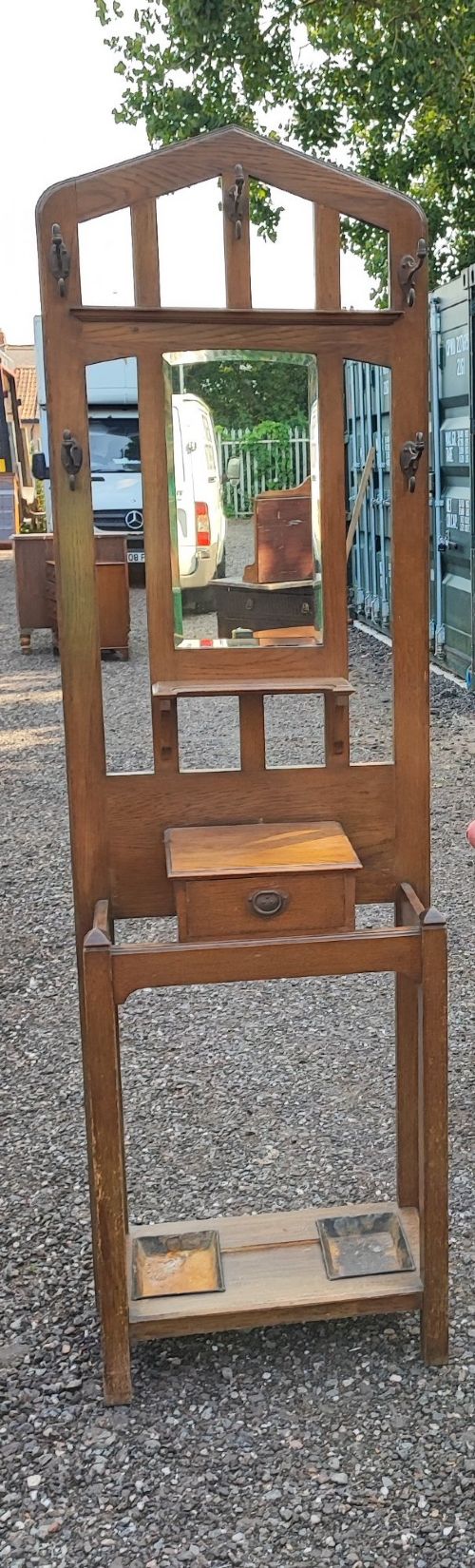
An arts and crafts coat stand serves as a functional piece of hall furniture designed for hanging garments, hats, and storing umbrellas. The examples found here span from the late nineteenth century into the mid-twentieth century, capturing the transition from Victorian heavy timber to lighter Edwardian interpretations.
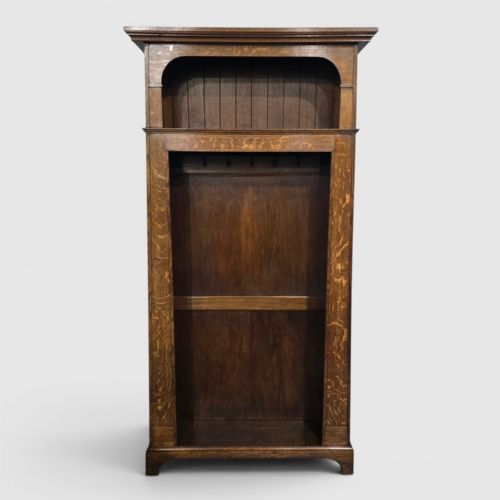
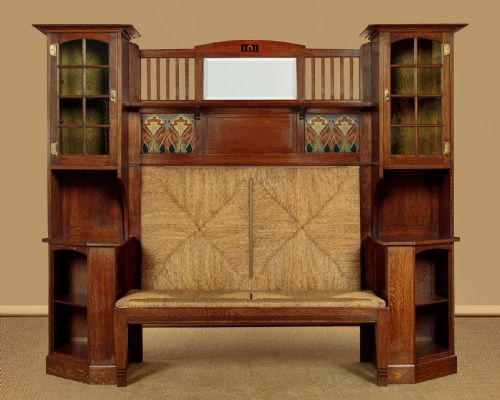
Solid oak dominates the selection, frequently appearing alongside brass hooks, ceramic tiles, and integrated drip trays. Pieces range from simple wall-hanging rails to large combined hall stands featuring benches, mirrors, and umbrella holders.
Buyers will most commonly encounter upright oak hall stands dated around nineteen hundred and nineteen ten. These incorporate structural pegs, carved panels, and metal hardware characteristic of the movement.
Materials and Construction
Makers utilised solid timbers, principally oak and occasionally walnut or mahogany, joined with exposed tenons and pegged joints to display structural integrity. Metal components such as brass coat hooks, iron rails, and zinc drip trays provide durable functional contrast to the wood.
Decorative elements include carved linear motifs, inset ceramic tiles, and bevelled mirror plates framed within the timber structure. Golden pine and stained finishes appear in regional pieces, while revolving frames utilise internal metal spindles for smooth rotation.
Arts and Crafts Coat Stand Retail Price Guide 2026
Typical asking prices for arts and crafts coat stand among the pieces listed under this phrase on Sellingantiques today, from the lower quarter to the upper quarter. They describe what is for sale here now, not the wider market.
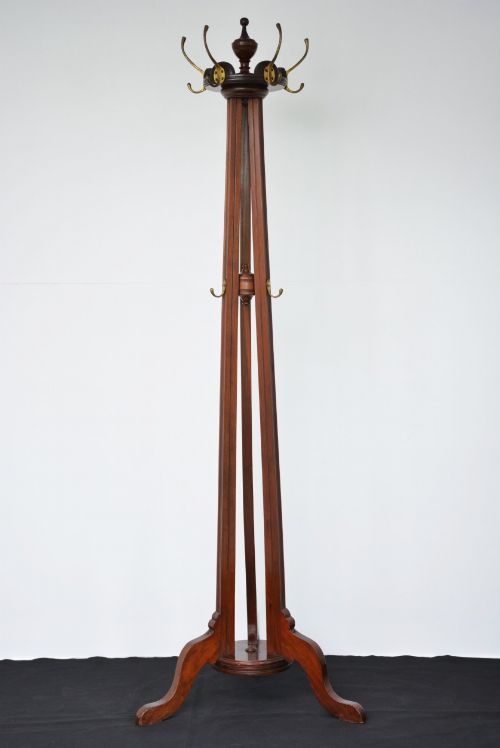
Certain stands include revolving tops, allowing users to spin their hats and coats into place like a library bookcase.
Design and Execution
The distinction between standard utility items and finer examples rests in the ambition of the design and the treatment of the timber. Selected pieces display figured oak, hand-hammered brass fittings, and hand-painted ceramic inserts by named artists rather than mass-produced cast iron hooks.
Proportion and stability separate utilitarian hall furniture from superior pieces. Well-executed examples balance vertical height with weighted bases or secure wall fixings, ensuring the frame supports heavy winter garments without tilting.
Jas. Shoolbred·Astrola·GW Evans·Ellen E. Houghton of Minton
The Arts and Crafts Coat Stand Glossary
- Hallstand
- A combined piece of furniture incorporating coat hooks, a mirror, and umbrella wells with drip trays. These items stood in entrance hallways to organise outdoor wear.
- Drip tray
- A metal tray placed at the base of a stand to catch water from wet umbrellas. They are typically made from brass or galvanized iron.
- Hall tree
- An alternative term for a freestanding coat and hat stand, often featuring multiple radial arms at the top. Some examples include revolving sections for easy access.
- Inlay
- A technique where pieces of contrasting wood or ceramic are inserted into depressions flush with the surface. This decoration appears on the backboards of finer hall furniture.
- Bevelled mirror
- A mirror glass plate with an angled edge ground down to a thinner perimeter. This detail reflects light and adds depth to the central hall panel.
Arts and Crafts Coat Stand: Frequently Asked Questions
How do I maintain an oak hall stand?
Apply natural beeswax periodically to nourish the dry timber and buff with a soft cloth to maintain a protective sheen. Avoid placing the furniture directly against damp walls or near intense heat sources that cause wood to split.
Inspect metal hooks and drip trays regularly, removing dust with a dry brush. Ensure brass elements remain unpolished if original patination is preferred.
Were these stands used in small homes?
Most surviving hall stands were built for spacious Edwardian and Victorian entrance halls where large timber furniture could anchor the room. Smaller homes utilised slim wall-hanging rails or compact corner stands.
Freestanding versions require adequate floor clearance and distance from entrance doors to allow comfortable access to coat hooks and umbrella wells.
How do I date an arts and crafts piece?
Examine the construction methods, timber selection, and hardware style to determine the period of manufacture. Pieces from eighteen ninety often show Aesthetic Movement influences, while nineteen ten examples feature lighter golden oak and simpler geometric lines.
Look for maker stamps, registration numbers, or retailer labels stamped onto the rear timber panels or cast into the metal hooks.
Can these stands support heavy winter coats?
Original solid oak frameworks and robust brass hooks are engineered to bear the weight of heavy garments, umbrellas, and walking sticks. Ensure the structure rests evenly on the floor to prevent strain on individual joints.
Tall revolving stands require balanced loading on opposite sides to maintain smooth movement and prevent tipping during daily use.