





Arts and Crafts Chair Set
An arts and crafts chair set brings honest timber construction and thoughtful joinery straight to the dining table or sitting room.
Arts and Crafts Chair Set
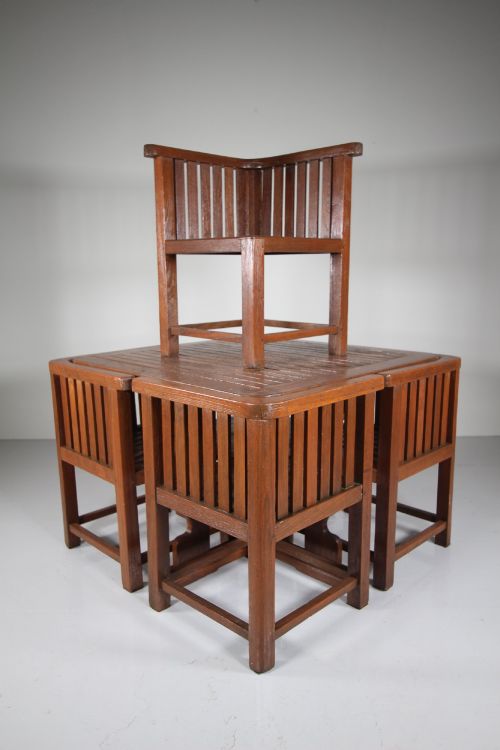
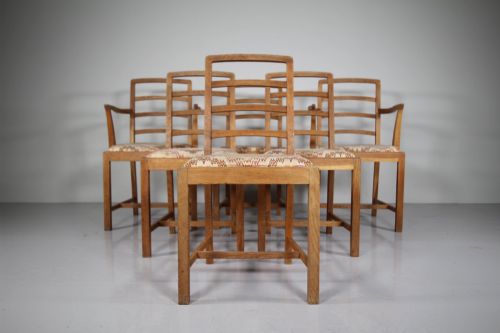
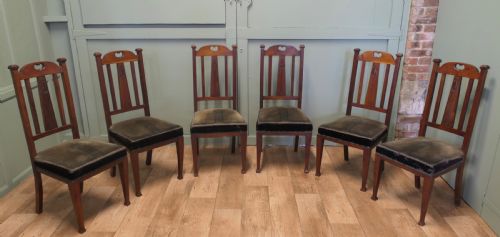
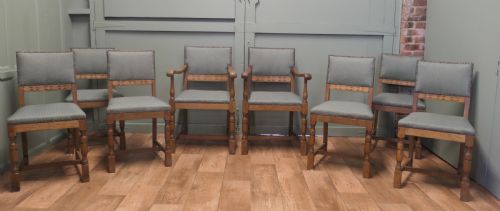
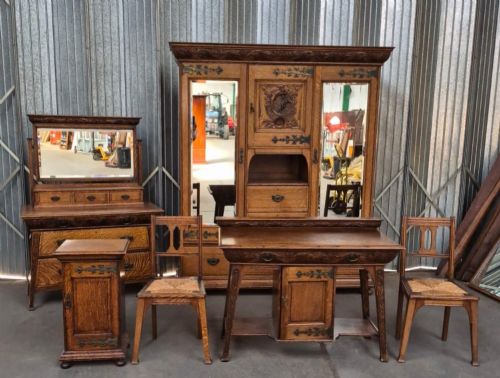
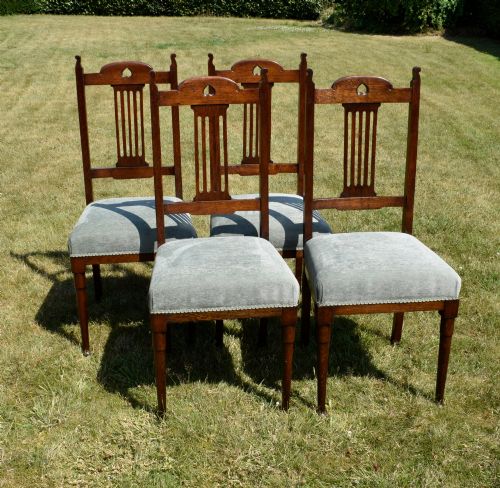
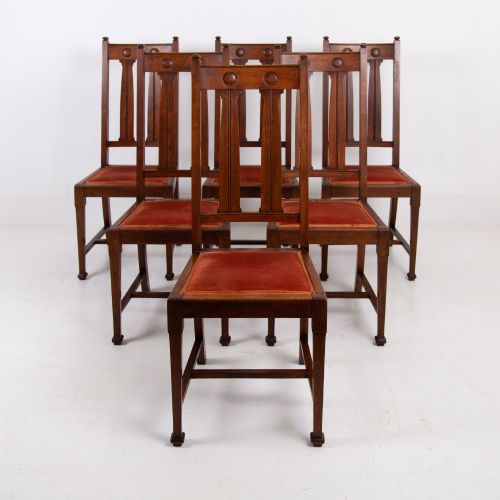
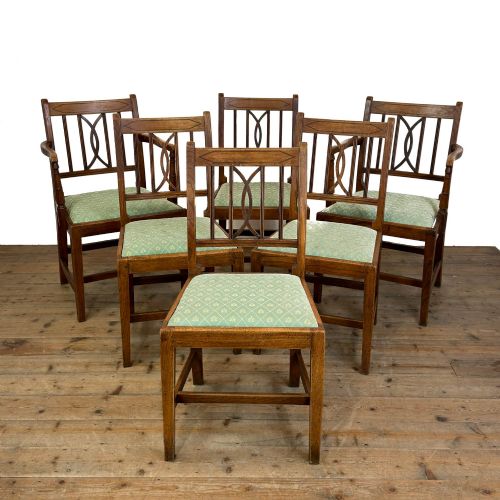
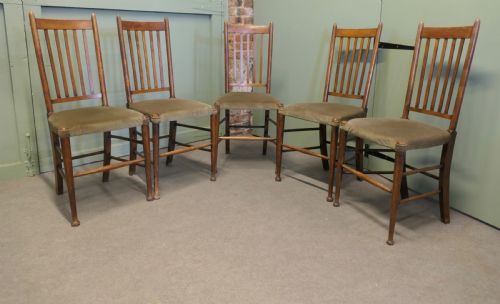
An arts and crafts chair set comprises multiple matched seats produced during the late nineteenth and early twentieth centuries, spanning periods from the 1880s through the 1930s. Buyers searching for an arts and crafts chair set will most frequently encounter groupings of dining chairs constructed from oak, though salon suites and bedroom groupings also appear.
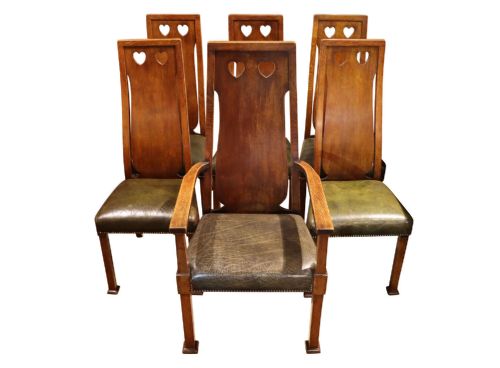
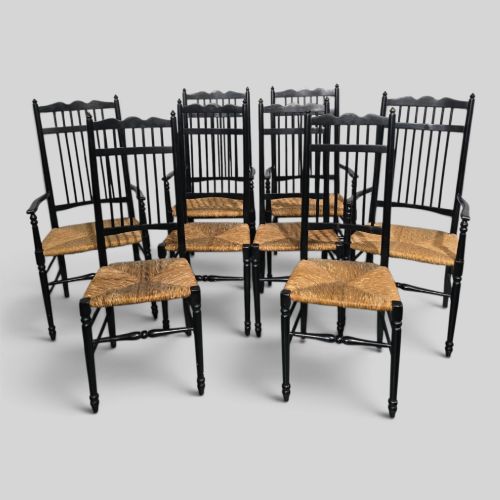
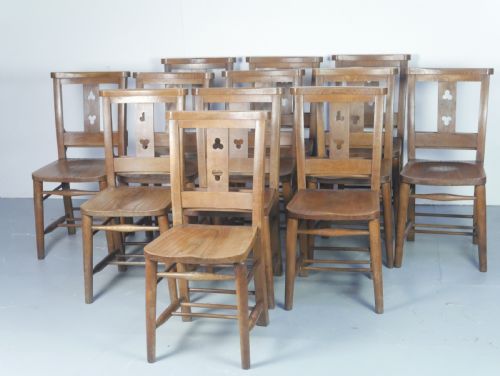
The configurations vary in size, running from intimate sets of four up to larger dining sets of six, eight, twelve, or fourteen pieces. Alongside standard dining chairs, the selections include highback models, rush-seated country versions, and occasional side chairs reflecting stylistic influences like the Aesthetic Movement and Edwardian design.
Materials and construction methods
Oak dominates the production, appearing in both standard and golden tones, alongside alternative timbers like mahogany, walnut, elm, and country woods. Joinery relies on traditional pegged and mortise-and-tenon construction that displays the structural integrity of the timber rather than concealing it behind veneer.
Seat pads and back panels incorporate durable materials including textured leather, woven rush, brass studs, and various fabric or velvet upholstery. Highback forms often feature distinctive splats or leather panels secured with decorative metal tacks.
Arts and Crafts Chair Set Retail Price Guide 2026
Typical asking prices for arts and crafts chair set among the pieces listed under this phrase on Sellingantiques today, from the lower quarter to the upper quarter. They describe what is for sale here now, not the wider market.
Some highback chairs stand so tall they practically demand good posture from anyone brave enough to sit through a long Victorian dinner.
Distinctions in quality and origin
Quality separates ordinary utility seating from pieces bearing the marks of known retailers or designers like Liberty & Co, Heals of London, Goodyers, Charles Bevan, Edward Gardener, Shapland and Petter, or George Henry Walton. The distinction lies in the refinement of the carved details, the weight of the timber, and the integrity of the original leather or rush work.
Regional variations also influence the character of the seating, moving from robust Scottish and English provincial workshop output to metropolitan retail offerings. Greater consistency in matching grain patterns across a larger group elevates the status of extensive dining sets.
Heals of London·Goodyers London·Liberty and Co·Charles Bevan·Edward Gardener·Shapland and Petter·George Henry Walton
The Arts and Crafts Chair Set Glossary
- Highback
- A chair design featuring an elongated vertical backrest that emphasises linear proportions. These forms are frequently paired with leather upholstery or detailed slat work.
- Rush seat
- A woven seating surface constructed from dried marsh grasses twisted into cords. This traditional technique appears on country-influenced seating.
- Splats
- The vertical central strip of wood within a chair backrest. High splats characterise several mahogany and oak designs in this category.
- Aesthetic Movement
- A late nineteenth-century design current emphasising visual beauty over narrative content. Pieces from this movement display clean lines and refined proportions.
- Mortise and tenon
- A traditional woodworking joint where a projecting tongue fits securely into a corresponding cavity. This method provides the structural strength found in unveneered oak frames.
Arts and Crafts Chair Set: Frequently Asked Questions
How many chairs come in a set?
The groupings range from compact sets of three, four, or five pieces up to larger dining suites numbering six, eight, twelve, or fourteen chairs.
Matching sets of six remain the most common configuration for standard dining tables, while larger numbers usually appear in substantial oak or mahogany room schemes.
What wood is most common?
Oak is the predominant timber, seen frequently in golden oak or fumed finishes that highlight the natural grain of the wood.
Mahogany, walnut, elm, and local country woods also appear across specific Edwardian and stylistic iterations.
How do I care for leather seats?
Original leather upholstery requires gentle cleaning and regular conditioning to prevent the material from drying out over time.
Keeping the leather away from direct heat sources helps preserve the surface and the original brass studding.
Are rush seats durable?
Woven rush seats offer surprising strength and resilience when used with reasonable care in everyday dining environments.
Avoiding excessive moisture protects the natural plant fibres from weakening.