


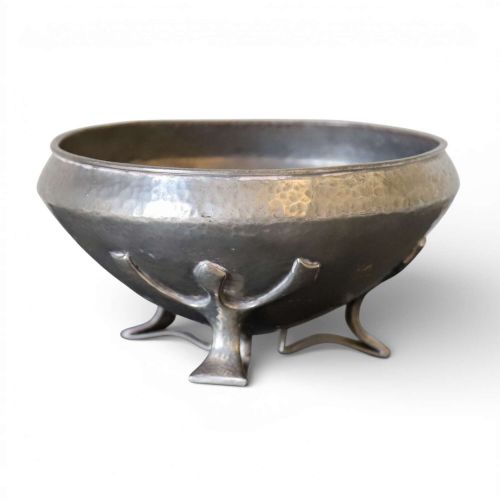


Arts and Crafts Centerpiece
An arts and crafts centerpiece brings hand-wrought metalwork and carved timber to the middle of the table, offering tactile character for daily service.
Arts and Crafts Centerpiece
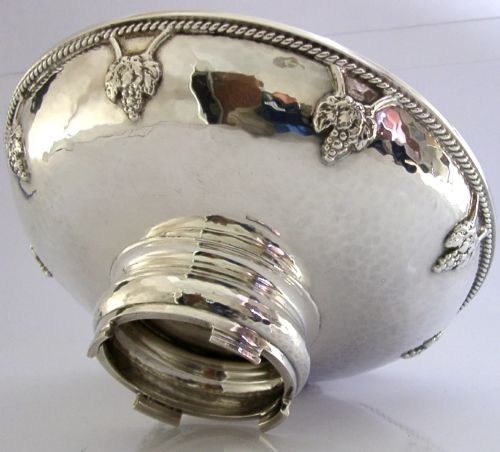
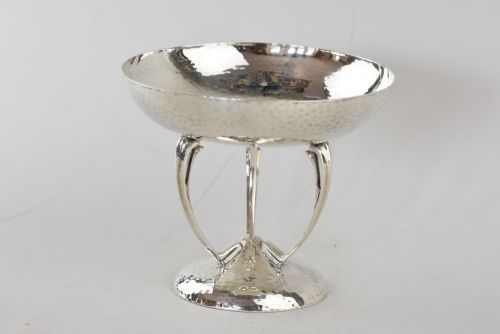
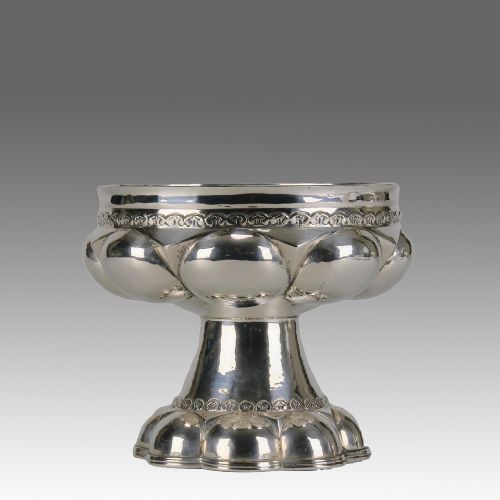
When you search for an arts and crafts centerpiece, you encounter decorative bowls, rose bowls, chalices, tazzas, and candelabra produced from the early twentieth century onwards. These objects reflect the hand-wrought ethos of the movement, taking forms such as pedestal dishes and shallow fruit bowls designed for domestic display and utility.
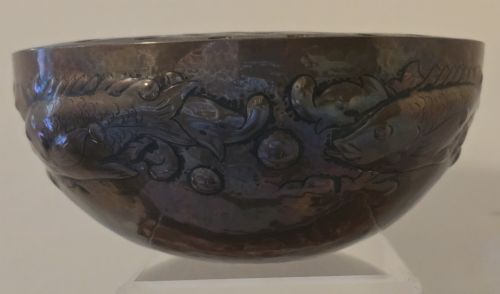
The version you are most likely to meet on this page is a hammered metal vessel in copper, sterling silver, or pewter, often accented with cabochons or enamelled details. Timber vessels also appear, featuring carved decoration such as fruiting vines that anchor the domestic interior in natural motifs.
Materials and construction methods
Makers shaped copper, sterling silver, and pewter sheets by hand, leaving visible hammer marks across the surfaces to record the process of manual raising. Pewter alloys were cast and finished to produce substantial domestic vessels with low melting points.
Woodworkers utilised solid oak to carve organic motifs directly into the material, while metalsmiths set Ruskin cabochons and enamel plaques into collars and pedestals. Glass elements such as crystal vases and green glass vessels were blown and patterned to complement the metalwork.
Arts and Crafts Centerpiece Retail Price Guide 2026
Typical asking prices for arts and crafts centerpiece among the pieces listed under this phrase on Sellingantiques today, from the lower quarter to the upper quarter. They describe what is for sale here now, not the wider market.
Several pieces feature pierced metal lids intended to keep stubborn roses from slouching into the tea.
Distinguishing quality in craftsmanship
Quality rests in the crispness of the hand-beaten texture and the deliberate weight of the metal. Superior pieces display purposeful hammer strikes rather than uniform machine finishing, demonstrating the individual hand of the metalsmith.
The integration of decorative elements dictates the upper tier of objects. Riveted construction, secure cabochon settings, and balanced pedestal proportions separate ambitious studio work from standard commercial production.
A E Jones·Goldsmiths and Silversmiths Company·Liberty & Co·Oliver Baker·Nathan and Hayes·Stuart·Archibold Knox
The Arts and Crafts Centerpiece Glossary
- Tazza
- A shallow bowl or cup mounted on a stem and foot, commonly utilised for displaying fruit or flowers in formal settings.
- Cabochon
- A polished, convex gem or enamel piece without facets, frequently set into the rims or pedestals of metal vessels.
- Tudric
- The trade name used by Liberty & Co. for their range of pewterware, developed in conjunction with designers such as Archibald Knox and Oliver Baker.
- Rose bowl
- A specialised bowl featuring a pierced lid or wire insert designed to hold short-stemmed rose blooms upright.
Arts and Crafts Centerpiece: Frequently Asked Questions
What is an arts and crafts centerpiece?
An arts and crafts centerpiece is a decorative or functional vessel created during the early twentieth-century design movement, typically fashioned from hammered metals or carved oak.
These pieces served as focal points on dining tables and sideboards, combining utility with manual craftsmanship.
How do I care for antique pewter?
Antique pewter requires gentle cleaning with mild soap and warm water, followed by immediate drying with a soft cloth to preserve the surface.
Avoid abrasive polishes that remove the historic patina developed over decades of handling.
What materials are common in these vessels?
Copper, sterling silver, and pewter dominate the metalwork, alongside solid oak for carved wooden bowls and crystal glass for vases.
Many metal vessels incorporate Ruskin ceramic cabochons or enamel details for added colour.
How do I distinguish Tudric pewter?
Tudric pewter pieces often bear specific model numbers stamped on the base, along with the Liberty & Co. retailer mark.
They frequently showcase distinctive Celtic revival or organic motifs designed by artists like Archibald Knox.