

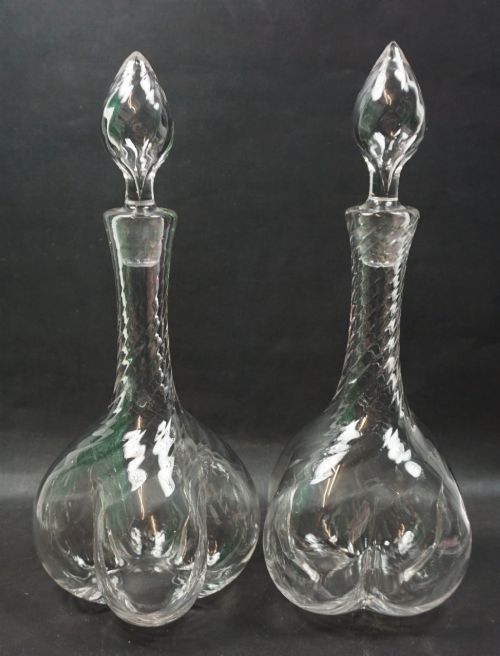


Art Nouveau Wine Decanter
These art nouveau wine decanter pieces combine organic styling with utilitarian charm, offering a striking centrepiece for any table.
Art Nouveau Wine Decanter
When searching for an art nouveau wine decanter, buyers encounter vessels shaped by the organic, flowing lines characteristic of the turn of the twentieth century. The selections available encompass forms ranging from traditional decanters and claret jugs to wine dispensers, ewers, and coasters.
Most examples date from the late Victorian and Edwardian periods, stretching from the late nineteenth century into the 1910s. British and continental origins dominate, including notable output from German and Austrian makers.
Vessels are frequently encountered in combinations of glass and metalwork. Clear and green glass bodies meet mounts and frames fashioned from pewter, silver plate, and sterling silver.
How they were made
Glass bodies were blown and sometimes engraved, paired with metal mounts cast in pewter, silver plate, or sterling silver. Pewter was often worked into figural or vegetal motifs, utilising the malleable nature of the metal to achieve the characteristic undulating contours of the style.
Makers also employed wrought iron and brass to frame glass carafes and dispensers. Silver plating was applied over base metals to provide a bright finish while maintaining structural support for the glass inserts.
Art Nouveau Wine Decanter Retail Price Guide 2026
Typical asking prices for art nouveau wine decanter among the pieces listed under this phrase on Sellingantiques today, from the lower quarter to the upper quarter. They describe what is for sale here now, not the wider market.
Materials recorded across the selection include glass, silver plate, pewter, sterling silver, green glass, wood, wrought iron, and brass.
What varies in quality
Quality rests in the harmony between the glass vessel and its metal mount. Superior examples exhibit seamless integration where the pewter or silver mount flows organically around the glass rather than appearing merely attached.
The definition and depth of the cast ornamentation dictate the standard of the piece. Crisp detailing in figural and botanical motifs separates standard production from work associated with prominent designers and manufacturers.
Archibald Knox for Liberty Co·WMF
The Art Nouveau Wine Decanter Glossary
- Claret jug
- A pouring vessel specifically designed for serving red wine, typically featuring a glass body and a metal handle, collar, and hinged lid. They are frequently encountered with silver plated or pewter mounts.
- Pewter
- A malleable metal alloy composed chiefly of tin, used extensively for the decorative mounts and frames of this era. It allowed craftsmen to cast complex, flowing organic shapes.
- Silver plate
- A base metal coated with a thin layer of silver to give the appearance of solid silver. It was widely utilised during the Victorian and Edwardian periods for decorative tablewares.
- Ewer
- A large jug with a wide spout and a handle, historically used for carrying water or wine. In this category, they serve as decorative vessels for dispensing spirits and wine.
- Cymric
- A trademarked name used by Liberty & Co. for their range of Celtic-inspired silver and pewter work. Pieces carrying this designation often feature enamel or semi-precious stone inlays.
Art Nouveau Wine Decanter: Frequently Asked Questions
What is an art nouveau wine decanter?
An art nouveau wine decanter is a serving vessel for wine produced during the late nineteenth and early twentieth centuries, characterised by asymmetrical, plant-inspired motifs and flowing lines.
These pieces typically combine glass bodies with metal mounts made from pewter or silver plate, reflecting the design philosophies of the Arts and Crafts movement and the broader Art Nouveau aesthetic.
How were these decanters used?
These vessels were utilised for holding and serving wine, claret, or spirits at the dining table. They functioned both as practical tableware and as decorative centrepieces during formal meals.
Beyond dining rooms, larger ewers and dispensers were employed in domestic settings for entertaining guests and displaying the homeowner's taste.
How do I care for my decanter?
Care requires gentle hand washing with warm water and mild soap, avoiding abrasive materials that can scratch the glass or wear down silver plating. Pewter mounts should be cleaned with non-abrasive polishes formulated specifically for the metal.
When storing or displaying the piece, ensure the glass stopper or lid is seated correctly and keep the vessel away from direct sunlight to preserve coloured glass and metal finishes.
How can I tell the period?
Dating relies on stylistic markers such as WH&S or Tudric marks, combined with the presence of Victorian or Edwardian manufacturing traits. Materials like green glass and figural pewter mounts point towards the turn of the twentieth century.
Examining the construction of the metal mounts and the weight of the glass provides further clues to whether a piece originates from the 1890s or the subsequent Edwardian decade.