


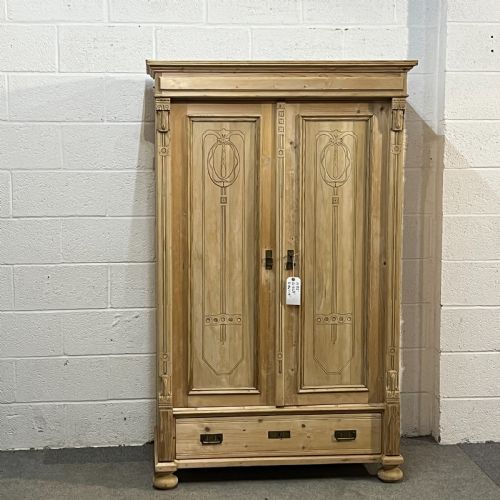


Art Nouveau Wardrobe
An art nouveau wardrobe brings fluid organic lines and natural motifs into the bedroom, offering substantial storage disguised by graceful floral and botanical detailing.
Art Nouveau Wardrobe
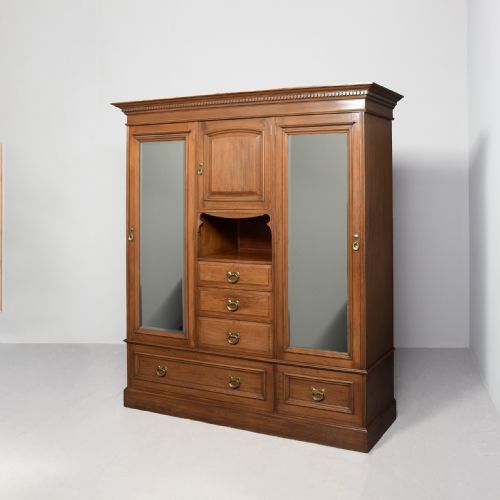
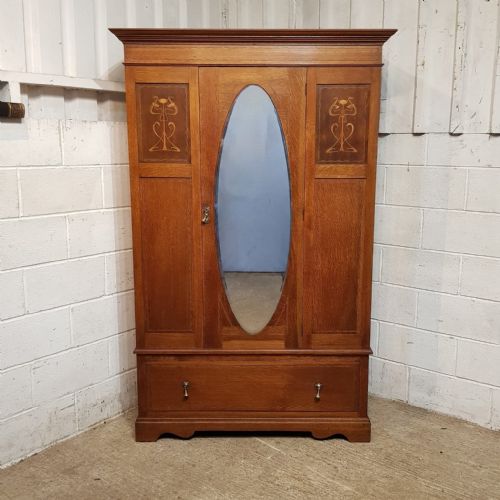
When searching for an art nouveau wardrobe, a buyer encounters substantial storage furniture spanning the late nineteenth century through to the Edwardian period. These pieces typically manifest as single, double, or triple door formats, often incorporating mirrored panels and lower drawers.
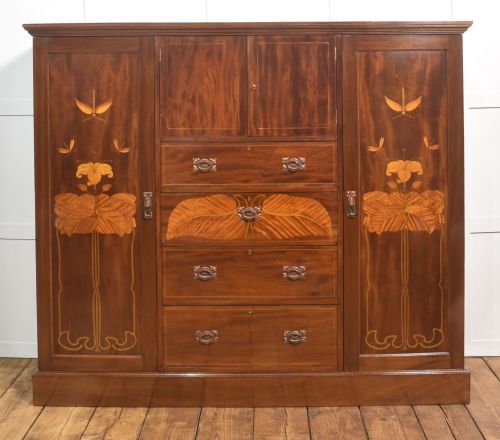
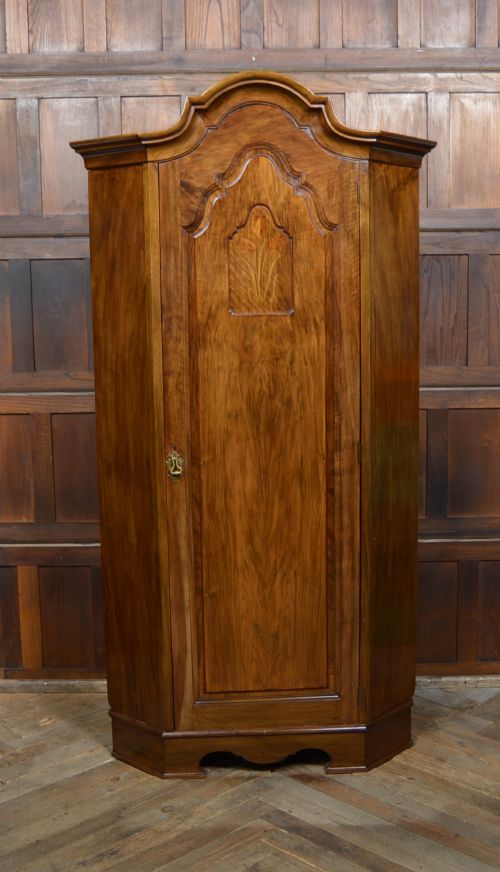
Mahogany, walnut, and oak dominate the available selection, frequently enhanced by intricate marquetry and inlaid details. Examples range from compact corner robes and single pine cupboards to expansive triple-section compactums created by notable design houses.
Stylistic influences stretch across standard art nouveau, arts and crafts, and Glasgow school aesthetics, capturing an era of purposeful handcraft and sinuous vegetal ornament.
Materials and Construction Methods
Cabinetmakers utilised solid timbers and selected veneers such as mahogany, walnut, oak, ash, and pine, building carcases designed to withstand daily use while displaying rich natural grain patterns. Many larger items incorporated knockdown construction systems to allow easier transport and installation in domestic bedrooms.
Surface decoration relied heavily on precision marquetry and inlay work, combining contrasting woods to form stylized floral and whip-line motifs. Brass hardware, including distinctive drop handles and strap hinges, complemented glass mirrors and carved panels to complete the decorative scheme.
Distinctions in Quality and Execution
Quality rests upon the ambition of the design and the precision of its execution, separating standard commercial production from bespoke studio outputs. Superior examples display seamless marquetry integration, finely carved botanical detailing, and robust internal configuration without structural sagging.
The choice of primary timber and secondary wood thickness dictates longevity and stability, particularly in multi-section wardrobes and compactums. Original bevelled glass mirrors, intact brass fittings, and well-fitted panel doors further distinguish exceptional cabinetmaking from mass workshop output.
Wylie Lochhead of Glasgow·Maple and Co·Liberty and Co
The Art Nouveau Wardrobe Glossary
- Compactum
- A large, multi-section wardrobe combining hanging space with internal drawers, linen presses, and shelving. This form maximises bedroom storage efficiency within a single unified piece of furniture.
- Marquetry
- The art of applying pieces of veneer to a structure to form decorative patterns and pictures. Craftsmen cut various tinted woods to create organic art nouveau plant motifs.
- Knockdown
- A piece of furniture constructed so that it can be easily dismantled into modular sections. This technique allowed large wardrobes to be transported up narrow staircases before reassembly on-site.
- Combination Wardrobe
- A storage unit that integrates hanging space alongside drawers and small cupboards. It provides versatile clothing organisation within a single cabinet footprint.
- Glasgow School
- A circle of influential artists and designers active in Scotland during the late nineteenth and early twentieth centuries. Their work championed simplified structural forms alongside attenuated vertical proportions.
Art Nouveau Wardrobe: Frequently Asked Questions
How do I assemble a knockdown wardrobe?
Knockdown wardrobes utilise interlocking wooden tenons, bolts, or wedge systems designed for straightforward dismantling and reassembly. Keeping track of original numbered panels ensures each component returns to its correct position during setup.
Securing the heavy cornice and base level on a firm floor prevents the side panels from twisting. Professional installation is often advisable for large triple wardrobes to guarantee structural plumb and proper door alignment.
Can I fit a modern hanger inside?
Many older wardrobes feature shallower internal depths than modern equivalents due to historical clothing sizes. Standard coat hangers may need to be angled or replaced with shorter alternatives to allow the doors to close fully.
Original wooden hanging rails can sometimes be adjusted forward, or sliding pull-out arms retrofitted carefully without altering the historic interior fabric. Measuring the internal clearance depth before purchase ensures modern garments hang correctly.
What is the difference between a compactum and a standard wardrobe?
A standard wardrobe focuses primarily on vertical hanging space behind one or two full-length doors, occasionally featuring a single base drawer. Compactums incorporate comprehensive internal organisation including banks of internal drawers, shelves, and linen compartments.
Compactums offer a broader footprint and greater height, serving as complete bedroom storage systems. Their complex internal joinery reflects high-status commissioning during the late nineteenth and early twentieth centuries.