


Art Nouveau Silver Pin
An art nouveau silver pin brings curving floral lines and flowing maiden motifs to a lapel or hat.
Art Nouveau Silver Pin
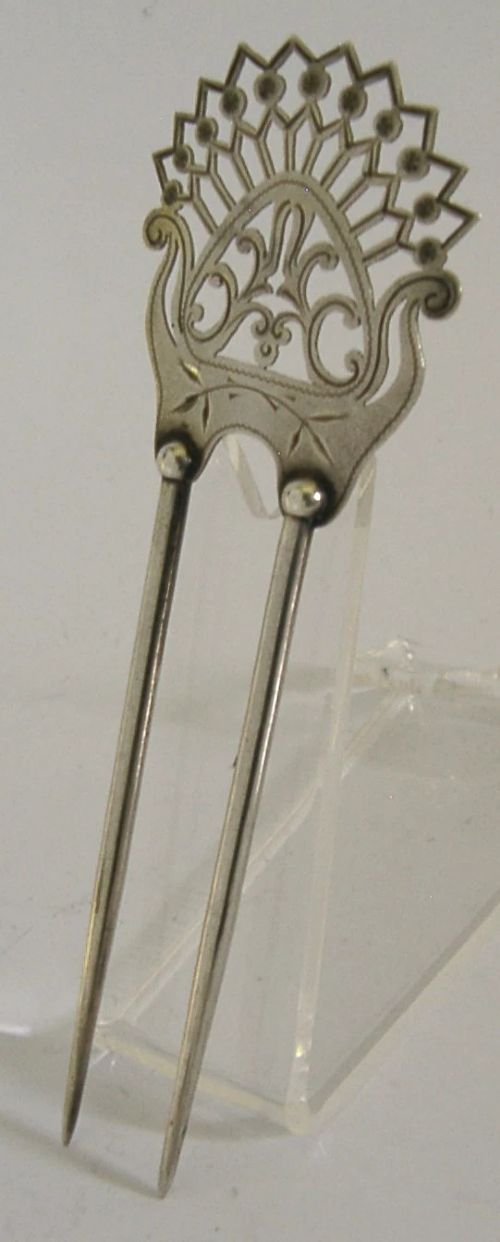
When you search for an art nouveau silver pin, you encounter small personal ornaments and fasteners created primarily around the turn of the twentieth century. Brooches, jabot pins and hat pins dominate the selection, often carrying the characteristic whiplash curves, stylized flora and fauna associated with the period.
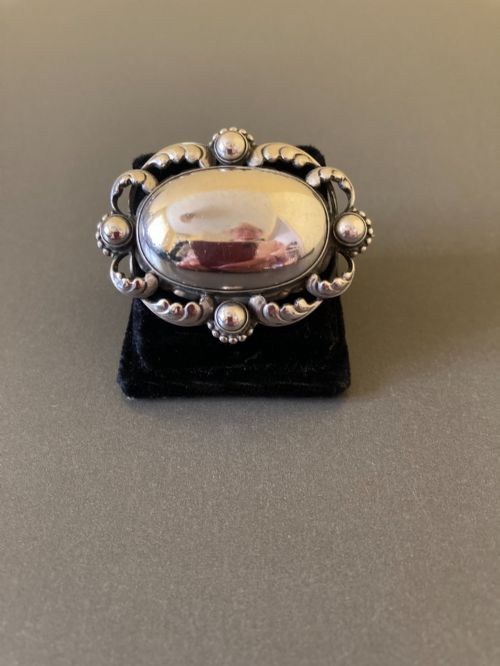
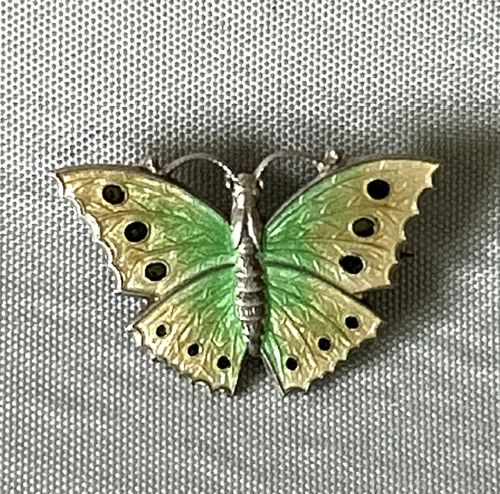
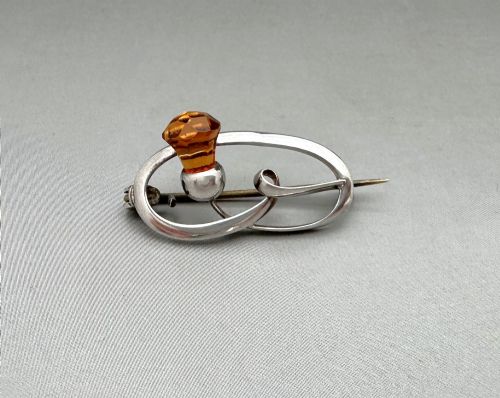
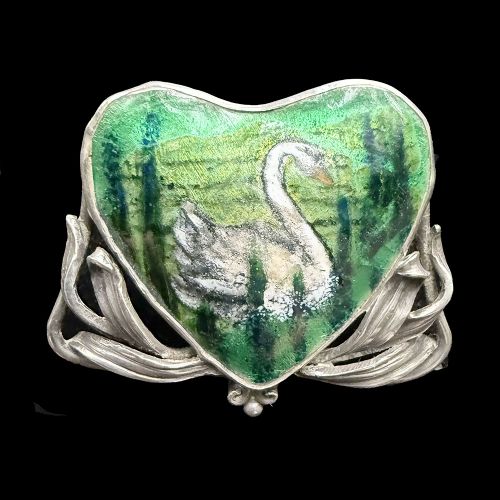
The most common examples take the form of small silver brooches or hat pins set with enamel or coloured glass. Makers utilised sterling silver and standard silver grades, frequently shaping them into thistles, butterflies, swans or female figures typical of the continental Jugendstil and British Arts and Crafts movements.
How they were made
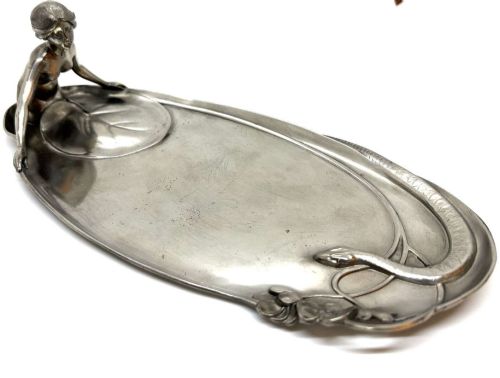
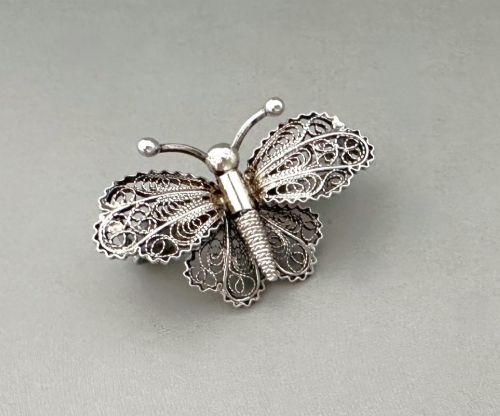
Silversmiths formed these objects using techniques such as stamping, piercing, and filigree wirework. Base metals like pewter and Britannia metal also appear alongside solid sterling silver and silver gilt, offering alternative weights and textures for moulded figures and trays.
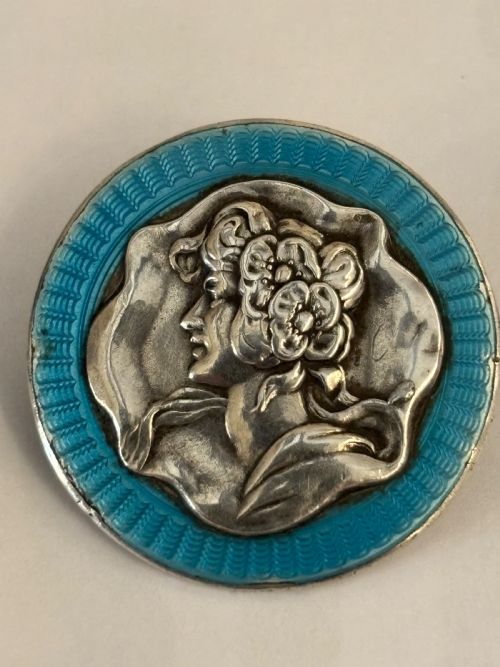
Enamelling techniques add colour and translucency to the metalwork. Artisans applied guilloche enamel with engine-turned geometric underlayers, or utilised plique-a-jour, a method resembling stained glass without a backing to let light pass directly through the coloured medium.
Snails, scarabs, kingfishers, and fairies frequently share display space with standard floral motifs.
What varies in quality
Quality separates mass-produced stamped novelties from items bearing the careful hand of a recognised designer or workshop. Crispness in the casting of a maiden or bird motif and the retention of delicate enamel work without chipping mark the upper tier of production.
The choice of secondary materials alters the character and standing of a piece significantly. Semi-precious stones, pearls, and intricate plique-a-jour demand greater skill from the maker than simple plain silver or base metal castings.
Charles Horner·William Hutton·Georg Jensen·Gustav Gaudernack·Meyle And Mayer·Henry Matthews·Mappin And Webb
The Art Nouveau Silver Pin Glossary
- Guilloche enamel
- Enamel applied over a metal surface that has been mechanically engraved with a repetitive pattern. This technique creates shimmering depth beneath the translucent glaze.
- Plique-a-jour
- An enamelling technique where the enamel is applied within open cells of metal, lacking a backing. It produces a stained-glass effect that glows when held to the light.
- Jabot pin
- A decorative pin designed to fasten folds of fabric on a jabot or cravat. These pieces usually feature a long pin stem with an ornamental terminal.
- Jugendstil
- The continental German-language variant of the Art Nouveau movement. It emphasises organic motifs, dynamic linear forms, and natural asymmetry.
- Silver gilt
- Silver that has been coated with a thin layer of gold on its surface. This treatment provides a warm golden tone while retaining the underlying silver structure.
Art Nouveau Silver Pin: Frequently Asked Questions
How do I wear a hat pin?
Hat pins secure large historical hats by passing through the fabric and the wearer's hair. Collectors today often display them in dedicated stands or mount them in frames.
Because the pins are long and sharp, secure them with protective stoppers if you choose to wear them on modern garments or hats.
What is the difference between Art Nouveau and Arts and Crafts?
Art Nouveau embraces fluid, asymmetrical lines inspired by organic growth and whiplash curves. Arts and Crafts focuses more on visible craftsmanship and simple structural integrity.
Both movements overlap significantly in the objects produced during this era, leading many pieces to share stylistic elements from both traditions.
How should I clean antique silver enamel?
Clean silver enamel gently with a soft, dry cloth to remove surface dust. Avoid liquid silver dips, as chemical solutions can seep beneath the enamel or damage delicate glass surfaces.
Store pieces away from direct sunlight and damp environments to prevent the silver from tarnishing heavily and to protect the fragile enamel layers.
Were these pins made for everyday use?
Victorian and Edwardian women wore these pins daily to fasten hats, collars, and scarves in place. The materials ranged from affordable pewter for everyday wear to sterling silver and enamel for formal occasions.
Over time, changes in fashion rendered hats and elaborate cravats less common, turning these practical fasteners into collectible jewellery.