




Art Nouveau Oak Furniture
Art nouveau oak furniture brings together organic linear design and sturdy timber, offering practical household utility with distinctive aesthetic character.
Art Nouveau Oak Furniture
Art nouveau oak furniture encompasses practical domestic pieces produced during the Edwardian period, spanning the years around nineteen hundred and nineteen ten. These items display fluid stylistic influences, intersecting closely with the Arts and Crafts movement, French Arts and Crafts, and Secessionist aesthetics.
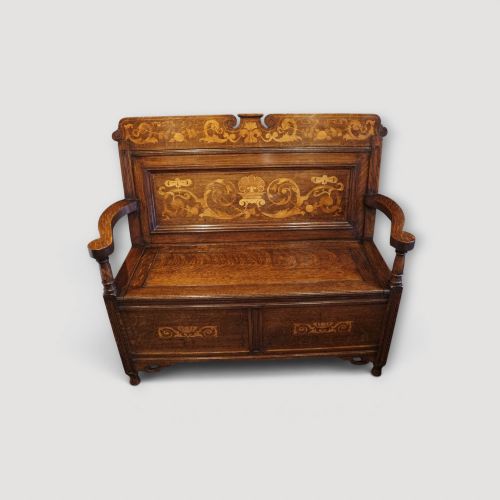
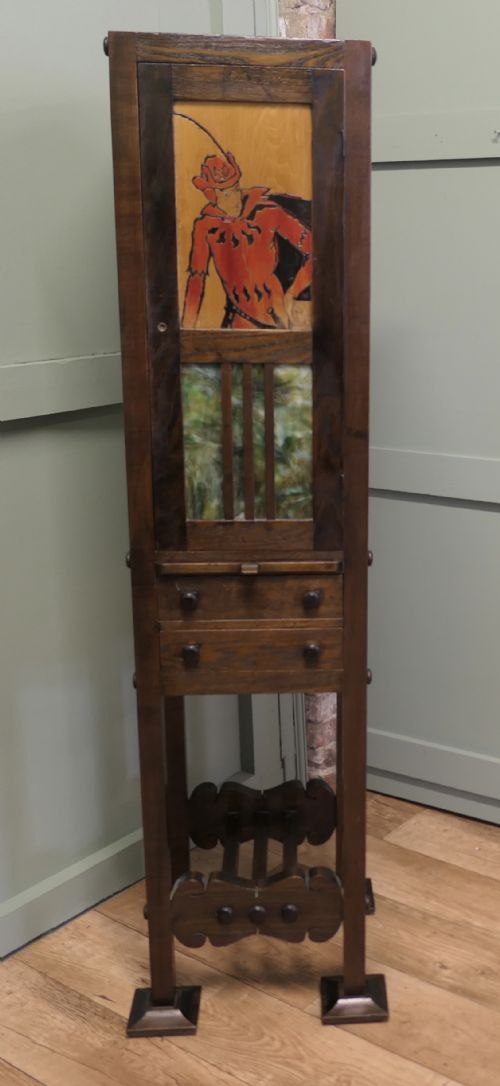
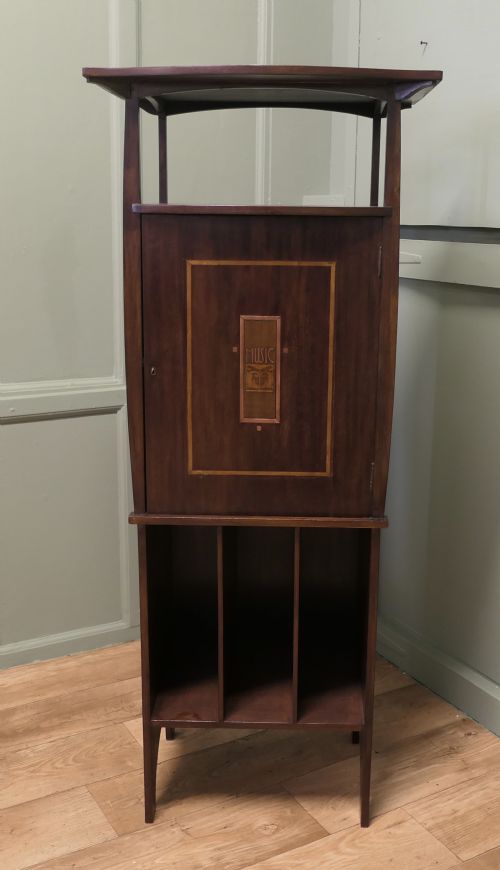
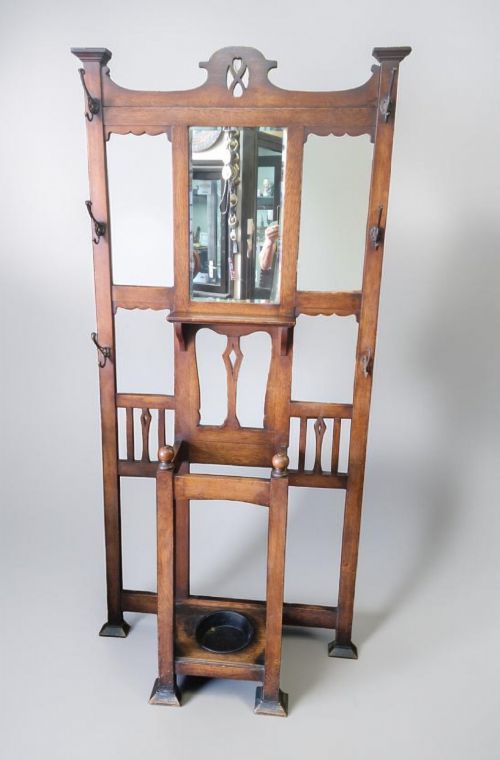
The selection here includes hall stands, occasional tables, side tables, music cabinets, seating suites, hall seats, monks benches, side chairs, mirror wardrobes, sideboards, dressers, display tables, plant stands, and writing tables. Pieces originate from British makers alongside continental workshops, including Dutch examples.
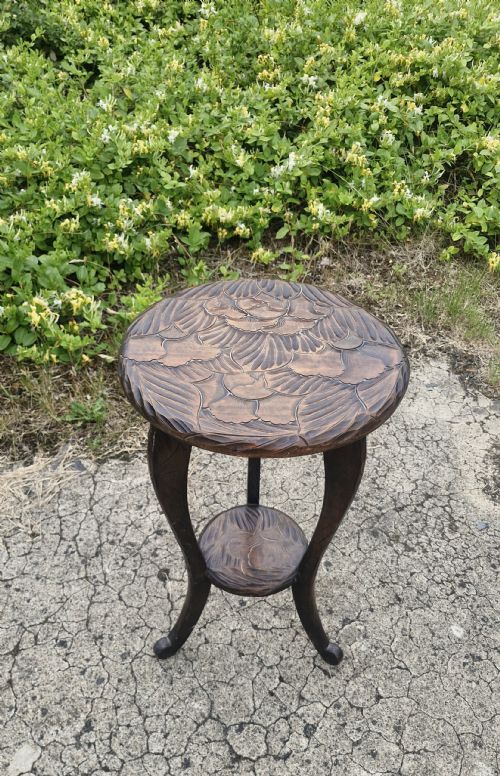
Buyers frequently encounter occasional tables and hall stands in this timber, reflecting the domestic focus of the period. These forms combine functional utility with the characteristic carved details and structural honesty of the movement.
How they were made
Makers utilised solid oak, often described as golden or light oak, as the primary structural material for these items. Timber construction frequently incorporates wood inlay to introduce contrasting tones and decorative patterns.
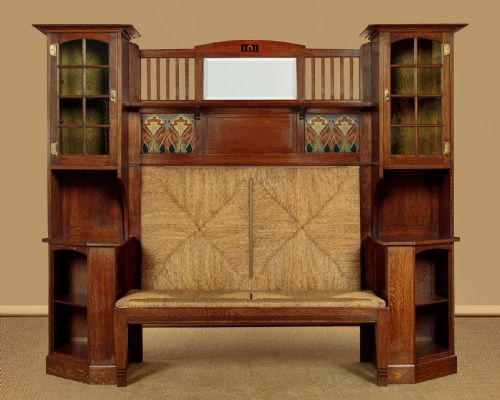
Artisan workshops integrated diverse secondary materials to accent the woodwork, including glass panels, ceramic tiles, and brass or copper hardware. Seating items and related furniture incorporate upholstered fabric components where required for comfort.
Continental pieces on this site include Amsterdam School designs alongside British Edwardian examples.
What varies in quality
Quality differences emerge in the execution of carved ornamentation and the precision of wood inlay work. Superior examples demonstrate confident hand-carving and careful integration of decorative ceramic or metal elements.
Structural integrity and the selection of timber grain distinguish standard production from exceptional pieces. Workshop origin also influences standing, with documented makers commanding greater attention from collectors.
GM Elwood for JS Henry·Liberty's·Liberty and Co
The Art Nouveau Oak Furniture Glossary
- Arts and Crafts
- A design movement prioritising traditional craftsmanship, simple forms, and the natural qualities of materials. It heavily influenced the aesthetic of domestic furnishings around nineteen hundred.
- Jugendstil
- The continental European manifestation of the art nouveau movement, characterised by flowing organic lines. It appears in continental furniture imports of the period.
- Secessionist
- A central European stylistic offshoot associated with progressive artists and designers rejecting historicist academic art. Works in this style display geometric rigour alongside organic motifs.
- Monks Bench
- A multifunctional domestic seat featuring a hinged back that folds down to form a table. These versatile items served practical roles in hallways and living spaces.
Art Nouveau Oak Furniture: Frequently Asked Questions
What is art nouveau oak furniture?
These items are domestic furnishings produced around nineteen hundred and nineteen ten that combine sturdy timber construction with the flowing, organic design lines of the movement. They include tables, seating, and storage pieces.
They reflect an era when craftsmen valued honest construction alongside artistic expression, merging utility with distinctive decorative styles.
How do I date these pieces?
Dating relies on stylistic markers, construction methods, and materials typical of the Edwardian period and the broader Arts and Crafts movement. Most surviving examples date from nineteen hundred to nineteen ten.
Documentation, retailer stamps, and characteristic design motifs help place individual items within this timeframe.
Where were these pieces made?
Production occurred across Britain and continental Europe, with notable output from British firms and Dutch workshops. Regional stylistic traits often indicate the origin of specific items.
British examples frequently align with the Arts and Crafts movement, while continental pieces may show Jugendstil or Amsterdam School influences.
How do I care for oak furniture?
Maintaining these pieces involves keeping them away from direct heat sources and extreme humidity fluctuations to protect the timber and any inlaid elements. Regular gentle dusting preserves the surface finish.
Avoiding harsh chemical polishes ensures the original patination and auxiliary materials like brass, copper, and ceramic tiles remain undisturbed.