

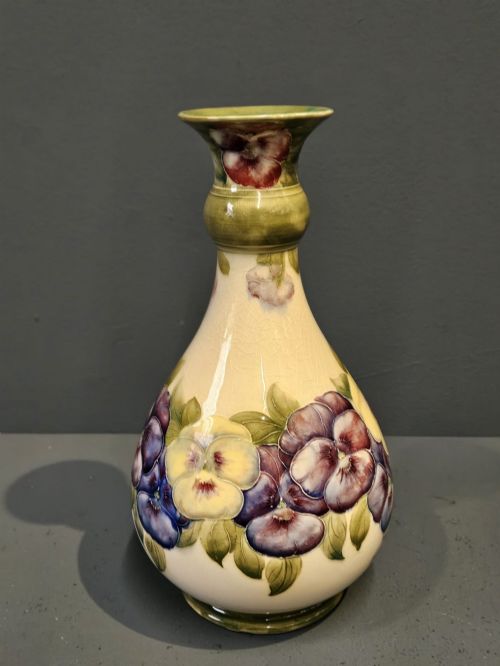


Art Nouveau Moorcroft Vase
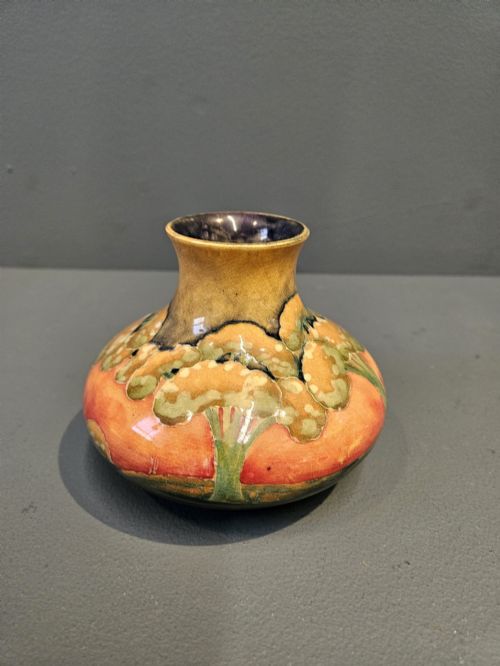
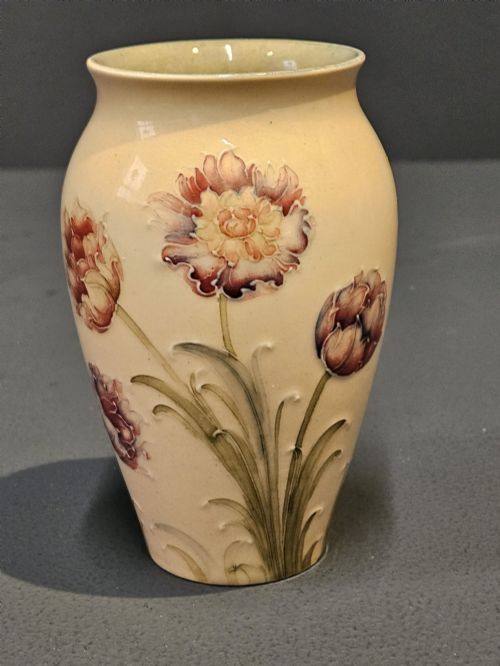
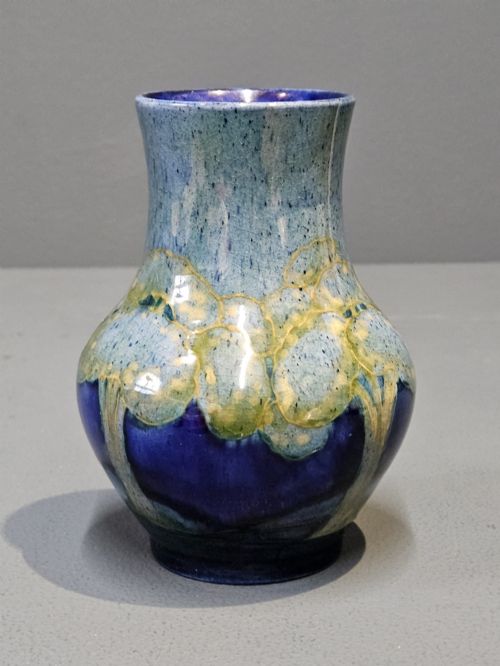
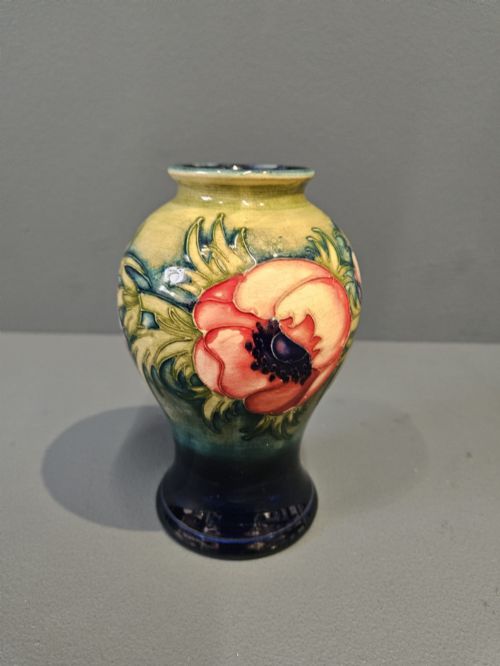
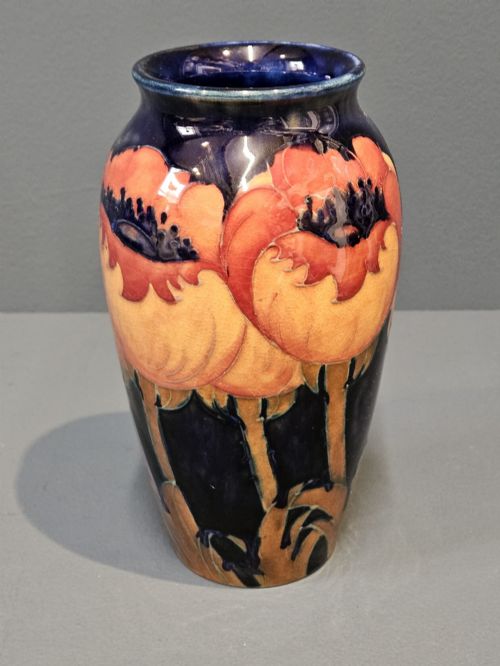
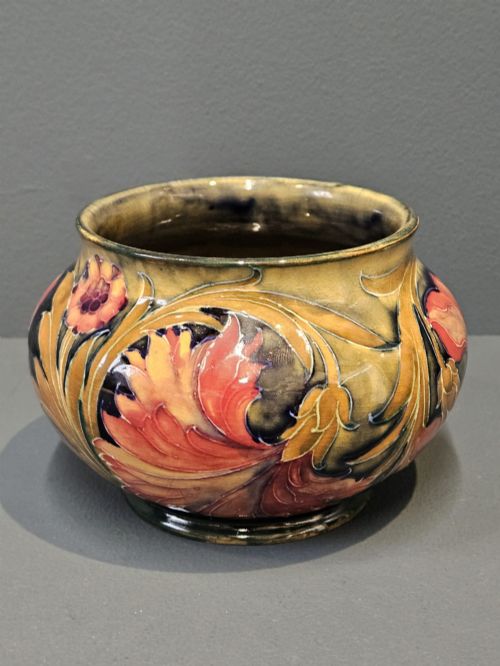
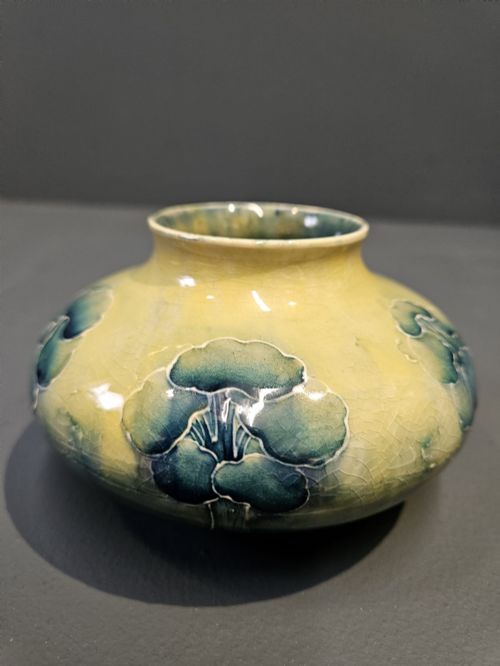
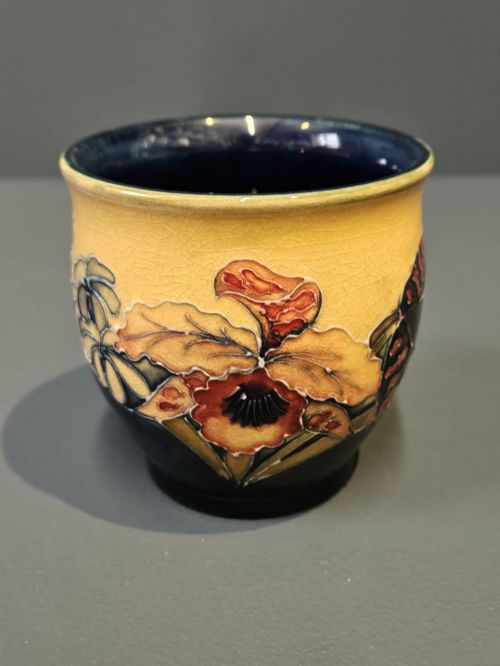
These pieces of art nouveau moorcroft vase bring organic botanical motifs and tubelined ceramic craft straight into your interior.
Art Nouveau Moorcroft Vase
An art nouveau moorcroft vase captures the fluid, botanical spirit of the early twentieth century through distinctive ceramic forms. When you search for this phrase, you encounter vessels decorated with natural motifs such as pansies, cornflowers, poppies, and tubelined floral patterns.
The pieces appearing here range from Victorian and McIntyre eras through to later twentieth-century iterations. You are most likely to meet earthenware examples displaying characteristic florian designs or collaborations with Liberty and Company.
Materials and production techniques
Potters built these vessels using earthenware and ceramic bodies moulded into traditional vase shapes, often finished with a rich glaze. The distinctive raised outlines characteristic of the work were applied by hand using a tubeline technique before the application of colour.
Makers utilised specialised ceramic glazes to achieve tonal depth across floral patterns like pomegranate, hazeldene, and orchid. Selected pieces also incorporate delicate details such as gold leaf accents applied to the fired ceramic surface.
Art Nouveau Moorcroft Vase Retail Price Guide 2026
Typical asking prices for art nouveau moorcroft vase among the pieces listed under this phrase on Sellingantiques today, from the lower quarter to the upper quarter. They describe what is for sale here now, not the wider market.
Early decorators painted flowers so enthusiastically they occasionally left their own thumbprints permanently glazed into the base.
Assessing quality in ceramic design
The finesse of the hand-applied tubelined decoration dictates much of the visual success in these ceramic pieces. Crisp, precise floral outlines separate superior examples from softer, less defined iterations.
Depth and consistency of the glaze across complex botanical motifs influence the overall character of the vessel. Early McIntyre productions and marked pieces bearing signature details often demonstrate a higher degree of artisan execution.
William Moorcroft·Macintyre And Co·Liberty And Co
The Art Nouveau Moorcroft Vase Glossary
- Tubelining
- A ceramic decoration technique where liquid clay is squeezed through a bulb onto the pot to create raised outlines for subsequent colouring. This process forms the tactile boundaries of the floral motifs.
- Florianware
- An early style of ceramic design featuring stylised, flowing floral patterns developed during the formative years of production. These pieces often showcase blue, ochre, or green monochrome colourways.
- Earthenware
- A porous type of pottery fired at lower temperatures and subsequently covered in a vitrified glaze to ensure impermeability. It serves as the primary body material for these decorative vessels.
- Macintyre
- The pottery company that initially employed the designer and produced early collaborative wares before independent factory operations began. Pieces bearing this mark are heavily sought after by collectors.
Art Nouveau Moorcroft Vase: Frequently Asked Questions
How do I identify early Moorcroft pottery?
Early pieces often carry specific factory stamps or handwritten signatures from the designer on the underside. Look for McIntyre marks alongside early pattern names to establish an earlier production date.
Examining the depth of the tubelined floral design and the richness of the glaze helps confirm the period of manufacture.
What styles are common in these vases?
The dominant aesthetic is art nouveau, characterised by flowing organic lines, sinuous plant forms, and stylised floral arrangements. Arts and crafts influences also appear frequently in the earlier production phases.
Later pieces occasionally transition into art deco geometric sensibilities while retaining the signature ceramic glazing techniques.
How were Liberty and Company involved?
Liberty and Company retailed exclusive ceramic designs produced specifically for their London store by the factory. These items often feature special retailer marks alongside standard maker stamps.
Such collaborative pieces represent a distinct chapter in the commercial history of the pottery.
Where should I display my ceramic vase?
Position your vessel on a stable surface away from direct, harsh sunlight to protect the integrity of the glaze and colours. Placing the piece where natural light catches the raised tubelined details enhances its visual depth.
Ensure the location offers adequate physical clearance to prevent accidental knocks against the earthenware body.